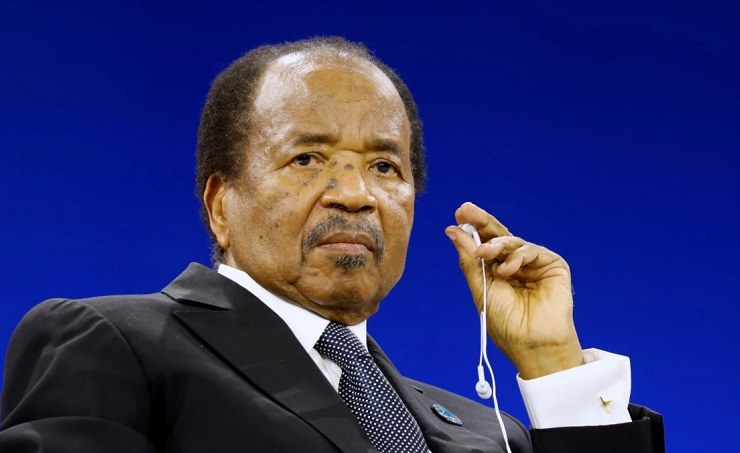
After 56 days shrouded in silence and speculation, Cameroon’s government has finally broken its prolonged muteness: President Paul Biya is alive and his return is imminent. Yet, the announcement raises as many questions as it answers.
The silence ends: 56 days of uncertainty shattered by a government statement
For 56 days, the nation held its breath. Every headline, every whisper, every glance toward the horizon reflected a collective yearning for clarity. Then, on August 2, 2026, the government spoke.
René Emmanuel Sadi, Cabinet Minister and official government spokesperson, delivered the long-awaited words over national radio: “The president is alive.” He went further: “There is no power vacuum.”
While the declaration brought a sense of relief, it also deepened the mystery surrounding the head of state’s prolonged absence.
Paul Biya: the African Lion at 93 after 43 years in power
To grasp the weight of this moment, one must understand the man at its center. Paul Biya, 93, is the world’s longest-serving current head of state. He has led Cameroon since 1982 — over four decades of uninterrupted leadership. To his supporters, he symbolizes stability. To critics, his rule represents stagnation and opacity.
On June 7, 2026, he departed Yaoundé alongside his wife for what was described as a ‘private stay in Europe.’ A brief respite, it was said. Yet, days stretched into weeks. Weeks into months. And still, no clear update.
A disturbing media blackout
Officially, very little happened during those 56 days. The presidency issued a handful of military decrees and sent routine congratulatory telegrams — including a message to France on July 14 marking Bastille Day. But no images. No public statements. No presence. Just absence — and a void rapidly filled by rumor.
“The Lion has not left”: the ruling party’s fragile reassurance
Facing growing speculation, the ruling RDPC party attempted to reassure the public. Christophe Mien Zok, the party’s propaganda director, wrote in L’Action on July 15: “Power is not vacant. The Lion has not left.”
But such words from a party official did little to calm tensions. Opposition voices grew louder. Jean-Michel Nintcheu, an opposition MP, formally called on the Constitutional Council to declare a power vacuum — a bold move in a system where such a post has remained unfilled since constitutional reforms in April 2026.
René Emmanuel Sadi speaks out: “The president is alive”
Amid rising pressure, René Emmanuel Sadi gave a rare interview on August 2. His tone was measured, deliberate. He dismissed claims of a power vacuum outright. “Those calling for the declaration of a vacancy in the highest office must read our Constitution more carefully and objectively,” he said.
He then restated what he called legal certainties: “The Constitutional Council has not ruled on any vacancy. President Paul Biya is alive. He has not resigned.”
But the question everyone asks remains unanswered: when will he return? “I cannot tell you exactly when President Biya will return. And even if I knew, it is not for me to announce it,” Sadi said. Yet he offered a glimmer of hope: “I can tell you he is coming back very soon.”
An unprecedented absence — even for the Lion
This absence is unlike any other. It already surpasses the 42-day stay abroad in late 2024. Over 43 years in office, Paul Biya has spent nearly 2,600 days outside Cameroon — nearly seven full years overseas. A record among African heads of state for private travel.
Unofficial reports suggest members of his inner circle, including family, may currently be in Switzerland. The government has not confirmed this, but the absence of hard information only fuels further conjecture.
Power vacuum: what does the Constitution say?
The legal debate is at the heart of the crisis. An opposition MP has formally asked the Constitutional Council to declare a power vacuum, arguing that after 45 days of absence, the body should intervene. But the legal reality is less straightforward.
The Cameroonian Constitution contains no provision limiting how long a president may remain abroad. “No law sets a maximum duration for the head of state’s absence from national territory,” noted the UDC opposition party. The government has exploited this legal gray zone. The opposition calls it a dangerous ‘institutional void.’
A nation on hold
Cameroon waits. Social media erupts with reactions — relief, disbelief, anger. “Paul Biya is the luckiest president in the world. He can do as he pleases, go where he wants, when he wants — with no consequences,” wrote one user. Others pointed to the record 50-day absence and raised concerns about his health.
Will the promise of an imminent return quell the doubts? It’s uncertain. The lack of a precise date, the continued secrecy around his whereabouts and health — all may only intensify demands for transparency.
The question no one dares to ask openly: what comes after Biya?
Beyond the immediate uncertainty lies a deeper issue: succession. At 93, Paul Biya is not just a leader — he is the regime. But for how much longer?
“The question of what comes after Biya is no longer just about health rumors — it’s about the future of a nation led by a 93-year-old president who has been absent for seven weeks,” observers note. Many prefer not to speak of it. But the question now looms over every conversation.
The UDC has called for an ‘institutional process’ to regulate prolonged absences of the head of state. While framed as a demand for transparency, it also signals growing unease about governance after Biya.
What we still don’t know
Despite the government’s announcement, key questions remain unanswered:
- Where is Paul Biya? Swiss media cite his presence in Switzerland, but no official confirmation exists.
- What is the real purpose of his stay? Described as ‘private,’ the unusual length and circumstances invite scrutiny.
- When exactly will he return? The minister’s answer: “Very soon.” A promise, not a date.
- What is his state of health? All we know: he is alive. Nothing more.
Can the government’s statement restore trust?
The timing of the announcement was risky. Coming after weeks of silence, it felt too late. The vagueness of the message risks leaving many unconvinced.
Yet Sadi stood firm. He addressed the criticism, defended the Constitution, and offered a timeline — albeit an imprecise one.
But in a country where information is tightly controlled and power is deeply personalized, the words of a minister carry less weight than the silence of a president.
Waiting for the Lion’s return
Cameroon holds its breath. The promise of Paul Biya’s imminent return is awaited with cautious hope. It could finally end two months of uncertainty.
Yet beneath that hope lies a larger issue: the governance of a nation led by a 93-year-old president who frequently and for extended periods leaves the country.
“The stability of a Republic cannot rest on silence or assumptions,” warns the UDC. A lesson Cameroon’s government may need to heed — before the next absence.
For now, the nation waits. It waits for its president. It waits for clarity. And it waits, above all, to see whether the Lion will truly roar again.
You may also like
United Russia’s 355 seats: the fallout, the debate, and what comes next for Russia’s Douma
After the flames: Moscow refinery strike sparks debate over where this war is heading
Benin’s ARS second term: the debate, the doubts and what happens next
After 600 Nigerians cross into Nwa, what happens next in Cameroon’s North West?
After Mali’s military defeats, a nation weighs what comes next