The prolonged absence of President Paul Biya from Cameroon has reignited critical discussions surrounding a potential power vacuum at the nation’s helm. Joshua Osih, a prominent figure and leader of the Social Democratic Front (SDF), asserts that Cameroon is currently operating on ‘autopilot’.
Having departed on June 7 for what was described as a “brief private stay in Europe,” President Paul Biya has yet to return to Yaoundé, extending his time abroad beyond 40 days. This extended period away has intensified the debate over a presumed vacancy of power within the highest echelons of the state.
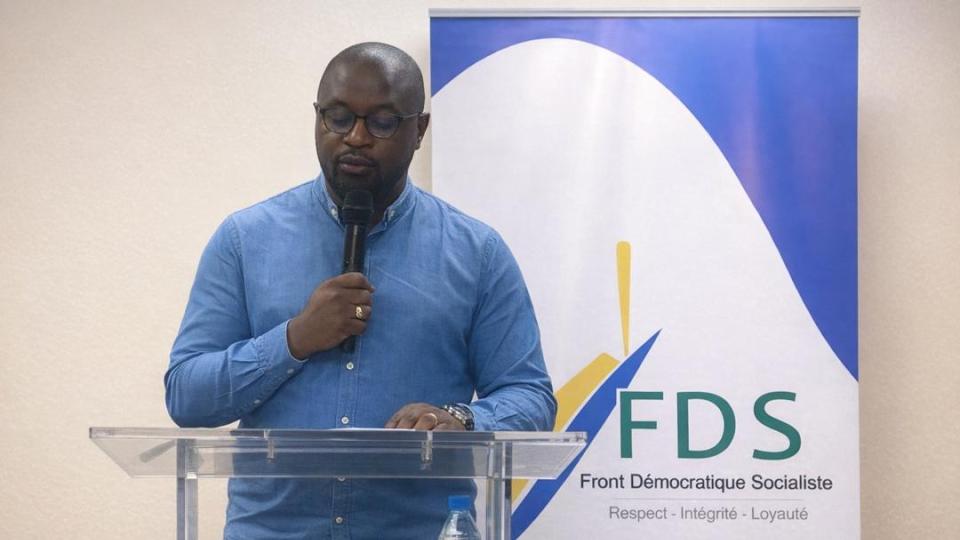
During a press conference held on Thursday, July 23, SDF President and Member of Parliament, Joshua Osih, voiced strong disapproval of the political predicament, which he believes is plunging the country into deep uncertainty. “A Head of State absent for over six weeks. A vacant vice-presidency. Cameroon on autopilot, and we cannot rely on autopilot during a storm,” the elected official declared emphatically.
Osih emphasized that his party, the SDF, was not merely present to highlight the crisis. “We have come with water to extinguish the fire,” he stated, underscoring their commitment to finding solutions. The opposition leader urged a return to the foundational principles of the rule of law in Cameroon. This declaration aligns with similar demands previously made by various opposition leaders and civil society figures. Notably, Jean-Michel Nintcheu has formally called upon the Constitutional Council to declare a power vacancy at Etoudi.
Conversely, the ruling party firmly rejects any notion of a power vacuum. “There is no vacancy of power at the apex of the state,” asserted Jacques Fame Ndongo, Minister of State and National Communication Secretary for the Cameroon People’s Democratic Movement (RDPC).