The African Football Confederation has officially endorsed the joint bid of Burkina Faso, Mali and Niger to host the 2032 Africa Cup of Nations. This landmark decision marks a significant first step for the three Sahel Alliance member states as they now prepare to prove their readiness in infrastructure and security.
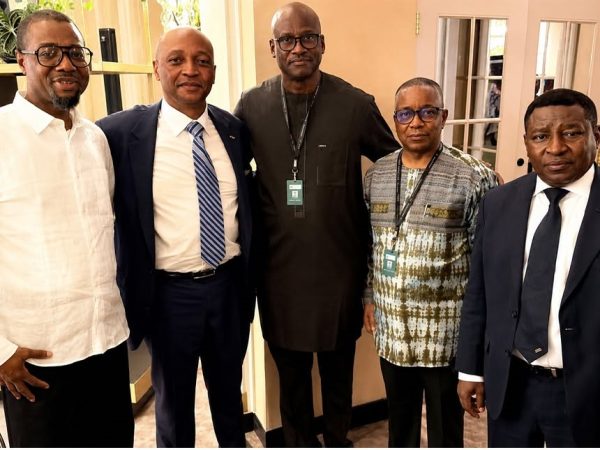
On Saturday, July 18, in New York, the presidents of the football federations of Burkina Faso, Mali and Niger—Colonel Oumarou Sawadogo, Mahamadou Cissé and Issaka Adamou—met with CAF President Patrice Motsepe to receive confirmation that their joint declaration of interest had been formally registered. The announcement, made public on July 20 by the Nigerien Football Federation, quickly resonated across West Africa.
An important milestone, not a guaranteed victory
While the procedural hurdle has been cleared, the journey is far from over. Under CAF’s candidacy regulations, the three federations have met the basic requirement of submitting a joint declaration of interest. This allows their bid to move forward in the official selection process, though it does not guarantee final approval. According to the Nigerien Football Federation, this validation simply ensures their application remains in contention as the CAF evaluates all technical aspects.
Why is the CAF planning ahead for three editions?
In early July 2026, the CAF simultaneously opened bidding processes for CAN 2028, 2032 and 2036, inviting all 54 member associations to participate. By taking this long-term approach, the continental body aims to allow federations ample time to develop robust and sustainable bids.
>While the CAF has not yet set a final decision date for the 2032 tournament, it will conduct a thorough feasibility review of the Sahelian proposal. This assessment will focus on the availability and quality of sports venues, hospitality infrastructure, and transportation networks across the three countries.
A precedent from East Africa offers hope
The idea of hosting together is not new to the CAF. Kenya, Uganda and Tanzania are already preparing to co-host CAN 2027, setting a regional precedent that could guide the Sahelian evaluation. A tripartite model would allow Burkina Faso, Mali and Niger to share existing facilities and resources, reducing the financial and logistical burden of meeting international standards alone.
In a statement released by the Nigerien Football Federation on July 20, CAF President Patrice Motsepe praised the initiative as a symbol of regional cooperation, while emphasizing the importance of adhering to established procedures.
Football as a tool of Sahelian diplomacy
This joint bid reflects a broader strategic shift. Since severing ties with ECOWAS, the military-led governments in Ouagadougou, Bamako and Niamey have intensified collaborative efforts to assert a unified Sahelian identity—spanning monetary policy, diplomacy and now sports. A successful bid would not only showcase the region’s unity but also provide a rare international platform at a time when insecurity continues to plague Niger and Mali. Just days before the bid was validated, renewed attacks claimed lives in both countries on July 17 and 18.
The CAF’s final verdict will hinge on two critical pillars: security conditions and the robustness of infrastructure—from stadiums and training grounds to hotels and transport systems. Both domains remain under intense scrutiny as the Sahelian coalition advances its bid.
Key takeaways from the CAF’s decision
The July 18 approval represents only the first administrative milestone in a long journey. While it confirms the trio’s eligibility to continue in the race, it does not assure technical feasibility or final selection. The path to CAN 2032 remains contingent on the ability of Burkina Faso, Mali and Niger to deliver a comprehensive, compliant bid that meets CAF’s stringent requirements for infrastructure, accommodation and safety.
The federations have vowed to work closely with their respective governments to refine their technical proposals. Yet the ultimate test will unfold not in boardrooms or press conferences, but on the ground—where the true capacity of the Sahel to organize a world-class football tournament will be judged.
A CAN 2032 victory could do more than crown a champion on the pitch. It could signal a new chapter for the Sahel: one where political unity translates into global visibility, prestige and progress.