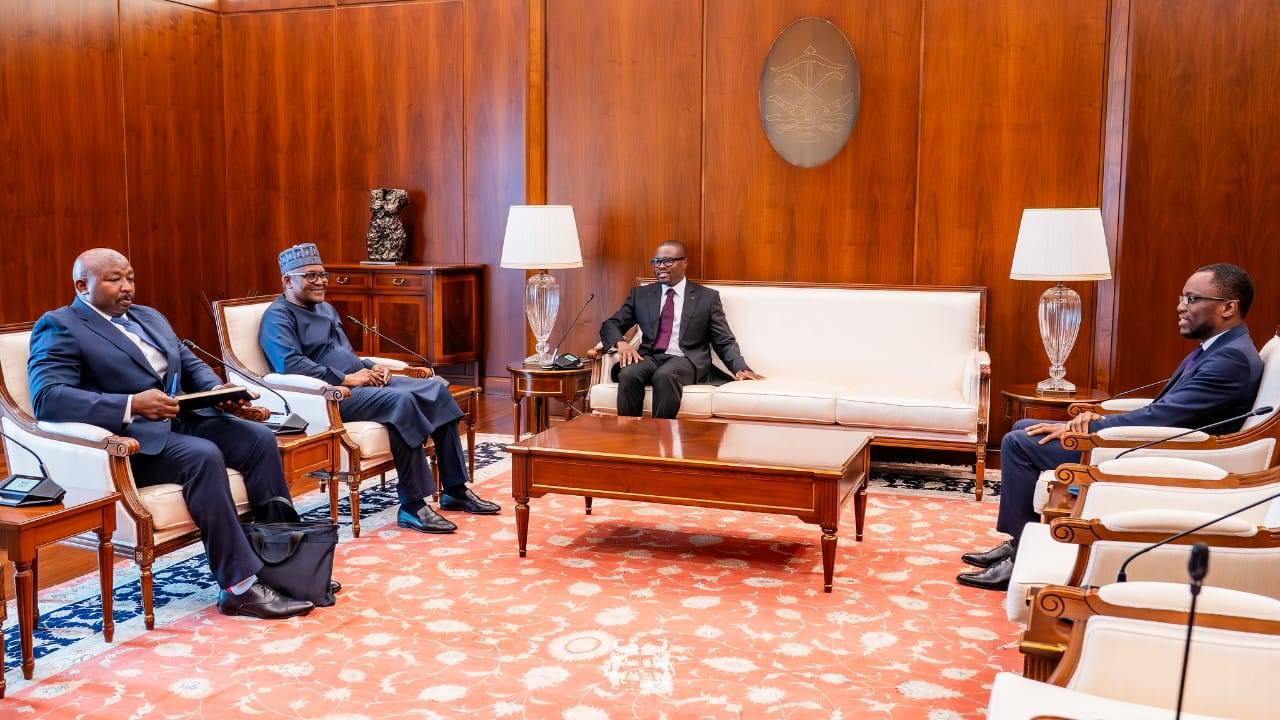
On Tuesday, July 28, 2026, Béninese Head of State, Romuald Wadagni, hosted a high-profile meeting with Nigerian business magnate Aliko Dangote at the prestigious Palais de la Marina. This pivotal encounter centered on strengthening bilateral cooperation, attracting significant investments, and exploring the direct economic benefits Bénin could gain from a solidified partnership with Africa’s industrial powerhouse.
A strategic summit at the heart of Béninese power
A palpable buzz filled the corridors of the Palais de la Marina in Cotonou this Tuesday. In a regional landscape where economic synergies are increasingly vital for resilience, President Romuald Wadagni extended a presidential welcome to one of the continent’s most influential figures: Nigerian billionaire and industrial leader, Aliko Dangote.
While diplomatic handshakes are a common occurrence at the Palace, this particular audience carries profound significance. It underscores the shared commitment of Cotonou and Abuja to intensify their exchanges and accelerate regional economic integration. For President Wadagni, long recognized as a meticulous financial expert and development advocate, welcoming the African industrial titan represents a logical progression in his economic transformation agenda.
Aliko Dangote: an industrial empire at Bénin’s doorstep
Aliko Dangote needs no introduction. As the head of the eponymous group, Africa’s wealthiest individual has forged a diverse empire spanning cement, sugar, agribusiness, logistics, and most recently, oil refining with the colossal Dangote Refinery project in Nigeria.
For the Dangote Group, Bénin is far more than just a geographical neighbor sharing hundreds of kilometers of border. It represents a natural market, a strategic logistical corridor to the rest of the sub-region, and a long-standing partner with whom commercial flows, both formal and informal, have always been robust.
During the discussions, the businessman reiterated his keen interest in Bénin’s economic potential. His objective is clear: to identify new avenues for growth, secure cross-border supplies, and implement high-impact projects capable of serving both the Béninese market and the landlocked countries of the hinterland.
« The growth opportunities in West Africa are immense when we combine the strength of our industries with the strategic vision of our states, » a member of the businessman’s entourage indicated following the audience.
What gains for the Béninese state?
Beyond its diplomatic symbolism, this meeting prompts a critical question: what concrete advantages can the Béninese economy derive from it? The potential for direct and indirect benefits for Cotonou is multifaceted.
Increased foreign direct investments (FDI)
The establishment or expansion of projects financed by the Dangote Group would inject substantial fresh capital into the local economic fabric. Whether through the distribution of construction materials at more competitive costs or the development of storage infrastructure, every CFA franc invested strengthens the nation’s industrial base.
Job creation and skill transfer
The arrival of large-scale industrial projects is inherently linked to the massive creation of direct and indirect employment opportunities, particularly for Béninese youth. Beyond mere figures, it is the transfer of technical expertise and modern management methodologies that will benefit the local workforce.
Revitalization of the Autonomous Port of Cotonou and logistics
Bénin possesses a key asset: its port, the true economic lifeline of the nation. Enhanced synergy with Dangote entities could significantly boost cargo traffic, optimize the utilization of road and rail corridors, and generate substantial customs and tax revenues for the Béninese public treasury.
Energy security and resource supply
With the commissioning of the Dangote Group’s refining capabilities in Nigeria, Bénin could gain preferential and secure access to refined petroleum products and petrochemical derivatives (notably fertilizers crucial for Béninese agriculture), thereby reducing the country’s vulnerability to international market fluctuations.
The Bénin-Nigeria tandem: towards a reinforced economic axis
For a long time, commercial relations between Bénin and its giant neighbor were subject to political uncertainties and untimely border closures. The audience granted by President Romuald Wadagni to Aliko Dangote is part of a dynamic towards lasting normalization and economic pragmatism.
By establishing direct dialogue with Nigeria’s largest private sector players, the Béninese executive demonstrates its commitment to building a “win-win” partnership. The aim is no longer just to endure the influence of sub-Saharan Africa’s largest economy, but to position Bénin as an indispensable logistics, financial, and service hub for Nigerian industrialists.
This rapprochement also offers the Béninese government an opportunity to sanitize cross-border trade, favoring official and structured channels over informal ones, thereby ensuring better fiscal revenues for the state.
A vision for Bénin’s economic future
This July 28, 2026, audience marks a promising turning point in President Romuald Wadagni’s economic roadmap. By receiving Aliko Dangote at the Palais de la Marina, the Head of State has laid the groundwork for large-scale industrial and financial partnerships.
While these discussions must now translate into formal agreements and operational roadmaps, the initiative reflects a clear ambition: to make Bénin an attractive destination for major investments and to transform its geographical proximity to Nigeria into a genuine lever for national prosperity. The coming weeks will clarify the exact nature of the initial projects resulting from this strategic tête-à-tête.