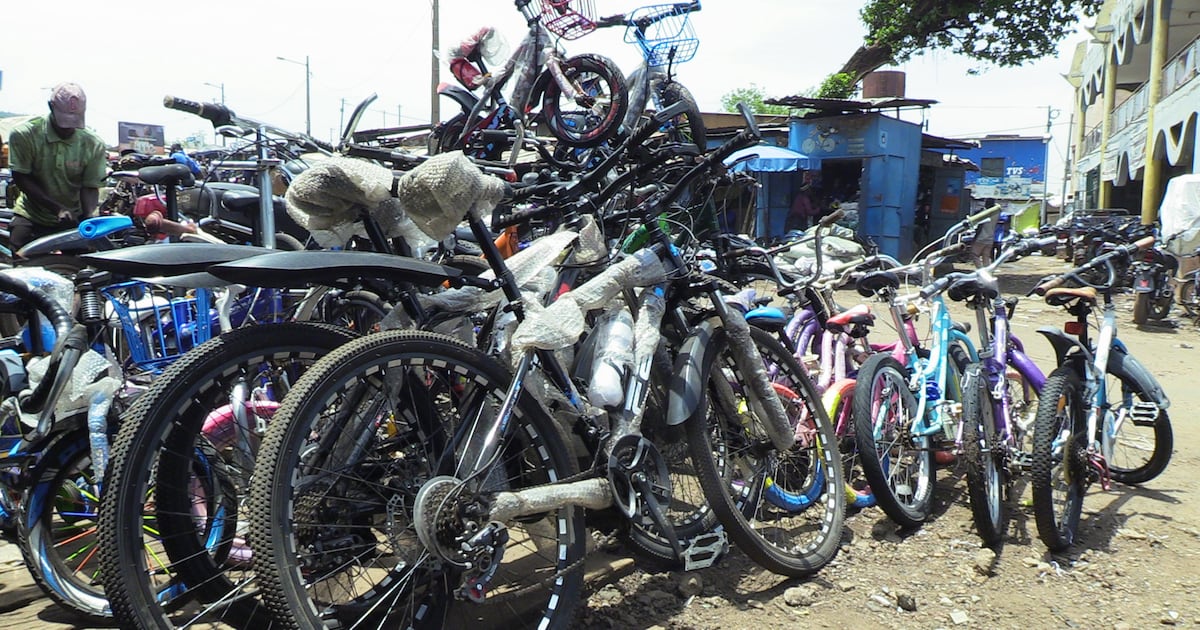
a bustling marketplace where needs meet ingenuity
In the heart of Bamako’s Médine district, Adama Konaté has spent 27 years transforming bicycles into both a livelihood and a service. His stall is more than just a shop—it’s a workshop where imported frames from France, the United States, England, Canada, and China are repaired, customized, and assembled into reliable two-wheelers. Beyond sales, he offers clients a chance to take home a freshly built or restored bicycle, adapting to their exact needs.
The scope of Médine’s new market extends far beyond two-wheeled transport. Within the sprawling Diguèbakonona section, vendors like Konaté also cater to farmers and motorists. Here, agricultural tools—from plows to hoes—and vehicle accessories are readily available, filling gaps left by other markets in the city. Whether it’s a rare spare part or a specialized farming implement, shoppers know they’ll find what they need in one place.
artisans shaping daily life with handcrafted goods
Just steps away, Drissa Traoré runs a thriving trade in locally made household essentials. His workshop produces traditional mud stoves, wedding trousseau chests, peanut grinders, and small ovens—all crafted to meet the demands of Bamako’s families. Since relocating to the new Médine market a year ago, his business has flourished. “My income has improved significantly,” he shares. “Each item is priced according to its design and purpose. Success comes from discipline and hard work.” His message to young entrepreneurs is clear: consistency and dedication turn small efforts into lasting livelihoods.
farmers adapt to challenges with essential tools
Fousseyni Sangaré specializes in agricultural equipment, stocking plows, hoes, and soil-working tools that are in high demand during the rainy season. “As planting time approaches,” he explains, “farmers from across the region come to restock before the fields awaken.” This year, however, supply chains have faced hurdles. “Insecurity has disrupted deliveries to distant villages,” he notes. “Most of my stock comes from the Koutiala region, and despite economic pressures on customers, loyalty to trusted suppliers remains strong.”
Konaté, Traoré, and Sangaré represent just a few of the hundreds of traders who have turned Médine’s market into a vital economic engine. Their stories reflect resilience in the face of rising fuel costs and local disruptions—proving that even in uncertain times, ingenuity and community drive commerce forward.