Bamako families face Tabaski under jihadist siege in Mali
For 30 years, Alpha Amadou Kané has lived in Bamako—but this year will mark his first Tabaski celebration in the city. The 40-year-old from Mopti, in central Mali, had planned to return home to celebrate the Muslim holiday with his family. However, jihadist attacks on public transport forced him to cancel his travel plans.
Since late April, militants linked to Al-Qaïda’s Sahel branch have imposed a partial blockade on key roads leading to the Malian capital, setting fire to dozens of buses and cargo trucks. While the siege remains incomplete, the sight of charred vehicles has deterred transport companies from operating routes to Bamako and discouraged travelers from risking the journey to their villages.
Tabaski in Mali is more than a religious observance; it is a deeply rooted social tradition that reunites families, often separated for months due to work commitments. This year, however, the usual bustle in Bamako’s bus stations ahead of the holiday has been replaced by an eerie silence.
The transport sector faces compounding challenges, including severe fuel shortages. “Not only do we lack diesel to maintain regular schedules, but we’ve also lost several buses in recent attacks. It’s a devastating economic blow,” admits a local travel agency manager, requesting anonymity.
Under normal circumstances, the agency could transport over 50,000 passengers from Bamako to destinations across the country during Tabaski. “This year, we’re not planning any trips,” reveals the operations manager of a major transport company.
Wara Bagayoko, a lifelong Bamako resident, has always followed the same ritual: packing the family car to celebrate Tabaski with relatives in the Ségou region. This year, she breaks a 30-year tradition. “The roads are too dangerous. It’ll be the first time in decades I won’t celebrate in my village,” she laments.
While large transport firms have largely halted operations, some minibuses still enter Bamako—either via alternative routes or under military escort on certain axes.
Shortage of sheep
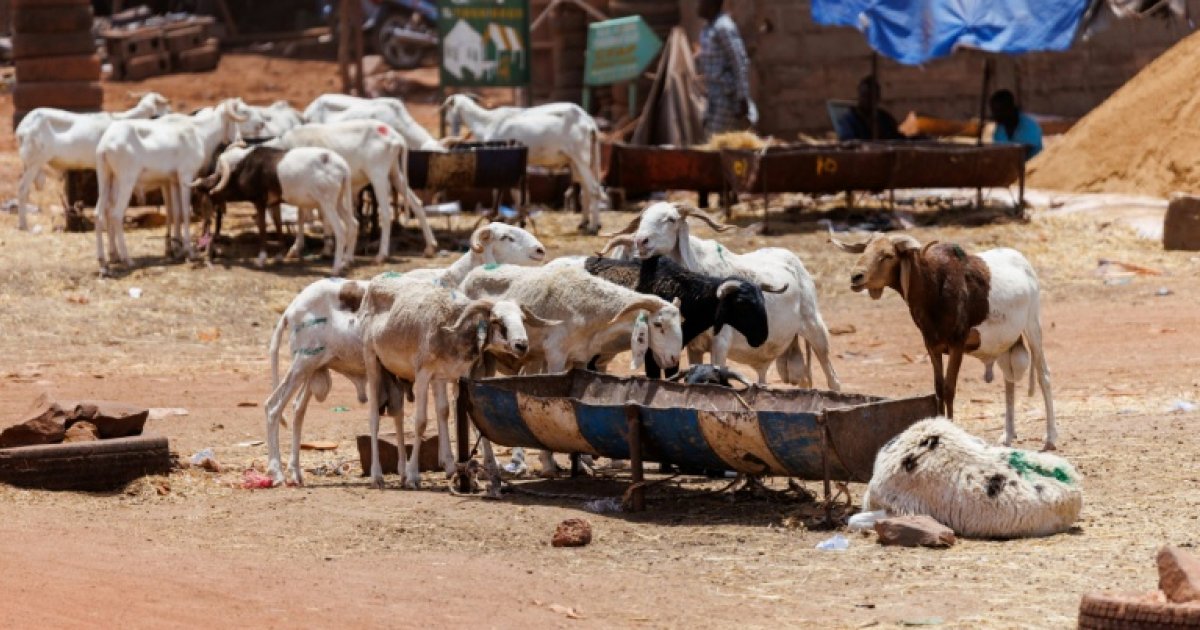
The transport paralysis has crippled Mali’s livestock sector, critical for Tabaski’s sacrificial rituals. Breeders and traders from pastoral zones struggle to deliver animals to Bamako, the country’s primary market.
Transport costs for a single animal, typically 2,500 to 2,750 CFA francs (€4), have surged to 15,000–18,000 CFA francs (€22–27) this year, reports transporter Alassane Maïga. The spike is driven by the blockade and the need for alternative, riskier routes.
Consequently, sheep—central to Tabaski’s symbolic sacrifice—have become scarce and exorbitantly priced in Bamako, a city where the minimum wage stands at 40,000 CFA francs (€60). “Many livestock trucks were torched by jihadists. Normally, I’d have over 1,000 heads; today, none,” says Hama Ba, a Bamako-based vendor.
Sheep that once sold for 75,000 CFA francs (€114) now fetch 300,000 CFA francs (€457). “Before, we had plenty of options. Now, sheep are nearly invisible in Bamako,” sighs Iyi, struggling to find a ram within her budget.
Power cuts and water shortages
Security isn’t the only crisis gripping Bamako. The capital is grappling with severe electricity outages and critical drinking water shortages. Tailors, who typically prepare festive outfits like the Selifini, face delays due to power cuts, hampering their ability to fulfill orders.
Énergie du Mali, which operates primarily on diesel and fuel oil, has struggled to secure normal fuel supplies because of the blockade. “We tried using small solar panels, but they can’t replace grid electricity,” explains tailor Alou Diallo.
Households also worry about food preservation. “How will we keep meat fresh without electricity? Buying an expensive sheep only to lose the meat in 24 hours due to power cuts is a nightmare,” shares a mother from the Sirakoro district.
In recent days, Malian authorities announced the arrival of hundreds of fuel tankers in Bamako to alleviate shortages.