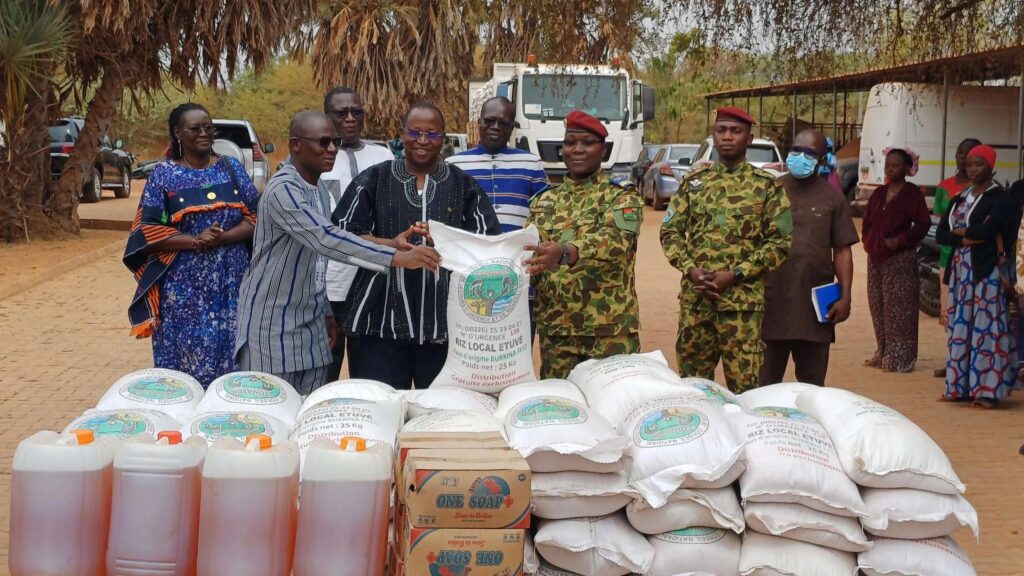
The official narrative and the reality on the ground have rarely been so far apart. On Wednesday, September 23, 2026, Burkina Faso’s transitional authorities once again rolled out the red carpet to receive 25,000 tonnes of wheat donated by the Russian Federation. The scene unfolded just as Captain Ibrahim Traoré continues to tell audiences at home and abroad that his country is closing in on food self-sufficiency, powered by agro-pastoral drives and what he calls recovered sovereignty.
The gap between those two images is now the subject of heated public debate, and it raises an uncomfortable question about what comes next for a nation that presents itself as a regional model of independence.
A widening gap between speeches and supply lines
How can a country on the verge of feeding its entire population keep welcoming thousands of tonnes of foreign grain? The answer lies in the staging of national policy. By insisting that Burkina Faso no longer needs outsiders to guarantee its food security, the government appears to be papering over a deep agricultural crisis. That crisis has been fuelled by the loss of control over large stretches of rural territory and by the forced abandonment of farmland by displaced communities.
Celebrating the supposed end of dependency while embracing emergency shipments is a contradiction that is becoming harder to ignore. If self-sufficiency were a measurable reality rather than a slogan, national granaries would be enough to supply cities and displacement camps without waiting for vessels from the Black Sea.
The fallout: a debate that is spreading
The arrival of the wheat has triggered reactions far beyond official circles. Farmers’ groups, economists and ordinary citizens are asking why a country that claims to be food sovereign still relies on external deliveries. For many, the delivery exposes the distance between political messaging and the daily struggle to put bread on the table.
Critics argue that the authorities are using the shipment as a public relations victory while avoiding a frank discussion about failed harvests, insecurity in farming areas and the lack of investment in local production. Supporters counter that any food arriving in a time of need is welcome, regardless of where it comes from. That divide is now shaping the political conversation.
A gift that looks much like a hidden purchase
Behind the label of humanitarian generosity and strategic partnership with Moscow lies a political and financial transaction whose details remain carefully concealed. In diplomatic language, the phrase free donation often serves as a smokescreen. Several observers point to a disguised purchase or a highly political barter: in exchange for the grain, Russia strengthens its geopolitical, security and economic foothold in the country, trading food for strategic concessions in gold mining, economic contracts and unreserved diplomatic alignment.
These 25,000 tonnes of wheat are not free. They are paid for at a high price in external dependency and sovereign concessions. Far from an act of disinterested solidarity, the transfer looks like a political bill settled indirectly by the Burkinabè taxpayer.
What comes next for food sovereignty
Presenting an external supply operation as a symbol of sovereignty is a reversal of values. A truly sovereign people is one that produces what it consumes on its own soil, under the protection of its own security forces. As long as Captain Ibrahim Traoré’s rhetoric of rupture clashes with the reality of imported wheat sacks used to meet immediate emergencies, sovereign self-sufficiency will remain what it is today: a communication illusion.
The coming months will test whether the government can turn the debate into action. If the response is more shipments and more slogans, the gap between the promise and the plate will only grow wider.
You may also like
Boussouma’s exodus at 77 km from Ouagadougou: fallout, public debate and what comes next
Madaouela fallout: how Niger’s uranium gamble with Atomic Eagle is being received
Chadian rebels in Lomé: the fallout, the debate, and what happens next for Togo
Moussa Kaka’s disappearance in Niamey: the fallout, the debate, and what happens next
358 russian fighters killed in three years: the fallout reshaping Mali’s security debate