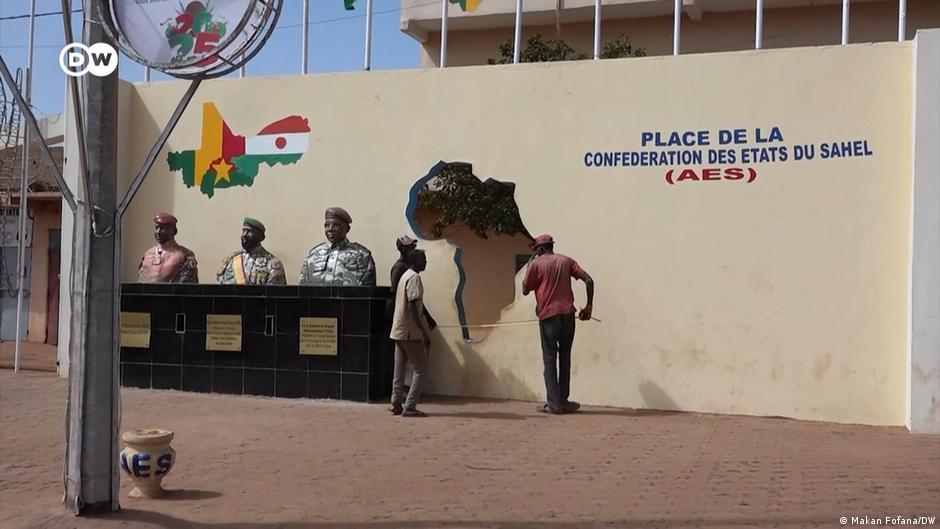
On April 20, 2026, Burundi’s President Évariste Ndayishimiye traveled to Ouagadougou for an official visit described as one of “friendship and cooperation.” At the time, he held the rotating presidency of the African Union (AU), a role that positioned him as a key mediator in a delicate continental standoff.
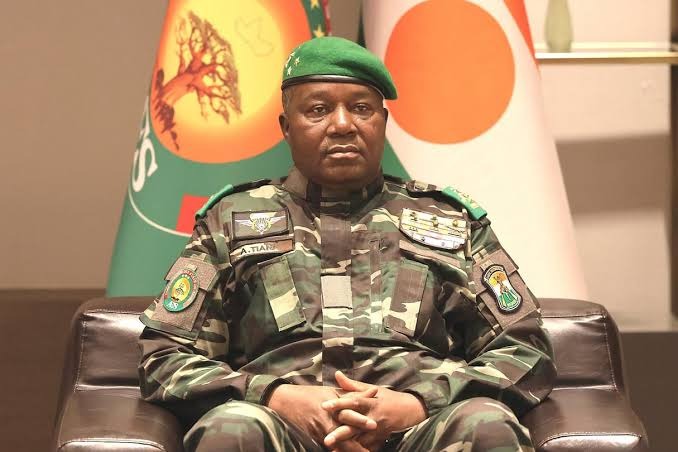
His mission? To reopen dialogue between the AU and the Alliance of Sahel States (AES), a coalition comprising Burkina Faso, Mali, and Niger, led by Captain Ibrahim Traoré. This diplomatic push came at a time when AES member states had withdrawn from AU institutions, citing disagreements over governance and regional security priorities.
Ndayishimiye’s visit to Burkina Faso—governed by a military junta that had seized power through a coup—was framed as a gesture of solidarity. The Burundian leader praised the junta’s efforts to restore stability in a country where democratic norms had been openly dismissed by its leadership. But beneath the diplomatic language of cooperation and stability, a deeper question arises: Is this not a quiet alliance among authoritarian regimes united by their shared rejection of constitutional constraints?
Shared paths to power
There is a striking alignment in the political trajectories of Burundi and the AES countries. Mali, Burkina Faso, and Niger faced sanctions from the Economic Community of West African States (ECOWAS) and the European Union following coups in 2020, 2022, and 2023, respectively. Burundi itself was sanctioned by the EU and the United States in 2016 after President Pierre Nkurunziza pursued a controversial third term deemed unconstitutional.
Such parallel experiences invite a comparative analysis that goes beyond surface similarities. It seeks to uncover deeper, convergent logics—political strategies that operate across borders despite vastly different geopolitical contexts. The relationship between Burundi and Mali, separated by thousands of kilometers and distinct regional dynamics, is a case in point.
Constructing the enemy within and beyond
In both countries, the identification of an enemy—whether internal or external—serves as a central pillar of political legitimacy. This tactic allows regimes to sustain a sense of perpetual threat, adaptable to shifting political circumstances. The enemy may be colonial, regional, or an amorphous security threat, but its function remains the same: to rally public support and justify authoritarian rule.
In Mali, this mechanism reached its peak in early 2022. A surge of nationalist sentiment—often described as a “rally-around-the-flag” effect—bolstered the junta’s legitimacy. Thousands of protesters took to the streets of Bamako on January 14, 2022, denouncing ECOWAS sanctions as foreign interference. Their chants targeted France and the regional bloc, framing the crisis as a struggle for Malian sovereignty against external domination.
Burundi’s government employs a similar narrative, but with a different historical focus. Belgium, the former colonial power, is portrayed as the architect of ethnic divisions and a complicit actor in Rwanda’s alleged attempts to destabilize Bujumbura. By blaming Brussels for the EU sanctions imposed on Burundi in 2016, the CNDD-FDD party diverts international criticism into a story of resistance against neocolonialism.
Picking regional foes
At the regional level, both countries have singled out specific adversaries to reinforce their domestic legitimacy. In Mali, Algeria has been accused of harboring opposition figures like imam Mahmoud Dicko and collaborating with terrorist groups operating in the Sahel. In January 2024, the Malian junta unilaterally terminated the Algiers Peace Agreement, escalating tensions further. By April 2025, Mali had closed its airspace to Algeria in response to a reciprocal measure by Algiers.
In Burundi, the role of adversary falls to Rwanda and its president, Paul Kagame. Ndayishimiye has repeatedly labeled Kigali a “bad neighbor,” accusing it of sheltering the plotters behind the 2015 coup attempt and supporting rebel groups like RED-Tabara. This rhetoric has translated into concrete actions: Burundi closed its land borders with Rwanda in January 2024 and actively intervened in eastern DRC between August 2022 and December 2025. The stated goal was to support Congolese forces and allied militias—including Wazalendo and the FDLR—against the M23 rebel group, widely believed to be backed by Rwanda.
These measures are not merely symbolic. They sustain a narrative of perpetual siege—a psychological and political necessity for regimes that rely on external threats to justify their grip on power.
The security paradox
Yet a paradox emerges when comparing the security strategies of Mali and Burundi. In Mali, the threat is immediate and tangible: attacks by the Front for the Liberation of Azawad (FLA) and the Group for the Support of Islam and Muslims (JNIM) in April 2026 reinforced the junta’s security narrative. Here, the regime positions itself as the sole protector against chaos, even as Mali’s economy suffers from chronic electricity shortages and the gradual withdrawal of development and humanitarian aid.
In Burundi, the security discourse serves a different purpose. With presidential elections scheduled for 2027, the ruling CNDD-FDD has endorsed its incumbent leader as the sole candidate in a tightly controlled process. The security narrative does not replace the election; it prepares the ground for it. Despite chronic shortages of fuel and foreign currency since 2015, the regime emphasizes stability over economic performance, using external threats to mask internal vulnerabilities.
Ranked among the world’s poorest nations—and occupying the lowest position on the 2023 Human Development Index—Burundi’s reliance on external scapegoats reflects, in the words of political scientist Jean-François Bayart, a pattern of internal predation disguised as national resilience.
The foundation of power
What the Mali-Burundi comparison ultimately reveals is not the uniqueness of each path, but the resilience of a shared logic. These regimes do not merely tolerate their enemies—they depend on them. Whether through colonial nostalgia, regional rivalries, or manufactured security crises, the construction of an external foe is not a burden; it is the foundation of their survival.