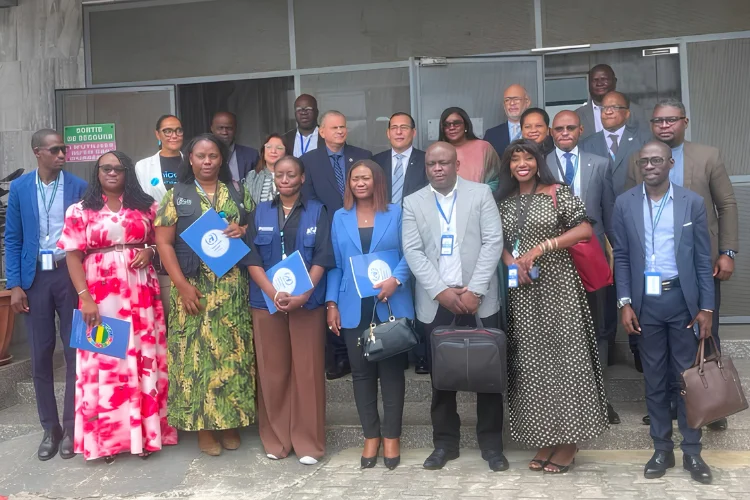
When the United Nations System in Gabon wrapped up its 2025 activities, the headline figure was hard to ignore: 10.5 billion CFA francs, or roughly 18.5 million dollars, injected into the country’s development landscape. But beyond the numbers, the real story lies in what this money changes for ordinary Gabonese — from families struggling with the cost of living to small entrepreneurs trying to stay afloat.
For the first time since taking office in January, the Resident Coordinator of the UN System in Gabon, Fatou Aminata Lo, met with the press at the UN common house. The meeting was not just about presenting the annual report; it was an opportunity to strengthen the strategic partnership and bring journalists on board for the Sustainable Development Goals (SDGs) and the upcoming 2028-2032 framework.
The human impact behind the funding
Flanked by agency heads, Lo made it clear that the UN’s role goes beyond project delivery. “Our contribution is not measured only by the number of projects completed,” she said. “It is also measured by our ability to bring actors together and to help turn public policies into concrete results for the people.”
In 2025, the UN mobilized this 10.5 billion CFA francs through 21 entities and nearly 300 staff members, 70 percent of whom are Gabonese nationals. The funding was channeled into three priority areas: promoting good governance and human rights, supporting the transition to a green and blue economy, and advancing equal opportunities and social inclusion.
Economic ripple effects for citizens and businesses
What does this mean on the ground? For a young entrepreneur in Libreville, the green economy push could open doors to new markets and jobs. For a family in a rural area, social inclusion programs might translate into better access to basic services. Yet, the impact is not always immediate or visible.
During the exchange, journalists raised pointed concerns about the UN’s actual role and the direct impact of these programs in the face of pressing socio-economic urgencies. The discussion was frank, laying the groundwork for closer and more transparent collaboration.
Three priorities, one goal: reaching the people
- Good governance and human rights — strengthening institutions and citizen participation.
- Green and blue economy — creating sustainable jobs and protecting natural resources.
- Equal opportunities and social inclusion — ensuring no one is left behind, especially vulnerable groups.
The coming years will test whether these investments deliver tangible improvements in daily life. With the 2028-2032 framework on the horizon, the UN and its partners are under pressure to show that 10.5 billion CFA francs can be more than a figure — it can be a catalyst for real change.
random pub
You may also like
Mali: JNIM ambush on Russian Africa Corps convoy near Niono — what it means for civilians and local trade
Mali’s poverty crisis: how hunger and hardship are reshaping daily life for millions
Guinea-Bissau’s December election: what Embaló’s return means for daily life, stability and the economy
The $20 million bounty on Robert Brovdi: what it means for Ukraine’s citizens, businesses and war economy
What Tinubu’s four-week Europe trip costs Nigeria as independence day looms