What the Mistral’s Dakar stopover means for Senegal’s economy and security
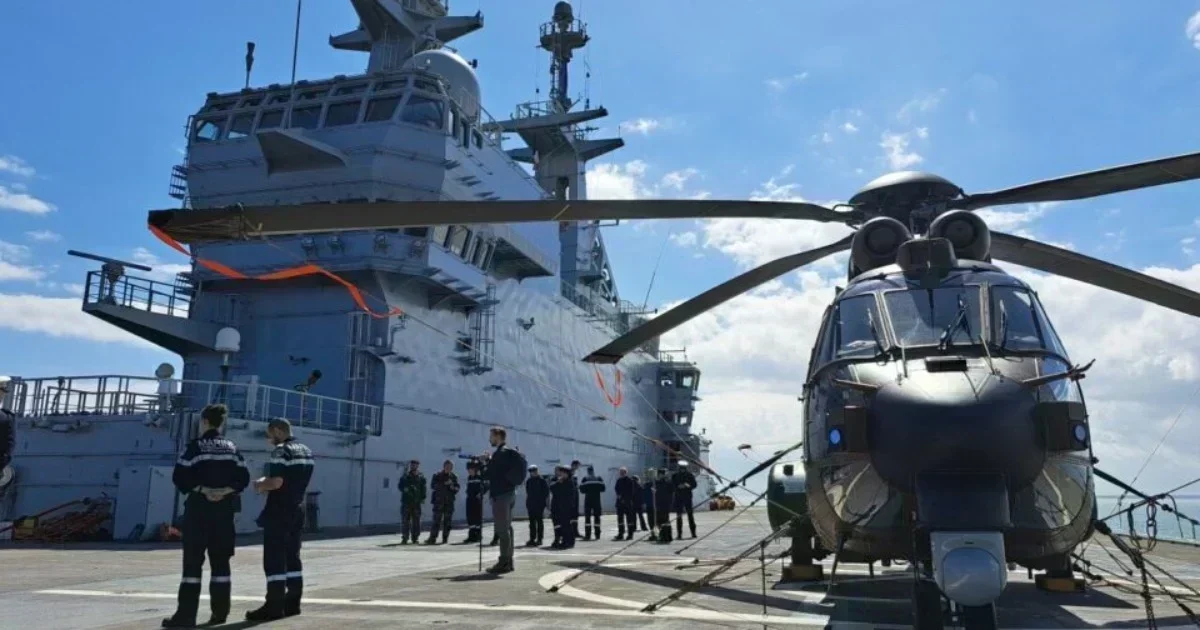
The French amphibious helicopter carrier Mistral is in Dakar from 2 to 6 October 2026. Its presence is far from a courtesy call: for five days, French and Senegalese military personnel will conduct joint operational activities on land and at sea, as well as expertise exchanges. This port call comes just over a year after the departure of French forces stationed in Senegal. The visit carries tangible consequences for local businesses, for the country’s security apparatus, and for the broader economy of a nation recalibrating its defence partnerships.
Five days of drills with direct impact on local activity
The Mistral is one of the flagship vessels of the French Navy. This amphibious ship can carry helicopters, troops and vehicles, and is designed for operations combining land, air and maritime assets. Its stopover at the port of Dakar falls within the framework of cooperation activities between the armed forces of both countries. For Dakar’s port area, the arrival of a vessel of this size generates immediate economic ripples: refuelling, provisioning, and logistical support contracts that benefit local suppliers and service providers.
During its stay, French and Senegalese military personnel will take part in several operational activities and expertise-sharing sessions. A large part of the programme focuses on land tactical operations. These exercises will not be limited to the capital. Units from both armies are to make joint movements between Dakar and the Mont-Rolland training centre, in the Thiès region. This site, used for troop training and instruction, will host part of the land activities planned during the stopover. The overland convoys and the use of local infrastructure bring short-term economic benefits to the Thiès area, from fuel purchases to food and accommodation for personnel.
A naval exercise off Senegal’s coast with security implications
The maritime component also plays a significant role. A naval exercise is planned to maintain the two navies’ joint coordination and intervention capabilities at sea. This type of manoeuvre tests the ability of crews to act together in a zone where coastal surveillance, the fight against trafficking and navigational safety remain major challenges. For Senegal’s fishing communities and maritime traders, enhanced coordination translates into better protection against illegal fishing and smuggling, which directly affects local livelihoods.
The stopover also includes an academic dimension. The programme features meetings and cohesion activities with the Armed Forces Health Service, the Higher War School and the Staff College. Reciprocal visits to operational centres are also planned, allowing officers from both countries to discover their counterparts’ working methods. These exchanges help build the professional networks that underpin long-term security cooperation, with knock-on effects for regional stability.
Since the handover of the last French military facilities to the Senegalese state in July 2025, France no longer has a permanent base in the country. Military cooperation between the two countries nevertheless continues in the form of occasional activities such as this one: joint exercises, training and expertise exchanges, conducted within a relationship that Senegalese authorities now want to be more balanced. For ordinary Senegalese and businesses alike, the key question is whether these periodic engagements deliver concrete security and economic returns, or remain largely symbolic gestures.