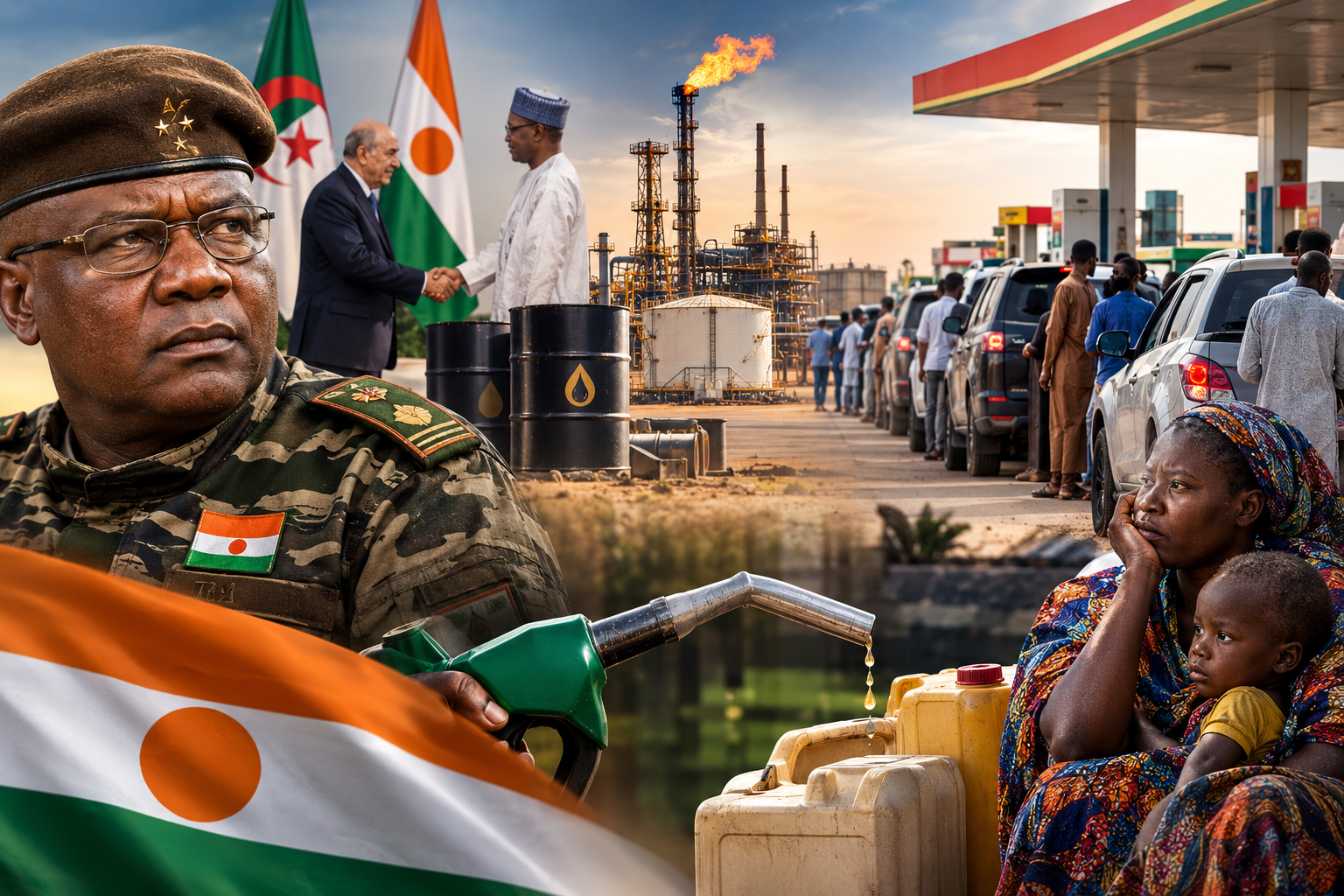
The recent security agreement between Algeria and Niger highlights a critical dilemma for Niamey. While the government pursues bold diplomatic and strategic partnerships in the name of national sovereignty, a pressing question lingers: how can an oil-producing nation struggle to supply its own citizens with fuel?
The contradiction is stark. Niger possesses significant oil reserves and has invested in extraction and refining infrastructure. Yet, fuel scarcity remains a daily challenge. Long queues at petrol stations, disrupted travel, and economic slowdowns reveal the harsh reality: when supplies falter, ordinary people, transporters, and small businesses bear the brunt.
Where does Niger’s oil go?
The core issue extends beyond production it lies in distribution and control. How much of Niger’s extracted oil stays within its borders? What volumes are exported, and under what terms? Do refining, storage, and logistics truly meet the country’s needs? These are the questions demanding clear, data-backed answers from authorities.
Foreign partnerships under scrutiny
The growing involvement of external actors in Niger’s strategic sectors also warrants close examination. Russia’s expanding influence across the Sahel, particularly among military-led governments, raises concerns about the economic and security agreements being forged. Transparency is non-negotiable if Niger’s leadership claims strengthened sovereignty over its natural resources.
Such sovereignty must yield tangible benefits: consistent fuel supply, affordable prices, and transparent management of oil revenues. Without these, declarations of independence ring hollow.
Security pacts vs. energy solutions
The Niger-Algeria security collaboration may address legitimate regional threats, but diplomatic agreements alone cannot resolve everyday economic hardships. Security cooperation does not substitute for effective energy policies or accountable resource management.
The unanswered question
For many Nigériens, the dilemma is straightforward: what good is oil wealth if it fails to secure domestic fuel accessibility? True sovereignty is not measured by the number of treaties signed or allies gained. It is proven by a state’s ability to convert its resources into real improvements for its people.
Niamey now faces the urgent task of clarifying its oil supply chain, assigning responsibility for shortages, and ensuring strategic decisions prioritize national welfare. Until petrol stations reliably meet demand, rhetoric about economic independence will continue to clash with an inescapable truth: who truly benefits from Niger’s oil, and where do its citizens stand in the equation?
By Daniel Mbami — Journalist