The military-led government in Burkina Faso has taken a decisive step, but the question remains: is it a step toward greater protection for citizens, or a dangerous erosion of democratic safeguards?
Why has Burkina Faso brought back capital punishment?
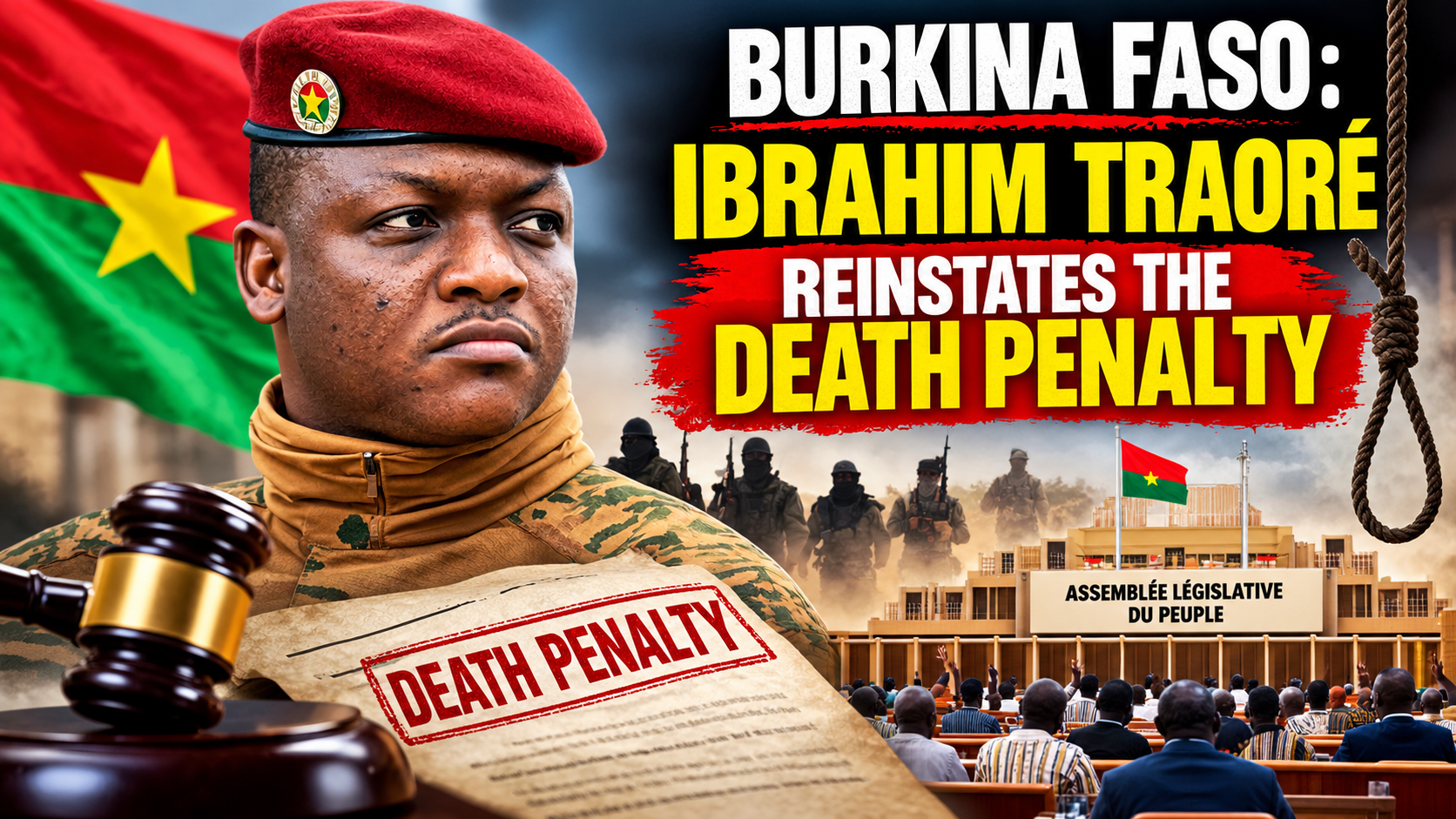
The Burkina Faso transitional legislature has approved a sweeping penal reform, reinstating the death penalty after an eight-year hiatus. The new criminal code, adopted unanimously on October 20, 2026, designates capital punishment for crimes such as terrorism, treason, espionage, and premeditated murder. The move is framed by authorities as a response to escalating jihadist violence and a bid to restore order and public safety.
Can harsher penalties quell the security crisis?
While the government positions the death penalty as a deterrent against extremist attacks, the link between severe penalties and reduced violence is far from proven. Security outcomes depend on multiple factors: intelligence gathering, military capacity to preempt threats, judicial efficiency, and sustained state presence in affected regions. A punitive approach alone cannot substitute for these critical functions.
The true test of success lies not in the severity of punishments, but in the government’s ability to prevent massacres, protect villages, and restore daily life in areas under siege.
The role of Ibrahim Traoré’s leadership in shaping the reform
President Ibrahim Traoré has publicly championed a hardline stance, warning that individuals convicted of treason or espionage will face “merciless” penalties. His administration presents the reform as a necessary assertion of state sovereignty in the face of external and internal threats.
Yet, governance through fear carries its own risks. A justice system strengthened solely by the threat of irreversible sanctions raises concerns about judicial impartiality, the risk of wrongful convictions, and the potential misuse of legal authority.
Judicial guarantees: the missing piece in Burkina Faso’s security strategy
Capital punishment removes any possibility of correction should a miscarriage of justice occur. To ensure fairness, such a penalty must be accompanied by robust legal safeguards: thorough investigations, airtight evidence, and transparent trials. Without these, there is a real danger that the new law could be applied arbitrarily or politically.
Press freedom and dissent under scrutiny
The penal reform arrives at a time when civil liberties in Burkina Faso are already under pressure. Reports from international observers highlight cases of enforced disappearances, arbitrary arrests of journalists, and forced conscription into anti-terror operations. Critics warn that expanding the scope of punishable offenses including certain press offenses could further shrink the space for public debate and criticism.
In a functioning democracy, citizens must be able to scrutinize government actions, journalists must report freely, and judges must operate without intimidation. When sanctions grow harsher, these freedoms risk being collateral damage in the name of security.
Fear as governance: a sustainable solution?
While fear may temporarily silence dissent, it does not build trust. Citizens need more than the absence of violence; they need institutions that are both effective and accountable. A state that governs through fear may suppress symptoms of instability, but it cannot address the root causes of insecurity weak governance, porous borders, and a lack of development in vulnerable regions.
The urgent challenge for Burkina Faso is not to impose stricter penalties, but to restore public confidence in the ability of the state to protect lives and uphold the rule of law.
A reform that will define Burkina Faso’s future
This legal overhaul is not merely a technical adjustment it represents a fundamental choice about how the state responds to crime and authority. The government’s stated goal is to strengthen national security, but that goal must be balanced with the protection of fundamental rights.
A country facing terrorism needs a state that is both strong and just. Security and freedom are not inherently at odds; they are mutually reinforcing when public institutions act with legitimacy, transparency, and judicial rigor.
By Daniel Mbami — Journalist