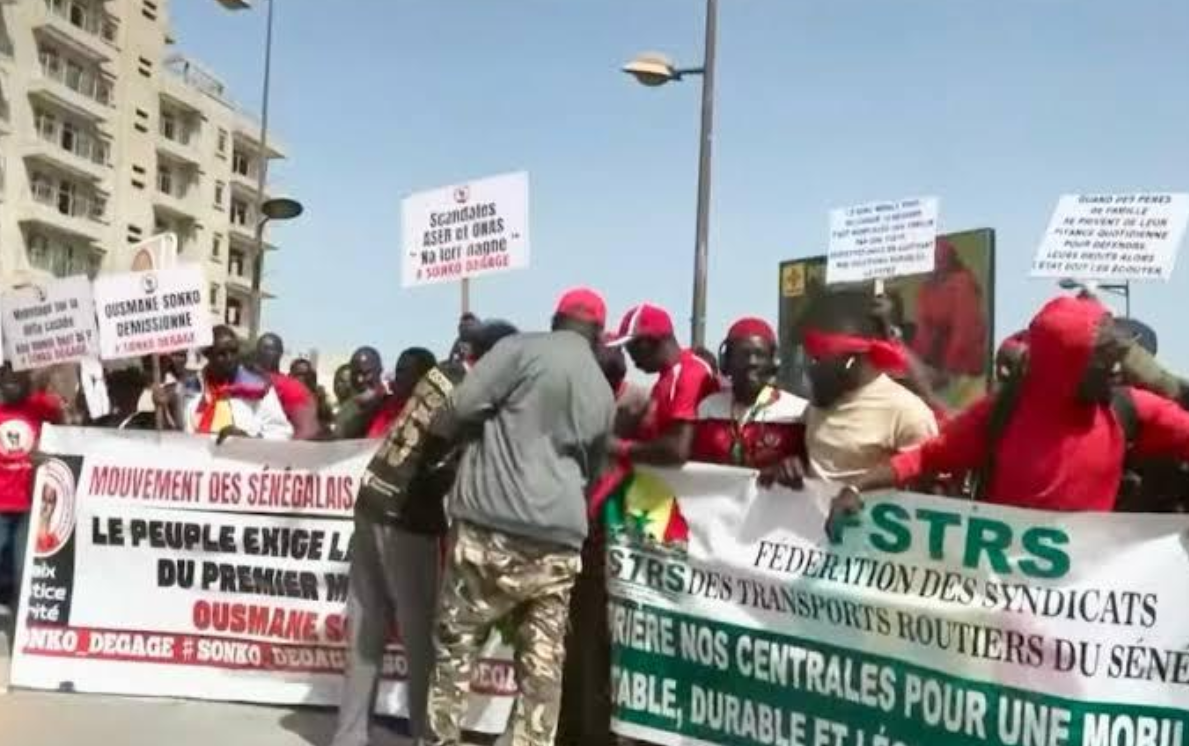
The people of Senegal stand at a pivotal crossroads as a nationwide strike looms large from October 21 to 23, 2026. Called by a coalition of labor unions, the action underscores deep-seated frustrations over unmet government promises, delayed salaries, and deteriorating working conditions. While authorities urge calm and propose further dialogue, their dual approach—alternating between negotiation and legal threats—risks deepening divisions rather than resolving the crisis.
More than wages: A broad agenda of unfulfilled commitments
The G7 union coalition, representing seven major education sector unions, has spearheaded the strike to demand full implementation of an April 16, 2026 agreement. Among their core grievances: unpaid allowances, unresolved administrative cases, and inadequate support for universal diploma training programs. Contract teachers, in particular, face chronic payment delays, administrative bottlenecks, and broken promises regarding mandatory certification—issues that threaten the upcoming 2026–2027 school year, already delayed by October floods.
The broader labor movement, led by the Front syndical pour la défense des travailleurs (FSDT), is amplifying the call for action. Their demands extend beyond education to include improved workplace safety, fair working hours, and compliance with long-standing social agreements. With public services and private sector operations potentially disrupted, the scope of this mobilization threatens to ripple across Senegal’s already fragile economic landscape.
Government response: A balancing act between dialogue and deterrence
In response to the escalating unrest, the government has attempted to position itself as a willing negotiator. On October 15, 2026, Prime Minister Ahmadou Al Aminou Lo emphasized the state’s commitment to tripartite social dialogue under the National Pact for Social Stability. He even proposed a three-month moratorium on strikes to facilitate negotiations—an offer that met with mixed reactions from union leaders.
But beneath the conciliatory tone lies a firm warning. On October 20, authorities emphasized that a single strike notice submitted to one ministry fails to legally cover a general strike spanning public, semi-public, and private sectors. Violations, they cautioned, could lead to salary deductions and disciplinary measures. The day prior, the government reassured citizens of its commitment to maintaining freedom of movement and protecting workers’ right to work.
This contradictory messaging—proclaiming openness while threatening punitive action—reveals the government’s struggle to reconcile economic discipline, public service continuity, and social equity. For unions, however, dialogue without action is no resolution at all. Their strike is not merely a protest; it is an ultimatum. Without visible progress, they insist, the cost of inaction will be felt far beyond the picket lines.
A crisis with political undercurrents
The strike unfolds against a backdrop of intense political fragmentation in Senegal. Disputes over the 2027 budget framework and growing tensions between executive and legislative branches have cast doubt on the government’s ability to present a unified front amid economic hardship. While union demands remain grounded in workplace and social justice, their timing amplifies pressure on an already strained political system.
The upcoming Youth Olympic Games add urgency to the standoff. Authorities are keen to ensure seamless service delivery and project stability ahead of an international event that showcases Senegal on the world stage. Yet unions refuse to be sidelined by such external demands. Their message is clear: the needs of workers cannot be deferred indefinitely.
The crisis, therefore, transcends sectoral disputes. It tests the credibility of state commitments and the resilience of Senegal’s social fabric. Whether the strike serves as a catalyst for reform or deepens institutional alienation may hinge on the government’s willingness to match words with measurable action.
What lies ahead: The path from protest to progress
The success of this strike will ultimately be measured not by its duration, but by its outcome. For students, families, public service users, and business owners, the stakes are immediate. For the government, it represents a defining moment in its relationship with labor and civil society.
Within Senegal’s social contract, trust is built through consistency—not declarations, but action. The next 72 hours could either reopen channels of dialogue or entrench a cycle of mistrust. One thing is certain: Senegal cannot afford to ignore the warning signs. The cost of broken promises is not just financial; it is societal. And in a nation where social stability hinges on mutual respect and accountability, the time to act is now.