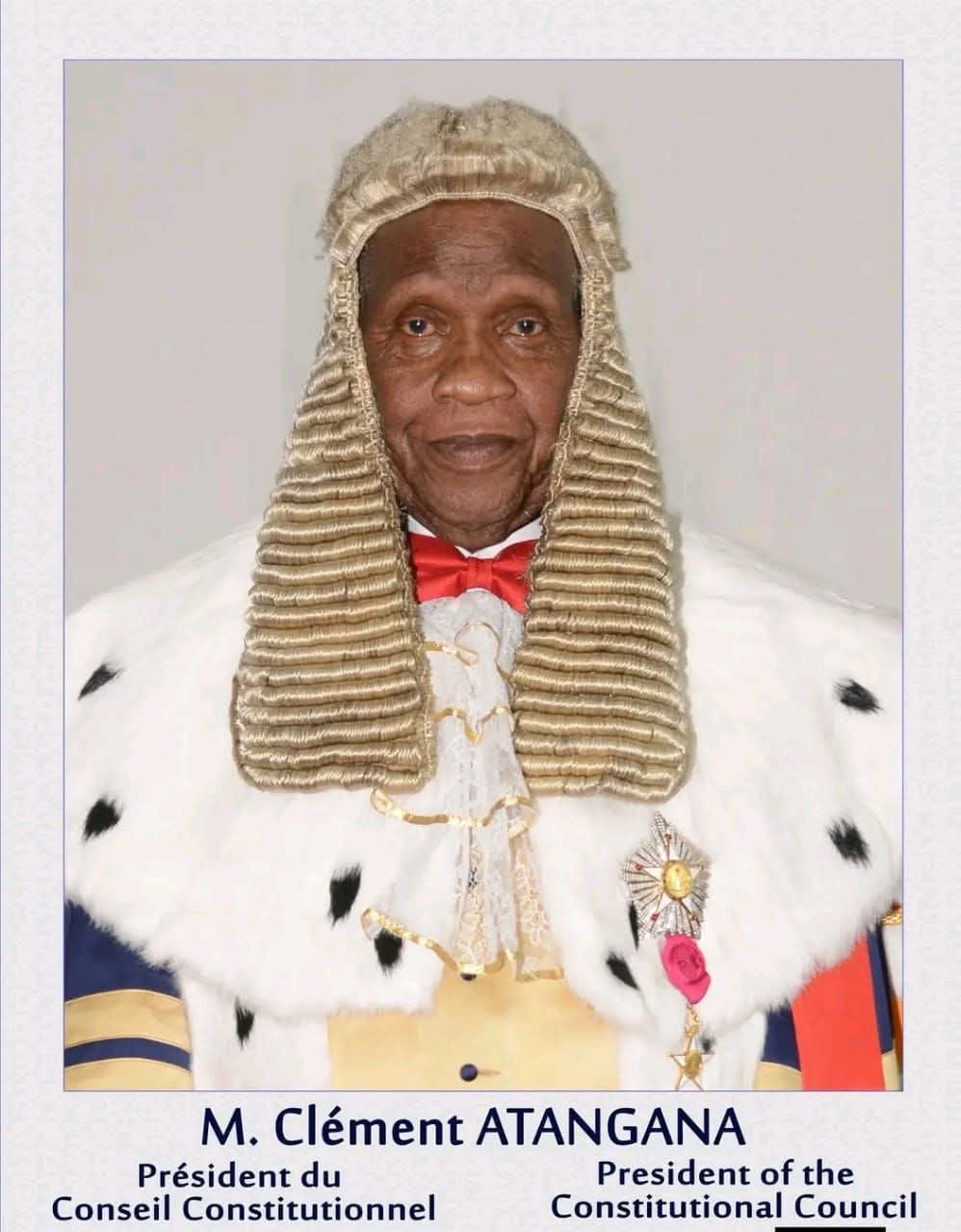
The death of Clément Atangana, the long-serving president of Cameroon’s Constitutional Council, has sent ripples through the country’s political and legal landscape. Atangana, who was evacuated to Paris for medical treatment after falling ill, passed away this morning at the age of 85. His departure leaves a void at the helm of an institution that has been both pivotal and controversial in shaping Cameroon’s electoral outcomes.
A career ending in controversy
Born in Ngomedzap, in the Nyong and So’o division, Atangana rose to the rank of magistrate outside the hierarchy before being appointed to lead the Constitutional Council. His tenure, however, was marked by persistent accusations of partiality, particularly in the handling of electoral disputes. The 2018 presidential election became a defining moment: under his leadership, the council dismissed every petition with the same single word—”irrecevable” (inadmissible). The repetition of this term earned him the nickname “Mr. Irrecevable” among the public, and cemented the perception of the council as an institution aligned with the ruling party, the CPDM.
The impact on public trust and institutions
The consequences of Atangana’s leadership extend beyond his lifetime. For many Cameroonians, the Constitutional Council’s credibility has been severely damaged. The 2018 rulings, seen as a blanket rejection of any challenge to the results, deepened suspicions that the body was not an impartial arbiter but an extension of executive power. This perception has real-world effects: it undermines confidence in the electoral process, discourages legitimate complaints, and weakens the rule of law. Opposition parties and civil society groups have long argued that without a credible constitutional court, future elections—including the upcoming legislative and municipal polls in 2027—risk being marred by disputes that cannot be resolved fairly.
Questions of bias and their fallout
Atangana’s image as a neutral judge was further eroded by a video that circulated after the 2018 results were announced, in which he was seen celebrating with his family and referring to Paul Biya as “your candidate.” The footage fueled claims of partisanship. In 2025, he participated in a meeting of the Nyong and So’o Development Committee, which produced a motion supporting Paul Biya and urging him to run again. Although Atangana later insisted the gathering was apolitical and that he had not taken part in drafting the motion, the damage was done. For many opponents, the episode confirmed their belief that the council was not insulated from political influence.
What comes next for Cameroon’s electoral justice
With Atangana’s passing, Cameroon faces a critical juncture. The appointment of a new president of the Constitutional Council will be closely watched, both domestically and internationally. The decision will signal whether the government intends to restore faith in the institution or maintain the status quo. For citizens and businesses alike, the stakes are high: a credible electoral justice system is essential for political stability, investor confidence, and social cohesion. If the council remains widely seen as a rubber stamp for the ruling party, the repercussions could include increased political tension, reduced civic engagement, and a further erosion of democratic norms. The coming months will reveal whether Atangana’s death marks a turning point or simply a change of figurehead at an institution whose credibility remains deeply contested.