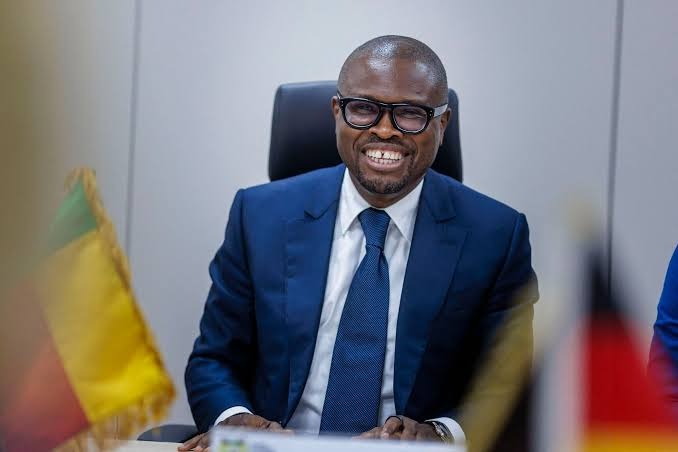
The Benin government has officially completed the raising of €500 million (around 328 billion FCFA) in international bank financing. The landmark operation was made possible by an innovative financial arrangement that combines a guarantee from the African Development Fund (ADF) with a strategic insurance mechanism.
Why this financing matters for ordinary citizens
In a global economic environment where access to international capital remains highly demanding for developing countries, Benin has confirmed its ability to mobilize substantial financial resources on competitive terms. Finalized on 18 September 2026, this 328 billion FCFA international loan marks a new stage in financing the Government Action Programme (PAG). For households, the deal is expected to translate into tangible improvements in daily life, while for businesses it opens the door to new opportunities in key sectors.
How the financial engineering won over the markets
The success of this bank fundraising round rests on credit enhancement engineering carefully prepared by institutional partners. To mitigate the risk perceived by private investors and lenders, the operation relied on:
- A partial credit guarantee from the African Development Fund (ADF), the concessional window of the African Development Bank Group (AfDB).
- A second-loss insurance policy provided by the insurance subsidiary of the Islamic Development Bank Group (IsDB).
This dual institutional protection allowed Benin to fully reassure international financial markets, extend the repayment period to 12 years and obtain highly attractive interest rates. As the AfDB pointed out, this type of transaction demonstrates the full potential of public guarantees to mobilize private capital on a large scale for African economies.
Education, health and infrastructure: where the 328 billion FCFA will go
This 328 billion FCFA envelope will be injected directly into high-impact social and economic projects. According to the strategic guidelines adopted, priority investments will target:
- Basic social services: improving access to drinking water, modernizing health infrastructure and strengthening the education system.
- Sustainable and structural development: renewable energy projects, agricultural modernization and the construction of transport infrastructure.
- Economic inclusion: creating sustainable jobs, with a particular focus on youth integration and women’s empowerment.
A strong signal for Benin’s credibility
This is not a first for the country. After a successful trial run in 2023 under a similar scheme, Benin repeated the experience in 2026. This consistency confirms the credibility of Benin’s signature on the international financial scene and proves the effectiveness of its macroeconomic reforms. By mastering these complex financial tools, Benin ensures sustainable access to international capital markets, which are essential to support its economic transformation momentum.
You may also like
Burkina Faso: how four years under Ibrahim Traoré reshaped the lives of millions
What the Bucharest resolutions mean for Benin’s workers, businesses and public finances
Niger’s UN sovereignty show: the SOMAÏR and SONIDEP collapse hitting every household
South Africa’s gun violence crisis deepens as 27 killed in Johannesburg and Cape Town shootings
Burkina Faso: shrinking civil service payroll exacts a heavy toll on households and local economies