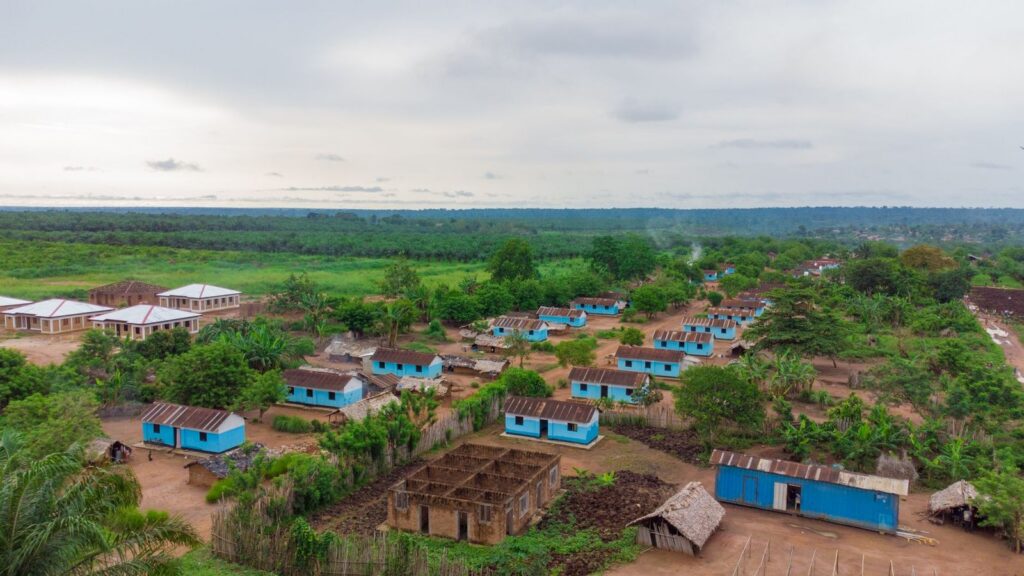
In the eastern reaches of the Democratic Republic of the Congo, the Ituri province has once again been struck by brutal violence. At least thirteen civilians lost their lives in a premeditated nighttime assault, while an entire village was reduced to ashes by armed assailants believed to be affiliated with the Allied Democratic Forces (ADF), a militant group originally from Uganda that has pledged allegiance to the Islamic State. Local authorities confirmed the attack, which fits a disturbing pattern of violence that has plagued rural communities in the region for years, despite the presence of government security forces.
Another deadly strike in a long-suffering region
The attackers struck under cover of darkness, targeting unarmed residents before systematically torching homes. Nearly every structure in the village was obliterated, forcing survivors to flee with nothing but the clothes on their backs. The tactics employed—swift raids on civilian targets, systematic arson, and the use of edged weapons to conserve ammunition—mirror the hallmarks of ADF operations, which have terrorized the northeast of Congo for over a decade.
Ituri, a province bordering Uganda and South Sudan, remains a hotspot of insecurity. The ADF threat is compounded by violent clashes between Hema and Lendu militias, as well as the lingering presence of local armed factions that profit from artisanal mining activities. Since May 2021, the province has been under a state of siege, placing civilian administration under military control—yet the strategy has yielded little improvement in security conditions.
The Shujaa operation struggles against a resilient enemy
Since late 2021, the Congolese Armed Forces (FARDC) have collaborated with Uganda’s People’s Defence Forces (UPDF) in a joint initiative called Operation Shujaa, aimed at dismantling ADF strongholds in North Kivu and Ituri. Nearly four years into the campaign, the results remain under scrutiny. While several rebel bases have been dismantled, the fighters have dispersed into smaller, mobile cells, shifting their tactics to hit isolated villages rather than confront military convoys.
This diffuse warfare complicates countermeasures. The ADF leverages the dense equatorial forests, the porous Uganda-Congo border, and the near-total absence of communication infrastructure to strike and vanish. Each attack fuels political unrest in Kinshasa, where opposition voices criticize the government’s failure to safeguard civilians despite substantial military deployments and the gradual withdrawal of the United Nations Stabilization Mission in the DRC (MONUSCO), initiated in 2024.
A security puzzle with no clear solution
The UN’s phased withdrawal has left a security void that the FARDC has struggled to fill. In neighboring South Kivu and North Kivu, the resurgence of the M23 rebel group—widely reported as receiving support from Rwanda—has diverted the bulk of Congo’s military resources. Ituri, once a secondary concern, now faces escalating attacks that have grown both in frequency and intensity in recent months.
The humanitarian fallout is dire. Hundreds of thousands of displaced people are crammed into makeshift camps around Bunia, the provincial capital, where aid agencies warn of severe shortages in food and medical supplies. The recurring destruction of entire villages, as seen in the latest attack, only deepens the crisis, swelling the ranks of the homeless and crippling rural economies.
For Kinshasa, the stakes are high. Stabilizing Ituri is not just a military objective but a test of the central government’s credibility, the security of trade corridors with East Africa, and the peaceful exploitation of one of the world’s richest mineral reserves. Until the ADF’s operational capacity is neutralized, investors in mining and logistics will remain hesitant, depriving the province of the resources it desperately needs to rebuild. While the attack’s toll may rise in the coming hours, the human cost is already catastrophic.
You may also like
Senegal’s 2026 budget revision: how the deficit surge hits households, businesses and the Pastef majority
Benin’s €544,042 UNAIDS funding: the tangible consequences for patients, communities and the economy
Senegal-Azerbaijan pact in New York: what it means for jobs, trade and cooperation
What Luxembourg’s 9.8 billion FCFA port training pledge means for Benin’s workers and businesses
Burkina Faso: shrinking civil service payroll exacts a heavy toll on households and local economies