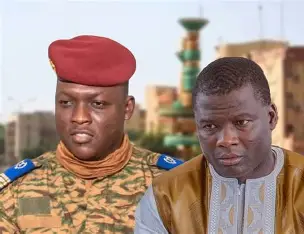
The political landscape in Burkina Faso continues to prompt scrutiny, particularly regarding the inner workings of the most critical decision-making circles. In recent weeks, the prolonged absence of Commander Oumarou Yabré, who oversees intelligence services, has sparked extensive debate among political figures and on social media platforms. While no formal explanation has been provided for his discreet withdrawal from public view, this development coincides with heightened concerns over security governance.
Observers have raised questions about potential shifts in the allocation of responsibilities within the security apparatus. Some speculate that Captain Ibrahim Traoré may be assuming a more direct role in handling highly sensitive matters. However, these claims remain unverified by official Burkinabè sources and should be interpreted with caution.
In systems where security challenges dominate the agenda, intelligence services play a pivotal role in shaping decision-making processes. Their primary function involves gathering, analyzing, and disseminating critical information to enable authorities to preempt threats and adjust responses accordingly. Any perceived alteration in their structure or operational hierarchy inevitably draws attention, even in the absence of confirmed changes.
Context and consequences of Commander Yabré’s absence
The notable absence of Commander Oumarou Yabré during the Tabaski celebrations has further fueled speculation. While some analysts attribute it to routine operational constraints or a deliberate choice for discretion—common in intelligence circles—others interpret it as a sign of underlying shifts in power dynamics. Without an official statement, definitive conclusions remain elusive.
Historical precedents indicate that periods of heightened security pressure often lead leaders to prioritize certain strategic matters more closely. If such a trend is occurring, it does not necessarily imply discord among officials. Instead, it could reflect coordination needs, extraordinary circumstances, or an effort to centralize decision-making processes.
At this juncture, publicly available information does not substantiate claims of strained relations between Ibrahim Traoré and Oumarou Yabré. No official announcements have been made regarding potential reorganizations within security services or changes in the roles of key figures in the institutional framework.
Navigating uncertainty in a climate of speculation
Given the rapid circulation of rumors, caution remains paramount. Verified facts remain scarce, and conjecture cannot replace substantiated information. Any meaningful developments within the country’s institutions should be assessed based on officially confirmed details or well-documented evidence.