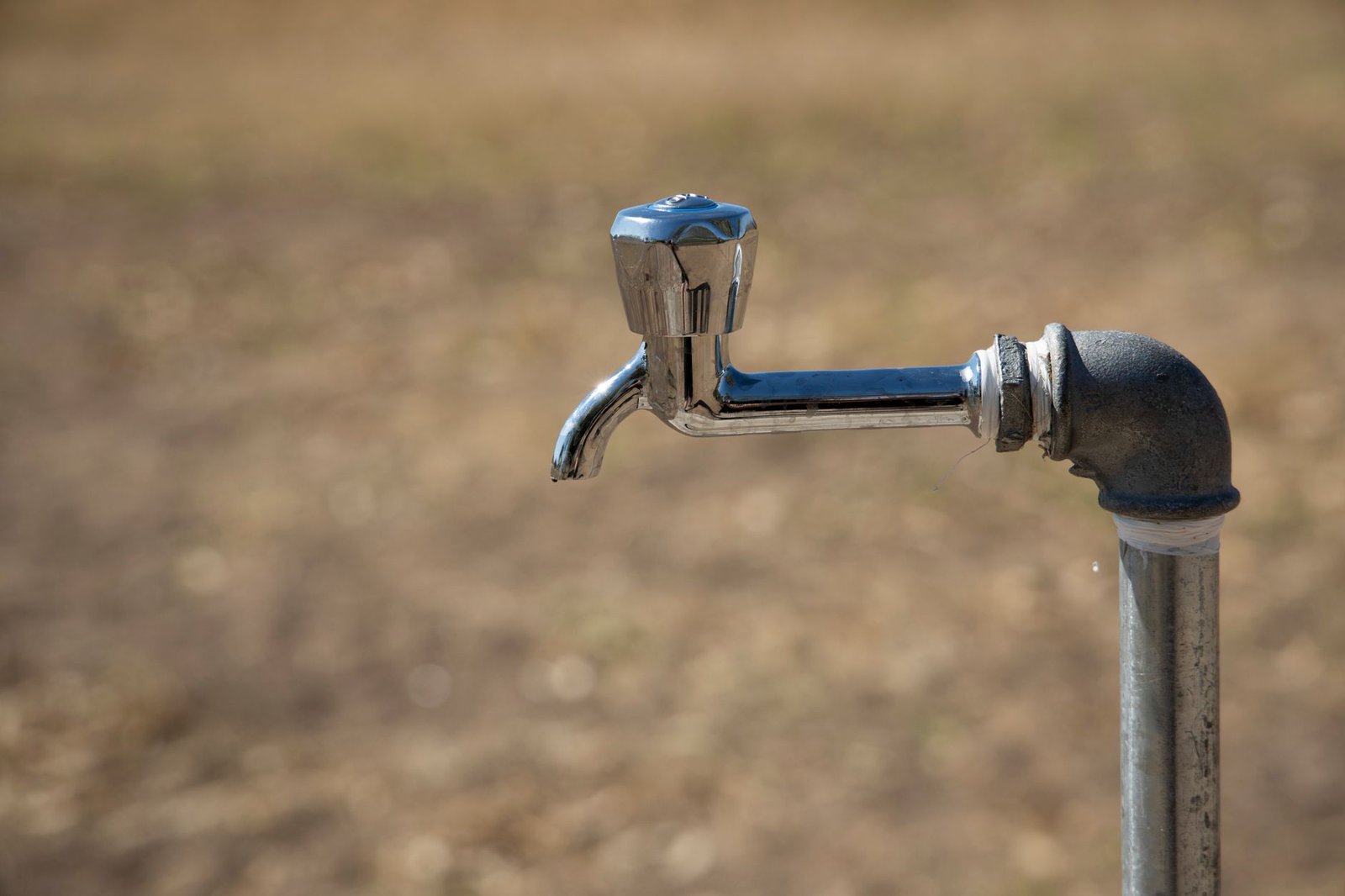
Libreville is grappling with an unprecedented water shortage, forcing authorities to declare a hydric emergency across the capital and its surrounding areas. Water taps have run dry for consecutive days, residents queue for hours at the few remaining distribution points, and the cost of resold water in plastic containers has skyrocketed. In markets and streets, frustration boils over—with comparisons drawn between the scarcity of water and the difficulty of obtaining a 10,000 CFA franc note, underscoring the daily hardships faced by families and communities.
The crisis stems from two converging factors. First, an unusually weak rainy season has drastically reduced water levels in reservoirs and extraction sites that supply the Greater Libreville area. Second, the aging infrastructure—stretching back decades—suffers from severe leakage, outdated treatment plants, and inefficient distribution networks. Together, these issues have pushed the system to the brink, leaving it vulnerable even to minor climate fluctuations.
An aging water network threatens Gabon’s resilience
The water crisis in Libreville shines a spotlight on Gabon’s broader challenges in managing critical infrastructure. Historically managed by the Société d’énergie et d’eau du Gabon (SEEG), water distribution has been plagued by inconsistent policies—marked by repeated government interventions without a clear, long-term investment strategy. With the population of Greater Libreville exceeding 700,000, demand has outpaced supply, and severe droughts now trigger targeted water cuts in peripheral neighborhoods.
The political transition following the August 2023 regime change has placed this issue at the forefront of national priorities. The current leadership faces a narrow window to deliver tangible results and restore public confidence. The declaration of a hydric emergency is a strategic move, enabling rapid mobilization of public funds, equipment requisition, and interministerial coordination. However, lasting solutions will require a robust, multi-year investment program—not just short-term fixes.
Social unrest grows as crisis deepens
On the ground, residents are improvising solutions. Government-hired water tankers make sporadic rounds, municipal authorities distribute water in batches, private boreholes are tapped, and resellers trade water by the jerrycan. Businesses—hotels, restaurants, and hospitals—are also feeling the pinch. Hospitals, in particular, face heightened risks as water shortages compromise hygiene standards and raise fears of waterborne disease outbreaks.
Officials point to immediate measures: repairing treatment plants, importing pumping equipment, and tapping groundwater reserves. Yet the financial burden of recovery remains daunting. International partners, including the African Development Bank and the World Bank, have previously funded water projects in Greater Libreville. However, renewed support will depend on transparent governance and a clearly defined role for the national operator.
Libreville’s crisis reflects a wider regional challenge
Gabon is not alone in facing this water crisis. Cities like Kinshasa, Brazzaville, Douala, and Abidjan have all experienced recurring water shortages due to rapid urban growth, underinvestment, and worsening climate variability. For Gabon—a country long seen as water-rich because of its dense forests—this emergency is a stark reality check.
Resolving the crisis will require three key actions: restoring existing infrastructure, diversifying water sources, and reforming the institutional framework governing public water services. With political transitions under way, time is of the essence. Failure to act decisively could fuel social unrest and influence future electoral outcomes. The root cause—low rainfall and deteriorating systems—demands urgent, coordinated action.