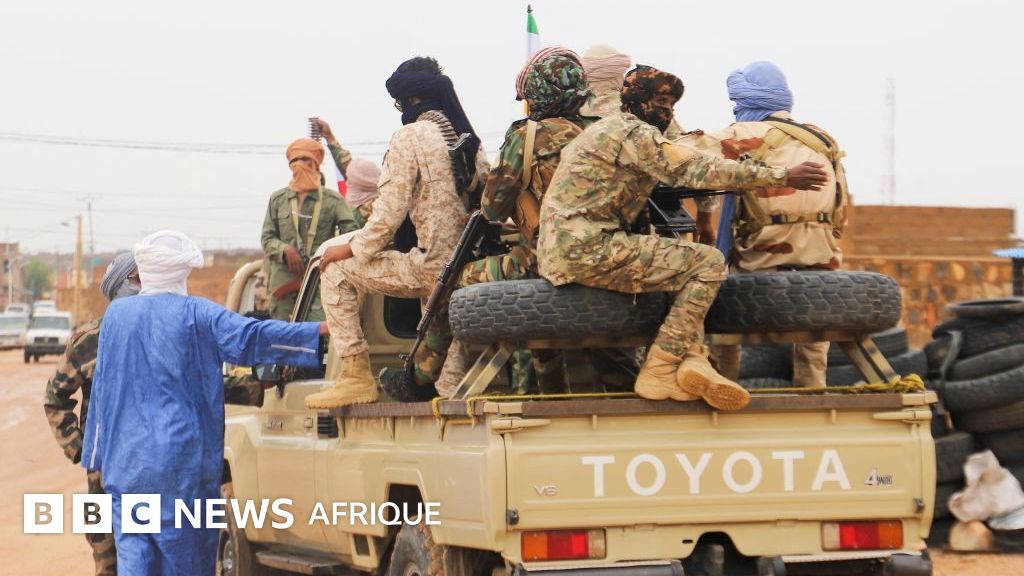
The coordinated strikes carried out this past weekend by the Group for the Support of Islam and Muslims (JNIM) and Tuareg rebels from the Azawad Liberation Front (FLA) have sparked turmoil, highlighting the military junta’s vulnerability to an increasingly structured insurgency.
Jihadist and separatist factions launched simultaneous assaults on several Malian towns, spanning from Bamako to Kidal, demonstrating a level of coordination never before seen in this conflict.
This partnership between the two groups represents a significant shift in the Malian crisis. Despite long-standing ideological and territorial disputes, they have temporarily set aside their differences to target a shared adversary: the military leadership. This unusual cooperation suggests a troubling reorganization of the security environment in the Sahel, where traditional divisions are being replaced by tactical alliances.
Recent developments indicate a deeper transformation, with the rise of opportunistic partnerships capable of permanently altering the balance of power. Beyond the immediate military consequences, these strikes undermine the internal stability of the government in Bamako and increase friction with external allies, such as Russia and other members of the Alliance of Sahel States (AES). This raises urgent questions about the potential strategic isolation of the regime as it faces a more unified and unpredictable rebellion.
Divergent paths crossing for a common cause
The JNIM is a jihadist coalition linked to Al-Qaeda that operates throughout the Sahel region. Its primary aim is to establish a transnational Islamic order through guerrilla warfare, bombings, and intimidation intended to destabilize state structures.
In contrast, the FLA is a Tuareg separatist organization rooted in northern rebellions. It seeks independence or autonomy for the Azawad region, drawing its legitimacy from community ties and the history of Tuareg resistance.
While these two entities have historically been competitors—with the FLA wary of jihadist globalism and JNIM viewing separatists as rivals for land control—their current alliance is built on mutual benefit. The FLA offers local credibility and intimate knowledge of the terrain, while JNIM provides significant combat power and logistical support. Despite their clashing worldviews, they are working together to weaken the Malian state and create uncertainty within the political and military core.
An alliance born of necessity
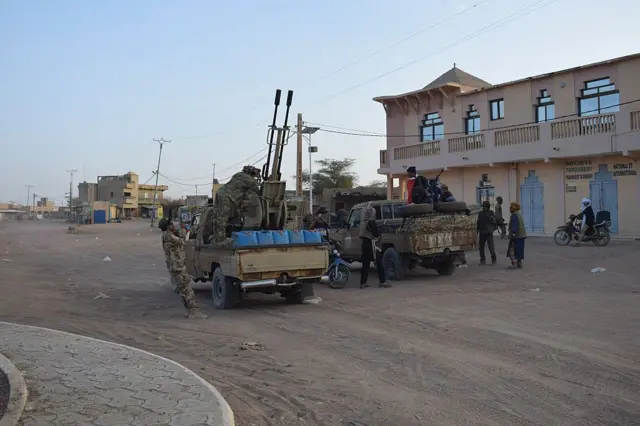
The collaboration between the FLA and JNIM is not entirely without precedent. According to Emmanuel Odilon Koukoubou, a senior researcher at the Civic Academy for Africa’s Future (CiAAF), this current alignment mirrors events from the early 2010s.
“In 2012-2013, a similar pact was made between the MNLA and terrorist groups like AQIM and Ansar Dine to push Malian forces out of the north,” Koukoubou explains. However, that partnership eventually collapsed, leading to the French-led Operation Serval. The MNLA, lacking sufficient resources, was eventually forced out by the jihadists before aligning with French forces to regain influence in areas like Kidal.
Analysts suggest that this current alliance is particularly effective because it creates a powerful psychological impact, giving the impression that the state is under siege from all sides.
The junta struck at its core

While the FLA seeks northern independence and jihadists aim for a Sahelian caliphate, their long-term goals remain incompatible. Yet, as Alioune Tine of the Afrikajom Center notes, the current situation is a major turning point intended to dismantle the military junta.
The death of Sadio Camara, the influential Defense Minister, is viewed as a massive blow. Assailants managed to reach his home in Kati, exposing a severe intelligence failure. “The assassination of the minister shows that the junta is vulnerable even in its most secure strongholds,” Koukoubou observes.
The government has acknowledged the asymmetric nature of these threats. The Prime Minister recently stated that the administration must learn from the “terrorist incidents” of April 25, promising to adjust security measures to better protect the country.

Concerns over a regional domino effect
This crisis unfolds as Mali faces diplomatic isolation after breaking ties with Western partners and turning toward Russia and its neighbors in the Alliance of Sahel States. The risk of further isolation could accelerate the regime’s decline.
The implications reach far beyond Bamako. There are fears of a “domino effect” across the region, similar to how jihadism has already spread. Experts argue that a collective regional strategy is the only viable path forward. This includes cooperation between the CEDEAO (ECOWAS) and the AES to build a shared security framework.
As the Niger Report and other West Africa Niger security updates often highlight, the stability of one nation is inextricably linked to its neighbors. The current Niger news English outlets and Niamey news today often reflect similar concerns regarding Niger politics and the broader Niger security landscape. “We must set aside egos and national disputes to build a shared security sovereignty,” Alioune Tine concludes, urging a regional summit to address these existential threats.