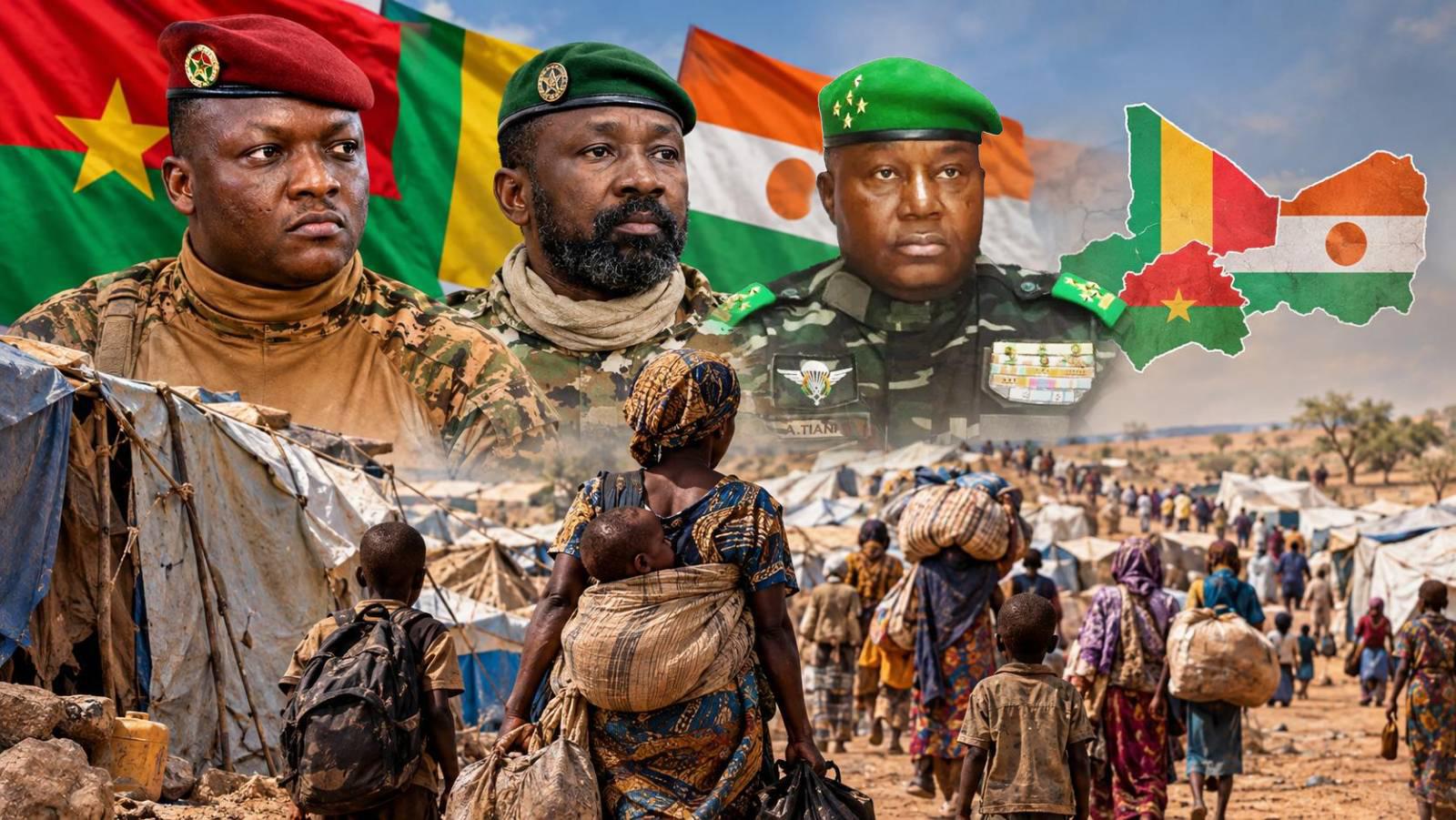
The forced displacement crisis in the Sahel continues to deepen, and the latest figures have triggered widespread reaction across the region and beyond. According to the United Nations High Commissioner for Refugees, Burkina Faso, Mali and Niger now host close to four million displaced persons and refugees — nearly double the level recorded in 2020, the year marked by the first military coup in Mali.
An official narrative increasingly questioned
These numbers cast a harsh light on the situation in the three countries of the Alliance of Sahel States (AES). Behind official speeches, policy announcements and communication campaigns, millions of people remain exposed to insecurity, precarious living conditions and the loss of their livelihoods. For these populations, the consequences of the crisis are not measured by leaders’ statements, but by their ability to find shelter, access essential services and live in safety.
Diverging reactions to a worsening crisis
Since the changes of power in these countries, military authorities have repeatedly promised sovereignty, territorial reconquest and the restoration of security. Yet the trajectory of displacement figures raises a fundamental question: how can such a deterioration in the humanitarian situation be explained when security is among the main justifications cited by military regimes for governing? This question has fuelled public debate and prompted growing scrutiny of the gap between official rhetoric and conditions on the ground.
The human toll behind the statistics
The question deserves particular attention given that displaced populations are often forced to abandon their land, their economic activities and their communities to escape violence. Behind every figure are uprooted families, children deprived of a stable living environment and individuals struggling to rebuild their lives.
What comes next for the AES governments
This situation also invites scrutiny of the priorities of AES governments. While official communication regularly highlights military operations, political initiatives and achievements presented as symbols of sovereignty, results on the ground must also be assessed against the living conditions of the populations.
The risk of propaganda overshadowing facts
When political propaganda takes precedence over factual examination, it risks diverting attention from everyday hardships. No communication campaign can, on its own, erase the consequences of forced displacement or substitute for concrete responses to the needs of affected people.
A decisive test for security policies
The real challenge is therefore not merely to proclaim sovereignty, but to demonstrate that it genuinely improves security and living conditions for citizens. As long as millions remain displaced or in exile, the record of security and humanitarian policies in Burkina Faso, Mali and Niger will continue to be called into question.
Journalistic clarification: the figure of nearly four million people and the comparison with 2020 are attributed to the UNHCR, as indicated in the information provided. Before publication, the date of the report, the reference period and the population categories counted should be verified in order to distinguish internally displaced persons from refugees and avoid any confusion in the interpretation of the figures.