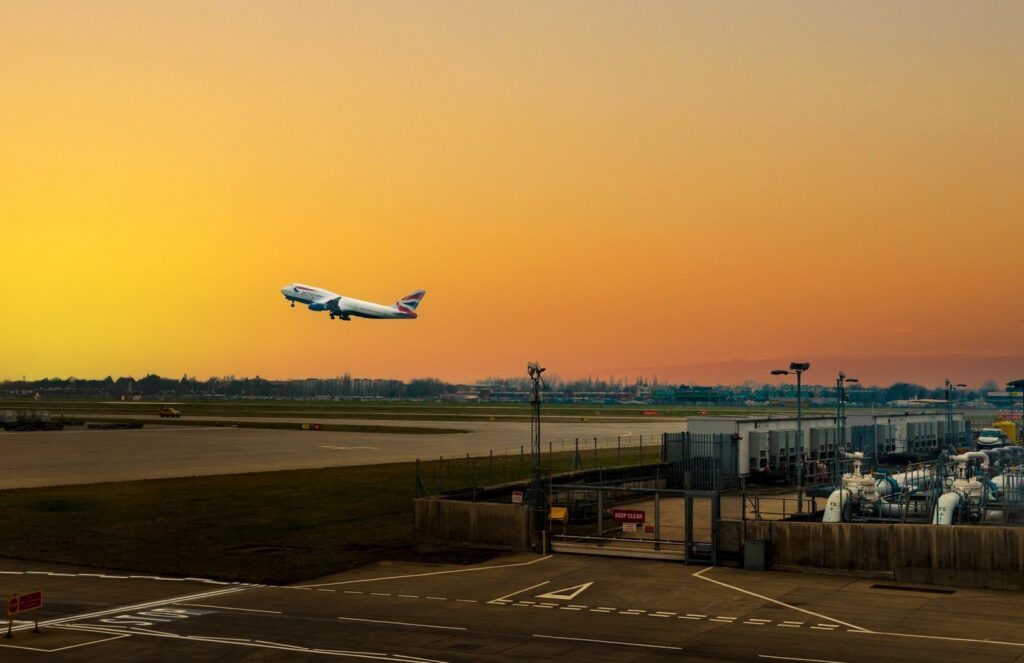
The United Kingdom has quietly tightened its airport transit rules for Senegal and eight other West African nations, and the practical consequences are already being felt by ordinary travellers, business operators and diaspora families. Under the new directive, Senegalese passport holders must now obtain a Direct Airside Transit Visa even when they never leave the international zone of a British airport and are simply changing planes at Heathrow, Gatwick or another UK hub. The change took effect without a meaningful transition period, leaving thousands of passengers scrambling to reorganise journeys that until recently required nothing more than a boarding pass and a few hours of patience.
For a country that relies heavily on air links to reach North American and Asian markets, the measure lands as a direct hit on mobility, trade and family life. It also raises uncomfortable questions about how London’s immigration priorities are reshaping everyday travel for West Africans.
What the new British transit requirement actually means
The Direct Airside Transit Visa is not a simple formality. Affected nationals must apply in advance, pay the associated fee, book a biometric appointment and wait for a decision that can take longer than the trip itself. The document is required even if the layover lasts only a couple of hours and the traveller remains airside the entire time.
Eight other West African countries are on the same list, but Senegal’s inclusion stands out because of the volume of traffic its citizens generate through London. Business executives, students, consultants and families visiting relatives in Canada or the United States routinely route through British airports, often because fares are lower or connections more convenient.
British authorities typically justify such extensions on migration-security grounds, citing asylum claims lodged during transit or attempts to cross the border irregularly. The specific data behind Senegal’s addition has not been published in detail, but the move fits a broader tightening of flows from sub-Saharan Africa that has been underway for months.
Why the timing is particularly awkward for Dakar
Senegal is in the middle of a wide-ranging effort to reposition its economy and diplomacy under President Bassirou Diomaye Faye. That strategy depends on moving skilled workers, students and private operators quickly between Dakar and major global financial centres. Adding a consular barrier in London makes routes to Washington, Toronto, Ottawa or Seoul more expensive and more complicated whenever they pass through the UK.
The decision also sits awkwardly with the partnership rhetoric London has promoted across Africa since Brexit. British officials have hosted investment summits designed to present the City as a leading partner alongside Paris, Beijing and Gulf capitals. A new visa wall sends a different signal to West African chancelleries, including those within the Economic Community of West African States, some of which may now weigh reciprocal measures for British visitors.
The real-world costs: higher fares, longer delays, lost business
The most immediate effects are being felt by West African communities in Canada and the United States. Many families rely on London connections to reach Dakar, Abidjan, Accra or Lagos, frequently choosing those routes for price reasons. A transit visa adds a direct cost, extends preparation time and pushes some travellers toward Paris, Amsterdam, Brussels or Istanbul, where transit regimes remain more flexible for West African passports.
British carriers are exposed too. If traffic shifts to continental European or Middle Eastern hubs, London’s position on the lucrative West Africa–North America corridor weakens. Emirates, Turkish Airlines and Ethiopian Airlines, already strong on these routes, could absorb passengers discouraged by UK bureaucracy.
There is also a diplomatic dimension. The decision was taken unilaterally, without formal consultation with the governments concerned. Dakar and its neighbours are expected to review their options in the coming weeks, from formal protests to regulatory adjustments for British business visitors. The measure is already in force.
What to watch next
The coming weeks will show whether Senegal and its regional partners coordinate a response or treat the issue bilaterally. Either way, the practical burden falls on travellers who now face higher costs, longer planning times and fewer convenient routes to the destinations that matter most to them.
You may also like
AES currency delay: economic ripples for households and businesses
Radio frequencies in Côte d’Ivoire: what the AIGF’s spectrum control really means for Ivorians, businesses and the economy
How Burkina Faso’s phantom armored vehicle program drains resources and erodes public trust
How Benin’s AEO customs status is reshaping export economics for local businesses
Northern Niger’s power and water deficits: the tangible toll on livelihoods under Tiani