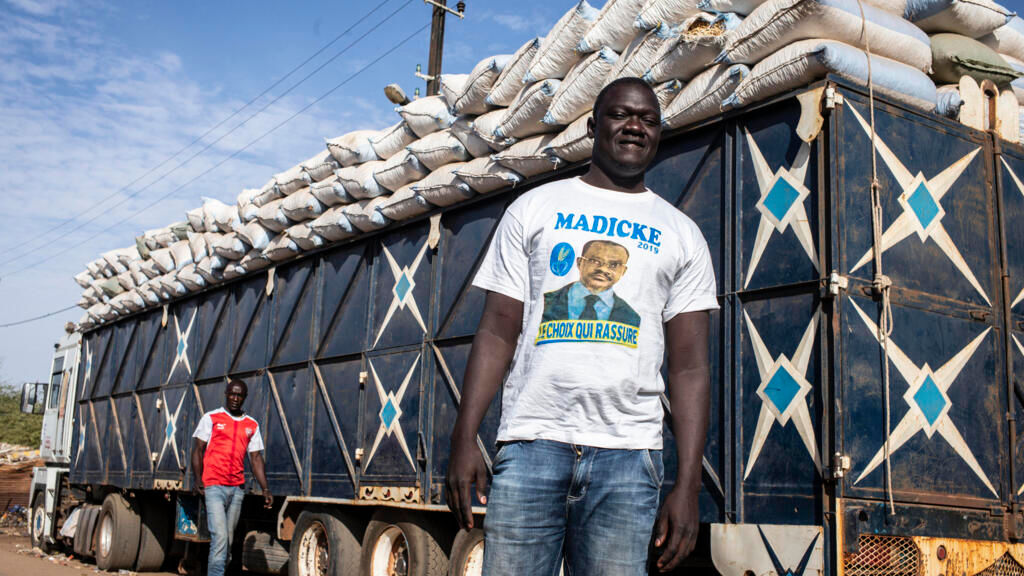
truckers push for smoother border crossings between Senegal and Mali
Long lines of trucks stretching nearly 15 kilometers have become a common sight at the Senegal-Mali border crossing near Moussala. Drivers face mounting delays and harsh conditions as they wait to clear customs, prompting transport operators to demand urgent action to improve fluidity on the Dakar-Bamako trade route.
Traffic congestion and rising costs
Daouda Singui Sarr, director of promotion and assistance at Senegal’s Conseil sénégalais des chargeurs (Cosec), highlighted the severe challenges plaguing the sector. « The delays at the border are causing transit times to balloon, leading to significant additional costs for transporters. Beyond the financial burden, drivers are enduring dire conditions—especially during the rainy season, when basic amenities are scarce », he explained.
The surge in traffic, driven in part by booming mining activities, has overwhelmed existing infrastructure. In response, authorities have already expanded staffing at Kidira to speed up processing. « Why not replicate the modern truck park model developed at Kidira in Moussala? » Sarr suggested, pointing to the need for scalable solutions.
Urgent measures and local coordination
With no signs of slowing, transport leaders are urging immediate intervention. Authorities are now considering emergency measures, including temporary infrastructure upgrades and enhanced coordination with border agencies, to alleviate congestion. The goal: restore efficiency to a critical corridor that supports regional trade and economic ties.
Regional trade at a crossroads
The Dakar-Bamako axis is a lifeline for West African commerce, linking Senegal’s ports to landlocked Mali. As trade volumes rise, so do the stakes. Improving border operations isn’t just about reducing wait times—it’s about safeguarding supply chains, cutting costs for businesses, and ensuring the livelihoods of thousands of drivers and logistics workers who depend on this route.
You may also like
Air Sénégal suspends all Dakar-Paris cabin crew amid parcel-carrying probe
Moussa Kaka’s disappearance in Niger: the far-reaching consequences for citizens, the press and West Africa’s economy
Lyon’s goalless stalemate with Chelsea: the real-world fallout for fans, clubs and the women’s game
Eastern DRC peace mediation: what the latest Tshisekedi letter to Gnassingbé means for civilians and local businesses
Mali: JNIM ambush on Russian Africa Corps convoy near Niono — what it means for civilians and local trade