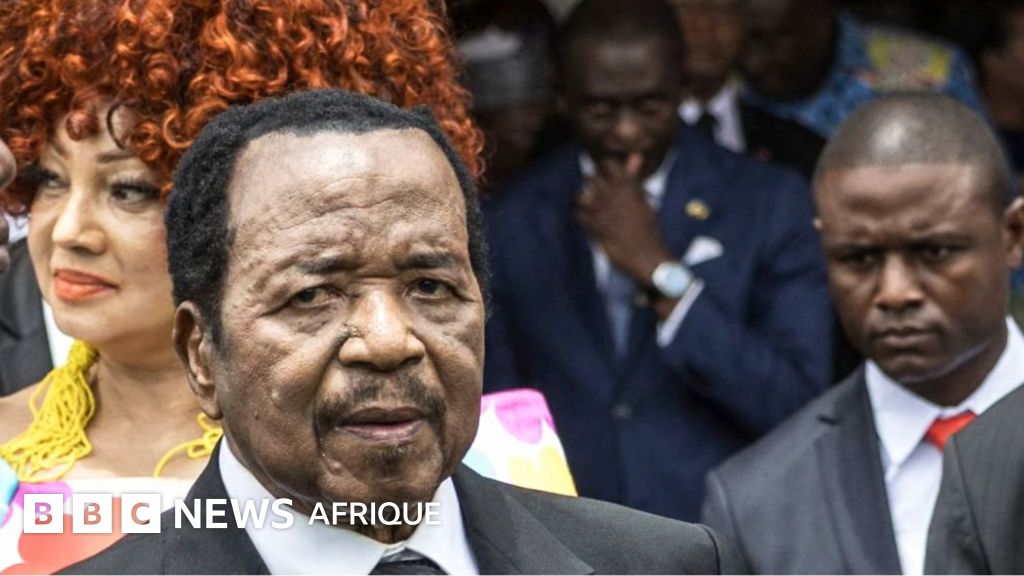
Crédit photo, AFP via Getty Images
Cameroon’s long-serving President Paul Biya has initiated a significant military reshuffle, appointing new officers to pivotal roles and promoting five colonels to the rank of brigadier general. This move comes as public apprehension mounts over the 93-year-old leader’s extended absence from the nation, having been out of the public eye for nearly two months.
Such strategic adjustments within the armed forces are not unprecedented under the Biya administration, often occurring during periods of heightened public scrutiny or perceived governmental vulnerability.
Historical context of military adjustments
The Cameroonian government has a history of reconfiguring its military leadership in response to regional and domestic pressures. Following an unexpected coup in neighboring Gabon three years ago, which saw the ousting of the Bongo dynasty and sent shockwaves across the continent, Cameroon promptly revised its military command structure. Similarly, ahead of his controversial bid for an eighth presidential term in last year’s elections, President Biya undertook another significant reshuffle of high-ranking army officials. More recently, in June, several members of the defense and security forces received promotions to higher ranks.
Presidential actions from abroad
The latest military appointments were made through distinct decrees issued by President Biya on Monday from Geneva, Switzerland. He departed Cameroon on June 7 for what his office described as a “brief private stay,” yet his absence has now stretched to nearly 60 days. This prolonged period away has sparked considerable debate, particularly on social media platforms, with many Cameroonians criticizing the lack of transparency regarding his activities and the indefinite nature of his overseas trip.
Despite his absence, President Biya has continued to govern, signing various decrees, including authorizations for his government to secure loan agreements with international financial institutions. However, promises made after last year’s elections to form a new government remain unfulfilled, and the position of Vice-President, established last April, continues to be vacant.
Health speculations and official responses
President Biya’s extended stay abroad has reignited speculation about his health, a recurring topic in Cameroonian political discourse. While the government has consistently refuted reports of the head of state being hospitalized, press freedom organizations expressed outrage two years ago when Cameroonian media outlets were reportedly prohibited from reporting on Biya’s health status.
René Emmanuel Sadi, Cameroon’s Communication Minister, affirmed in an interview that the president is alive and actively working from Geneva, dismissing opposition claims that the nonagenarian leader’s absence constitutes a vacancy at the head of state. He assured the public of Biya’s imminent return to the country.
Conversely, Mamadou Mota, Vice-President of the opposition CRM party, contends that President Biya’s prolonged absence has created a “flagrant institutional vacuum” in Cameroon. He asserted last month, “Executive power is exercised at the heart of the nation, not through smoke signals or telepathy from hotel suites across the world.”
You may also like
Niger’s August mutiny: the fallout, the unanswered questions, and what lies ahead
Benin’s CCI budget for 2027 sparks debate: what the 6.6 billion FCFA plan means for businesses
Bambali agro park: what the launch means for Sédhiou and Senegal
Senegal’s palm oil deal with Indonesia: reactions, debate and what happens next
Burkina Faso’s militarisation debate: what the fallout means for displaced citizens