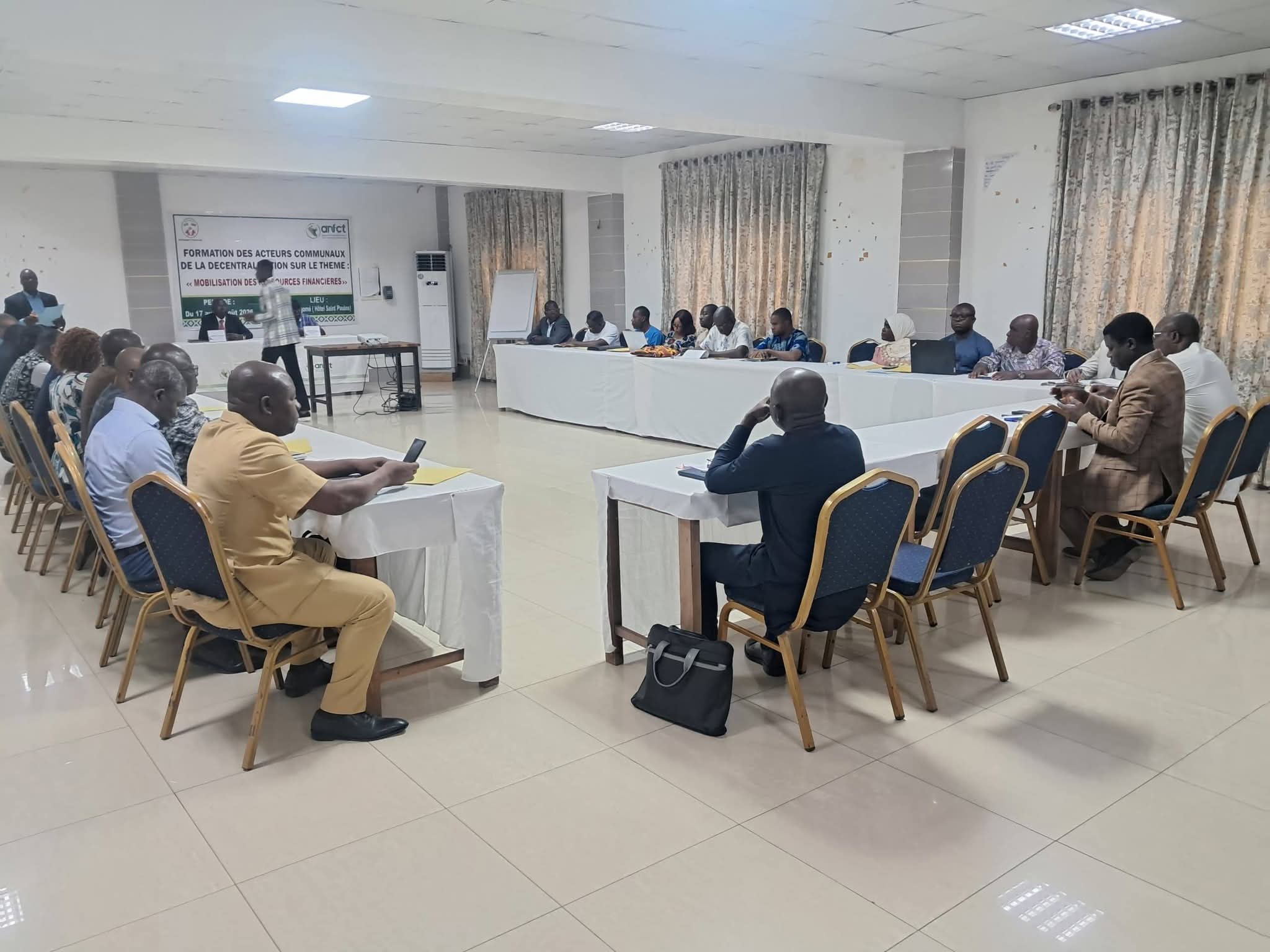
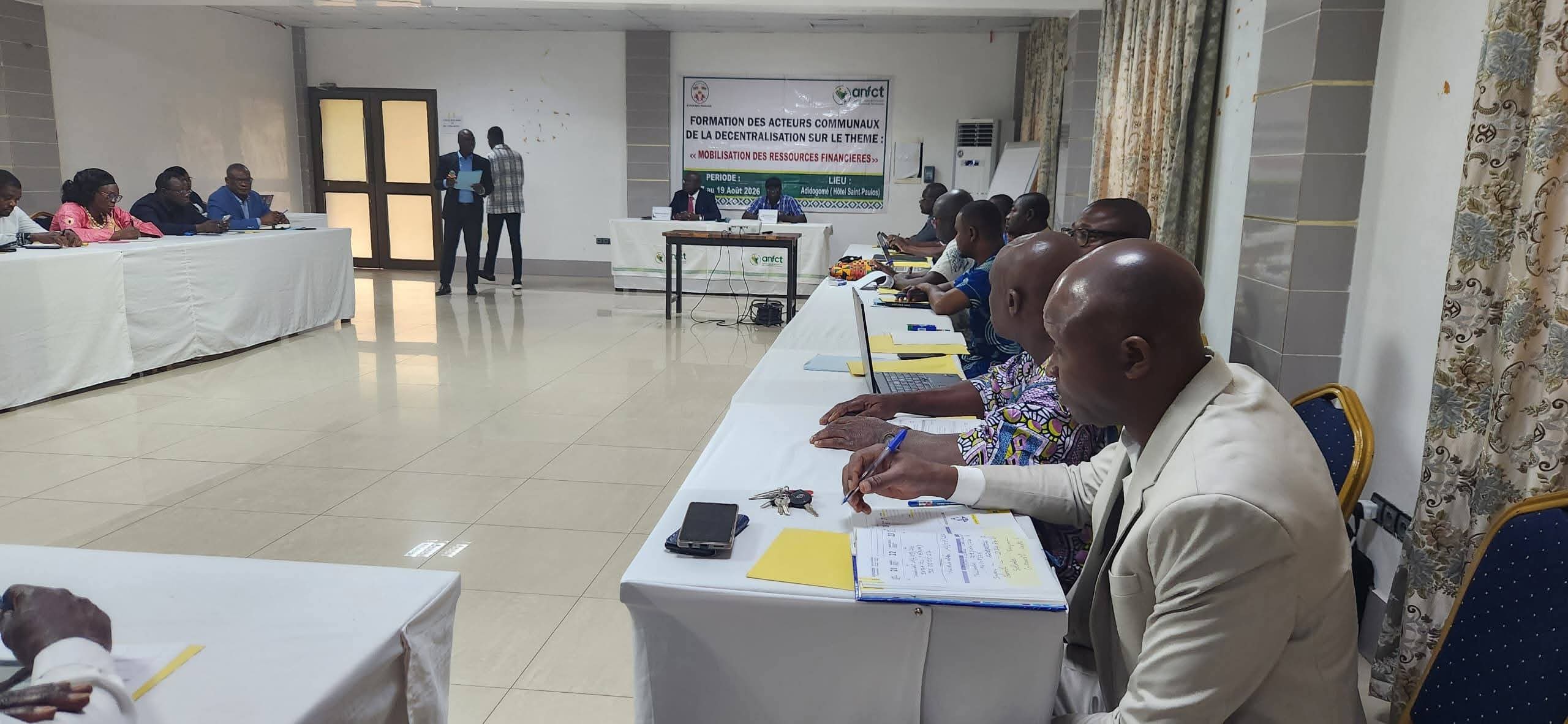
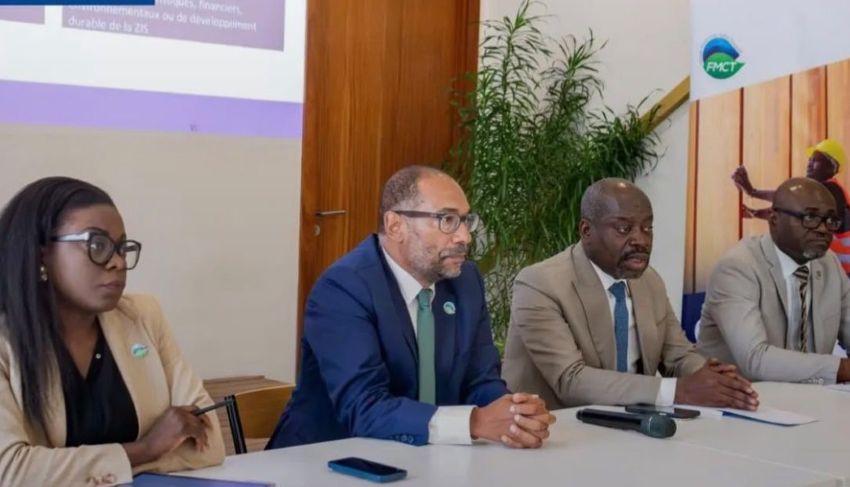
Lomé, August 17, 2026 — Municipalities in Togo face a critical challenge: securing and effectively managing financial resources to meet growing public expectations. From August 17 to 19, representatives from Golfe 2, Golfe 3, Agoè-Nyivé 5, and Agoè-Nyivé 6 are gathering in Golfe 7 for a specialized training session focused on financial mobilization and governance.
The initiative, part of the National Training Plan led by the National Agency for Territorial Collectivity Training (ANFCT), aims to equip local officials with practical tools to enhance revenue collection and optimize financial management. Without these skills, local governments risk failing to deliver essential services—from infrastructure to social programs—that their communities desperately need.
Financial autonomy: the cornerstone of local governance
For local governments, financial autonomy means more than just finding new funding sources—it requires safeguarding existing revenues, improving collection efficiency, and ensuring every collected franc translates into tangible public benefits. The capacity of a municipality to invest in roads, schools, and healthcare directly depends on its financial health.
This is why the training in Golfe 7 prioritizes hands-on learning. Officials are not only learning theory but also sharing real-world challenges and solutions. The goal is to foster a culture of financial discipline, where transparency and accountability become second nature in local administrations.
A training rooted in local realities
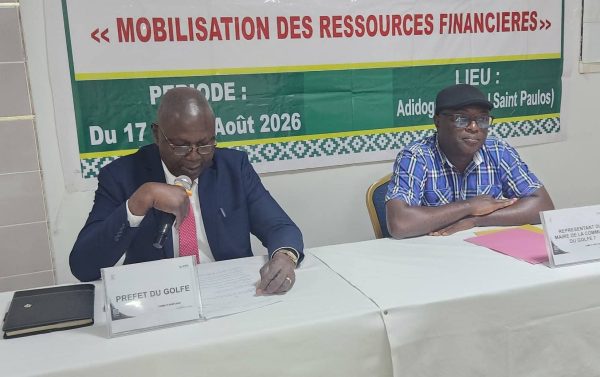
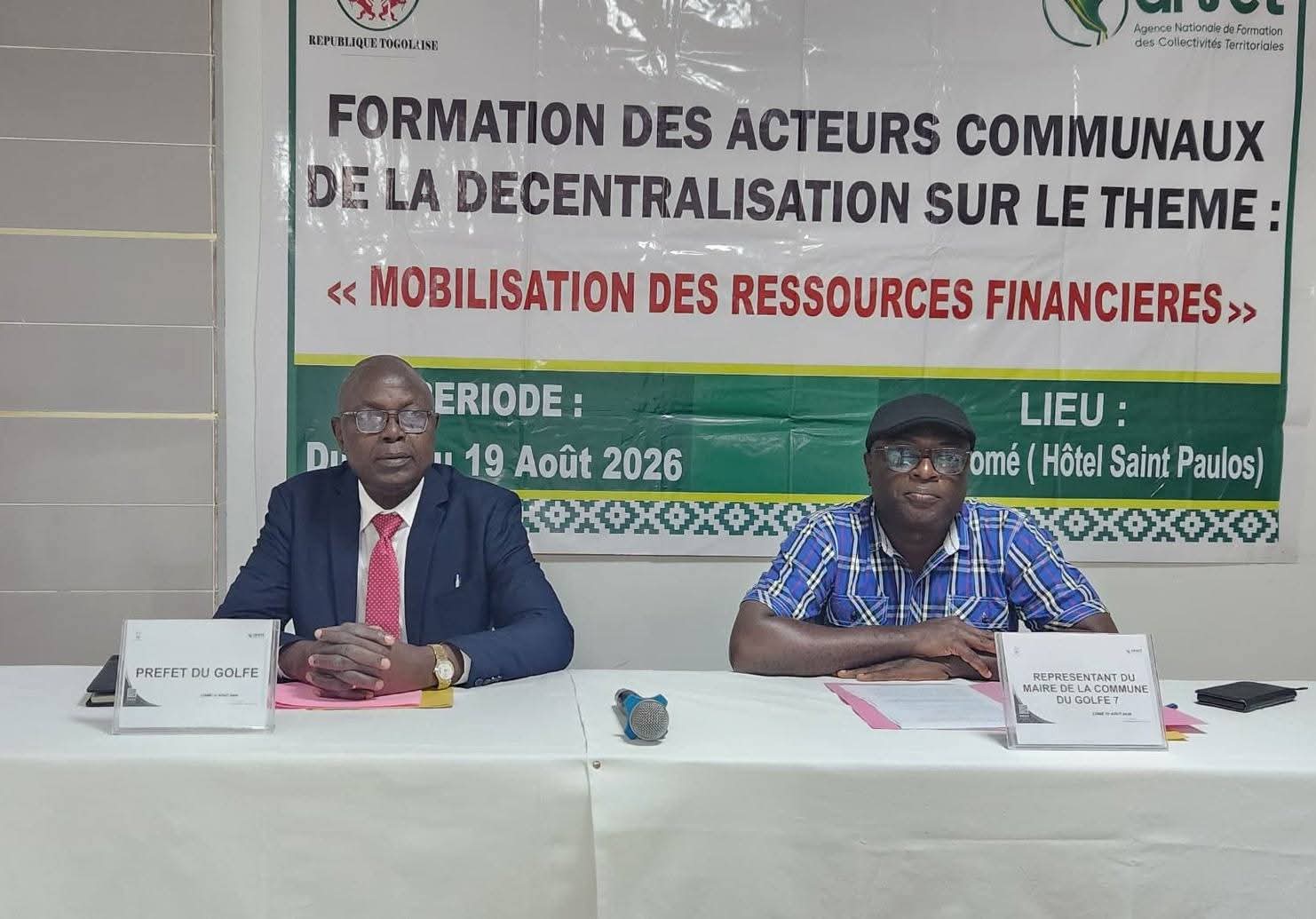
The workshop was inaugurated by Golfe Prefect Kossivi Agbodan, joined by Adaka Koffi, third deputy mayor of Golfe 7, along with mayors and financial officials from the participating municipalities. Adaka Koffi emphasized that this gathering is not just another meeting—it’s a strategic opportunity to build the financial resilience of local governments in Togo.
The training’s methodology goes beyond lectures. Participants are encouraged to analyze their own financial practices, pinpoint operational bottlenecks, and co-develop actionable solutions tailored to their municipalities’ unique contexts. The exchange of experiences, particularly on revenue generation and fiscal transparency, is at the heart of this approach.
From revenue generation to financial discipline
Prefect Agbodan underscored a critical point: collecting more revenue is only half the battle. The real test lies in how those funds are managed. A municipality could double its income yet fail to improve living standards if funds are mismanaged, embezzled, or wasted on inefficient projects.
This is why the training places equal emphasis on revenue mobilization and financial integrity. Participants are learning to implement transparent accounting systems, audit procedures, and performance-based budgeting—tools that ensure every franc collected serves the public good.
A three-day sprint toward financial resilience
Over three intensive days, officials from the four municipalities are collaborating to refine their financial strategies. The training is designed to be immersive, blending case studies, peer learning, and interactive workshops. The ultimate goal? To empower these local governments to convert newfound knowledge into measurable improvements in service delivery.
For the ANFCT, this initiative is a key pillar of Togo’s decentralization process. By strengthening the financial acumen of local leaders, the agency is helping municipalities take ownership of their development—ensuring that resources, whether from taxes, grants, or partnerships, are used to their fullest potential.
By Élise Ntamag — Regional policy
Follow this topicAdd our feeds to your favourite RSS reader
Economy Libreville’s unique one-stop shop for investors accelerates business setup By Editor-in-Chief Tuesday, July 14, 2026 210 No comment Libreville,…
International Senegal government shake-up: Prime Minister Ousmane Sonko dismissed The long-standing political partnership between Senegal’s top leadership has reached its…