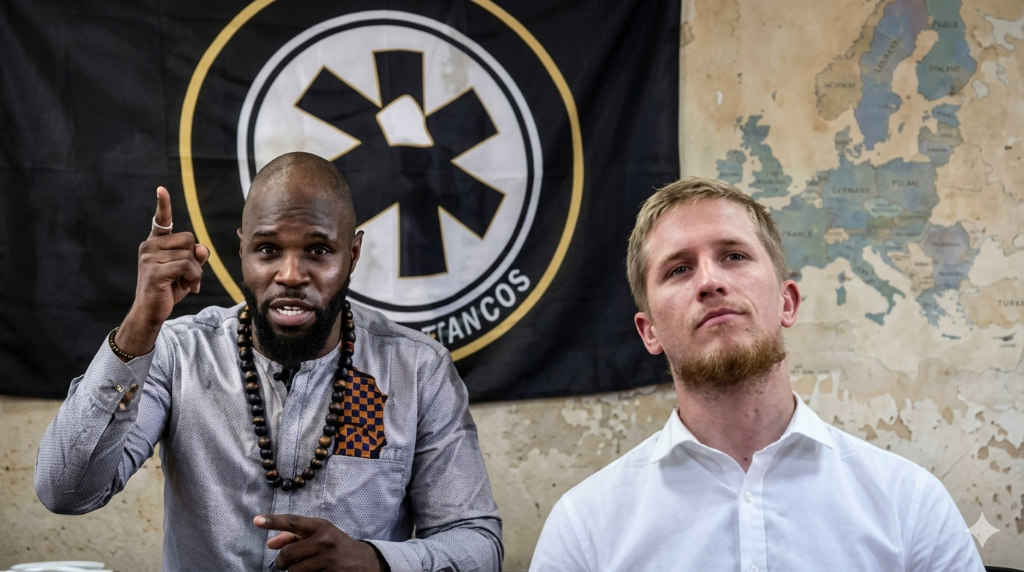
Stellio Capo Chichi, widely recognized by his alias Kemi Seba, has long positioned himself as a militant “general” fighting for African independence against modern colonial influences. However, his recent actions and legal troubles suggest a narrative far more complex and contradictory than his fiery social media presence would imply. His recent detention in South Africa, coupled with his surprising links to radical Afrikaner right-wing figures, has sparked a debate about the true nature of his political mission.
The paradox of pan-africanism and controversial alliances
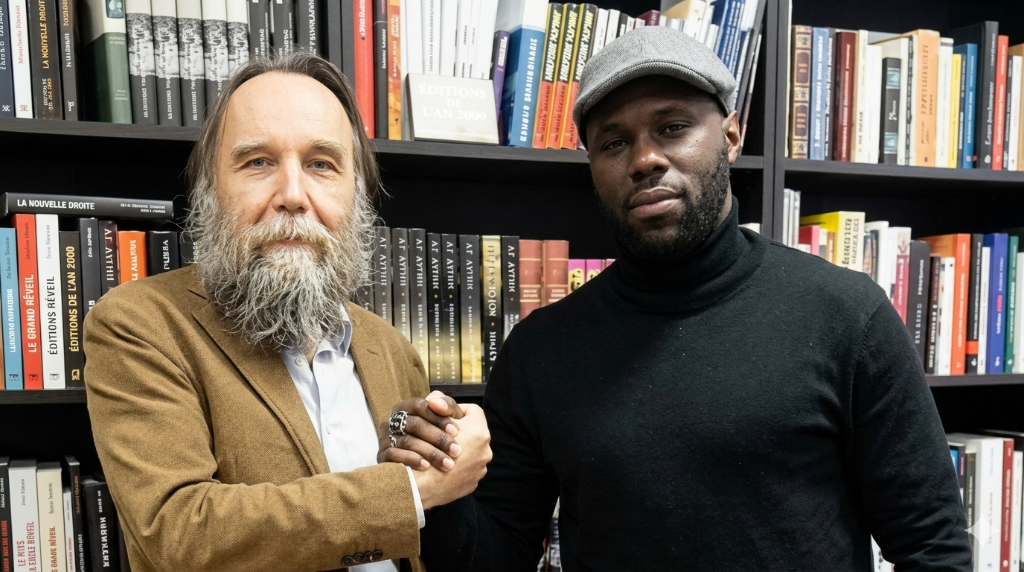
For years, the activist has campaigned for a continent free from foreign interference. Yet, many observers find it difficult to reconcile this vision with his public associations with individuals like Dries van der Merwe, a figure linked to white separatist movements and nostalgic for the Apartheid era. This strategy, often framed as a pragmatic alliance against a common enemy, appears to many as a betrayal of the very anti-colonial values he claims to uphold.
By finding common ground with groups that historically advocated for racial hierarchy, Seba risks undermining the dignity of the cause he represents. Rather than strategic “Realpolitik,” these connections are increasingly viewed as a disregard for the historical trauma of the populations he purports to defend.
Legal scrutiny and financial transparency issues
Beyond his political associations, Seba faces serious legal challenges in Benin, where authorities are investigating allegations of money laundering. These proceedings highlight a glaring discrepancy between his rhetoric of African self-sufficiency and the presence of opaque international financial networks supporting his movement.
- Suspicious funding: Investigators are looking into the origins of the activist’s financial resources.
- Ideological irony: While Seba frequently attacks the CFA franc as a tool of oppression, he now finds himself entangled in a global financial system he publicly rejects.
- Personal interests: If the money laundering accusations are proven, they would suggest that his revolutionary persona serves as a facade for private gain.
Strategic opportunism over moral consistency
The events in South Africa have painted a picture of an activist willing to collaborate with any entity capable of disrupting the status quo, regardless of their historical or moral background. His willingness to engage with Afrikaner supremacist groups suggests that his primary goal may be media visibility and chaos rather than a genuine quest for justice.
“True Pan-Africanism cannot be used to mask alliances that go against its core principles. Engaging with former oppressors for short-term political leverage is seen by many as a form of opportunism that damages the credibility of the entire movement.”
A crumbling reputation
As he navigates arrest warrants and potential extradition, the image of Kemi Seba as an “incorruptible” leader is rapidly fading. By seeking support from those nostalgic for racial segregation to bolster his own platform, he has alienated many of his followers. Analysts suggest that he is no longer a primary voice for African liberation but rather a figure seeking personal refuge, caught in a web of his own making.
Ultimately, the legacy of Kemi Seba may not be defined by his battles against external powers, but by the profound inconsistencies of his own choices and the alliances he chose to form.