Every May, Senegal braces for a surge in social unrest—a tradition rooted in decades of protest movements. The month begins with International Workers’ Day on May 1st, a day that has historically fueled labor strikes and demands for economic justice. This year, the country is witnessing a fresh wave of discontent across multiple sectors, from transportation to higher education.
Why May matters in Senegal’s social calendar
The timing of these protests is no coincidence. May 1st, International Workers’ Day, amplifies calls for fair wages, job security, and social dialogue. The month also carries historical weight, echoing the global uprisings of May 1968, which began as student protests before spreading to workers, paralyzing France. Senegal, as a former French colony, inherited these protest traditions, making May a flashpoint for social resistance.
A nation on edge: key flashpoints
The unrest has manifested in several sectors, each with its own grievances:
1. Transport workers strike over billing system disputes
Operators of Dakar’s urban transport system, represented by the Association de Financement des Professionnels du Transport Urbain (AFTU), went on strike, disrupting services. The conflict stems from a dispute over electronic ticketing systems, leading to a court-ordered halt on new machine deployments. Workers, frustrated by the ruling, took to the streets, crippling commutes in the capital.
2. Ageroute employees denounce managerial failings
Ageroute, the national road agency, is facing internal turmoil. The Director of Human Resources, Cheikh Ahmed Tidiane Thiam, publicly criticized the agency’s new leadership for excluding staff from decision-making and undermining workforce stability. The agency’s abrupt dismissal of 23 employees has further inflamed tensions.
3. University students demand unpaid stipends
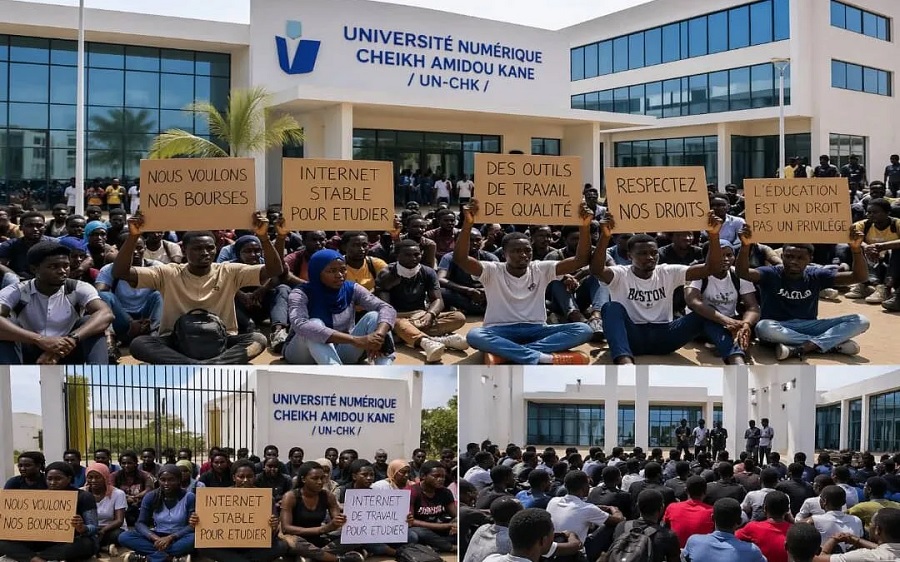
Students at the Université Numérique Cheikh Hamidou Kane (UN-CHK) are protesting the non-payment of their full scholarships. After receiving only two years of financial aid out of the three promised for their degree, they are demanding immediate resolution from authorities.
4. Trade Point Senegal raises governance alarms
The Fondation Trade Point Sénégal held a press conference to highlight what they described as an “alarming” state of affairs within the institution. Issues include deteriorating social and managerial climates, as well as questionable hiring practices.
The bigger picture: a month of reckoning
From transport workers to university students, the frustrations are converging into a collective outcry. The timing—amidst economic pressures and lingering frustrations from past grievances—suggests that May’s unrest is not just a seasonal trend but a symptom of deeper systemic issues. As the month unfolds, all eyes are on whether the government and institutions can address these mounting demands before the unrest escalates further.