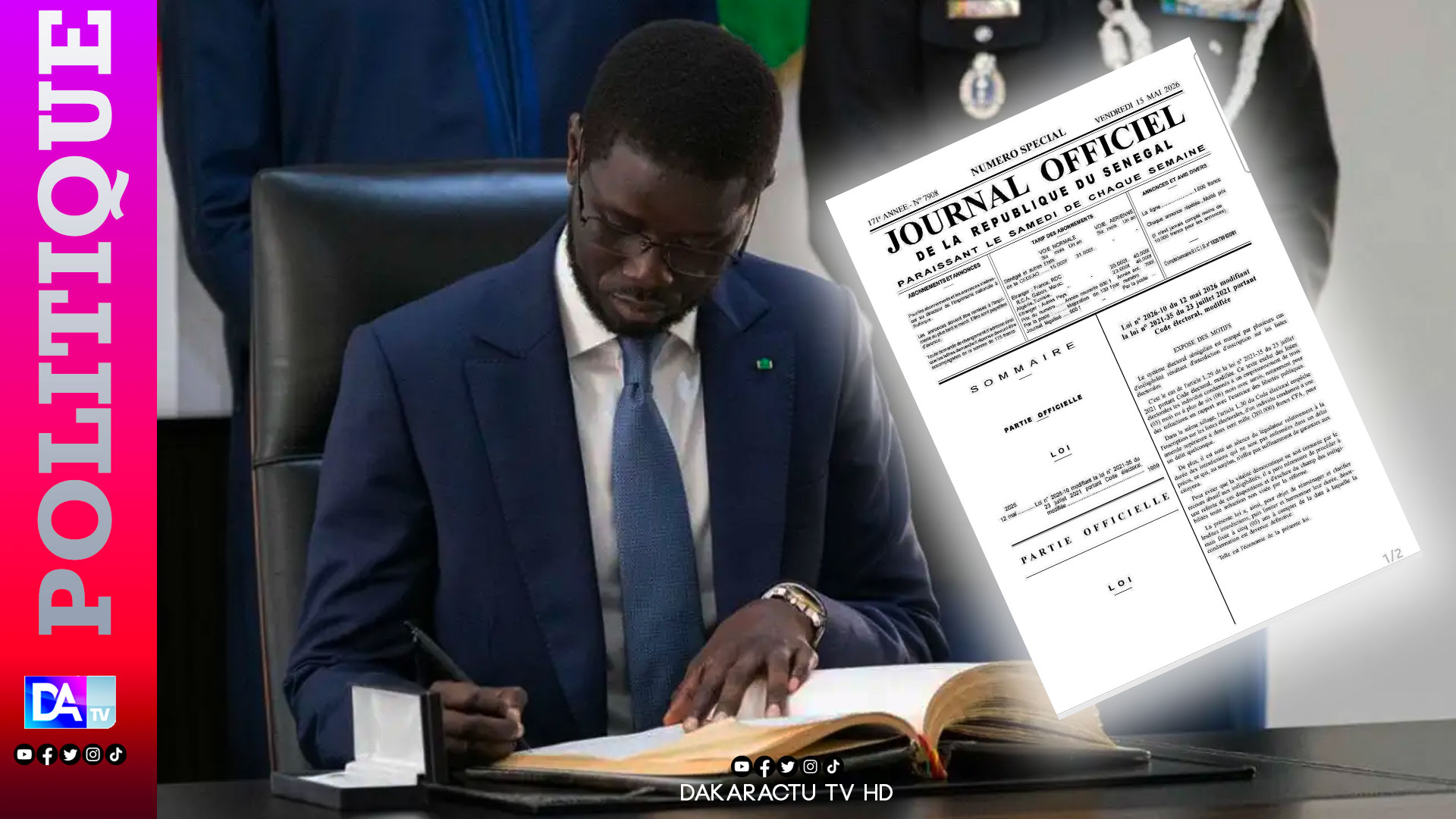
Landmark electoral reform signed into law by Bassirou Diomaye Faye
President Bassirou Diomaye Faye has enacted a sweeping revision of Senegal’s electoral framework through Law No. 2026-10, published in the Official Gazette on May 15, 2026. The legislation, which the National Assembly passed with a three-fifths majority, fundamentally reshapes the criteria for electoral disqualification—previously criticized as vague and potentially oppressive. The reform arrives ahead of critical upcoming elections, promising to restore clarity and fairness to the nation’s democratic processes.
Key changes under the reformed electoral code
Central to the new law is a complete overhaul of Article L.29 of the electoral code. The revised text now specifies four distinct categories of individuals barred from voter registration:
- Individuals convicted of felonies;
- Those sentenced for serious financial crimes, including theft, fraud, embezzlement, corruption, money laundering, and influence peddling;
- Persons subject to a court-ordered loss of voting rights;
- Legally incapacitated adults.
A major innovation is the introduction of a fixed five-year ineligibility period, triggered upon the finalization of a conviction. This replaces the previous ambiguity that allowed for indefinite or unclear disqualification timelines. Additionally, Article L.30—which previously disqualified anyone fined over 200,000 CFA francs for any minor offense—has been fully repealed, eliminating an overly punitive provision.
Addressing long-standing flaws in the electoral system
Lawmakers justified the reform by highlighting the inadequacies of the prior system. Under the old rules, automatic disqualification could occur after just three months of imprisonment—even with suspended sentences—or following minor fines, without any time-bound framework. This lack of precision, they argued, not only failed to protect citizens’ rights but also exposed the electoral system to arbitrary exclusions that could undermine democratic resilience. The new law seeks to refocus ineligibility on only the most serious offenses while ensuring predictable, time-limited consequences.
A reform with far-reaching political implications
The law’s adoption with a supermajority underscores broad parliamentary consensus, reflecting its significance in the lead-up to key electoral cycles. Depending on individual cases, the changes could reopen voting rights for several high-profile figures convicted in recent years—potentially including opposition leaders and others across the political spectrum. This shift may reshape political dynamics and campaign landscapes as Senegal prepares for its next round of elections.