West African leaders highlight gaps in Dakar reforms session
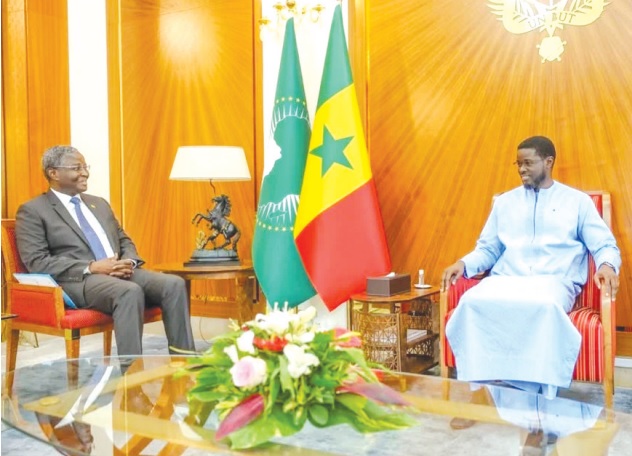
The political phase of the 11th annual review of UEMOA community reforms concluded yesterday in Dakar after a one-day postponement. The high-level meeting brought together top officials including the President of the UEMOA Commission, Abdoulaye Diop.
While Senegal maintains a generally satisfactory performance across the 145 reforms evaluated, authorities are now under pressure to implement rapid corrective measures following a 2.14-point decline compared to 2024 results.
Key findings from the Dakar review
The technical phase conducted in November 2025 was validated by both the Senegalese Minister of Finance and Budget and the UEMOA Commission president. The provisional implementation rate stands at 76.45% for 145 reforms, down from 78.59% for 132 reforms in 2024.
Major areas requiring attention include governance and convergence (down 6.3 points) and structural reforms. Notably, the UEMOA Commission did not receive Senegal’s 2024 report on the single window for financial statements. Other weak spots identified were culture, tourism, crafts, quality standards and the business climate.
Minister of Finance and Budget Cheikh Diba confirmed that the review outcomes will be presented to the Prime Minister during an upcoming audience with the UEMOA Commission president.
Progress in several sectors
Despite these challenges, several domains showed significant improvement:
- Agriculture, livestock, fishing and environment: +12 points
- Human and social development: +6.5 points
- Energy sector: +3 points
- Legal, accounting and statistical modernization: +5.5 points
Abdoulaye Diop emphasized that this annual review, established by the 2013 Additional Act of the Heads of State Conference, evaluates collective actions toward UEMOA treaty objectives and provides operational recommendations. Since 2014, ten reviews have been conducted in Senegal with generally satisfactory results.
This eleventh edition marks the second under the biennial political configuration introduced in July 2023. Senegalese authorities have announced that the conclusions will receive special attention in a presentation to the Prime Minister, signaling a strong push to align administrative practices with UEMOA standards before the next review cycle.