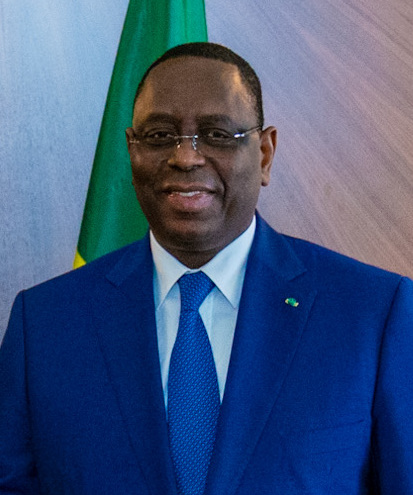
Days after welcoming him at the Palais de la République, President Bassirou Diomaye Faye made a decisive announcement: Senegal will fully endorse Macky Sall‘s bid for United Nations Secretary-General. The move, while not guaranteed to secure the position, marks a significant strategic shift in the country’s diplomatic posture.
From political rivals to diplomatic allies
It was not long ago that Bassirou Diomaye Faye and Macky Sall were locked in a bitter confrontation. Faye, then a rising political figure, was imprisoned in April 2023 at the Cap Manuel prison in Dakar, following a crackdown that targeted opposition leader Ousmane Sonko and his movement. His release on March 14, 2024—just days before the presidential election—came through a presidential pardon secured in the heat of a pre-election crisis. Sonko’s resilience ultimately paved the way for Faye’s victory in the first round, a first in Senegal’s political history.
Yet, in a striking display of political pragmatism, Faye has now embraced his predecessor’s international ambitions. The move underscores a broader willingness to prioritize national interests over personal grievances, a decision that aligns with the Senegalese presidency’s emphasis on continuity in governance. Officials have framed the decision as a dialogue that transcends political transitions, positioning Senegal as a unifier in advancing Africa’s interests—particularly the long-sought goal of securing a permanent seat on the UN Security Council.
A political thaw that reshapes the landscape
The shift in Senegal’s stance was not immediate. Initially, the country’s silence on Sall’s candidacy risked undermining his bid. However, a pivotal moment arrived in May of the previous year, when Bassirou Diomaye Faye and his former mentor, Ousmane Sonko, parted ways, with Sonko dismissed from his role as Prime Minister. Sonko’s hardline stance against Sall had long been a cornerstone of the government’s narrative, but his removal freed Faye to adopt a more flexible diplomatic approach—one less constrained by partisan tensions.
This strategic recalibration also serves Faye’s own political ambitions. With plans to launch a new party, he is positioning himself for the 2029 elections by consolidating support across diverse political networks, including figures from Sall’s administration and former President Abdoulaye Wade’s camp. The warmth of Sall’s reception during his recent visit to Dakar underscored his enduring influence, reinforcing the logic of this realignment.
Diplomatic stakes and regional dynamics
For Macky Sall, Senegal’s endorsement is a game-changer. His candidacy, submitted in March by Burundi on behalf of the rotating African Union presidency, had faced a critical vulnerability: the absence of strong backing from his own country. In international forums, such neutrality—or worse, silence—is often interpreted as a lack of confidence, weakening a candidate before the Security Council even begins its deliberations.
With Dakar’s formal support now secured, Sall can present himself as a unified candidate, backed by his nation’s diplomatic machinery. This move neutralizes a key argument used by rivals and strengthens his position in the race. Yet, challenges remain. The UN Secretary-General position traditionally follows a regional rotation, and this time, Latin America is in line—with four of the five declared candidates hailing from the region. The sole non-Latin American contender, Sall’s path to victory will depend heavily on overcoming this entrenched custom.
What lies ahead for Sall’s campaign
Even with Senegal’s backing, the final outcome hinges on the UN Security Council, where the five permanent members hold veto power. Sall has avoided overt opposition, maintaining balanced relations with major powers. His 2022 abstention during the UN vote on Ukraine—under Senegal’s presidency—highlighted his diplomatic agility, while his recent meeting with Russian Foreign Minister Sergueï Lavrov in Moscow signaled continued engagement with key stakeholders. As the campaign intensifies, the verdict is expected by autumn.