Rwanda’s Kagame warns elimination of M23 rebels would mean Rwanda’s demise
- Politics
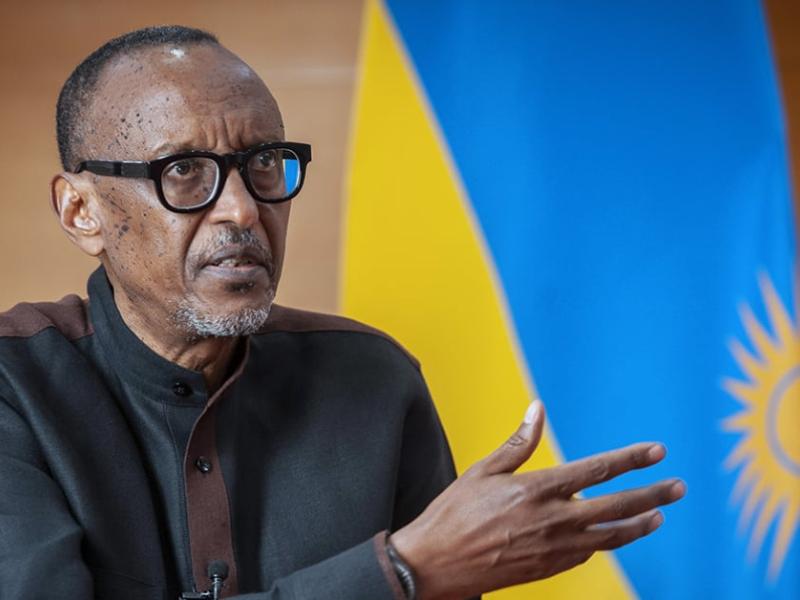
Rwandan President Paul Kagame issued a stark warning on Friday, July 17, 2026, during a meeting of the ruling party’s political bureau. He emphasized that efforts to eliminate the M23 rebel group would be perceived as an attempt to erase Rwanda itself, reaffirming the country’s unwavering stance against perceived threats to its sovereignty.
Addressing the gathering, President Kagame condemned what he described as attempts to silence Rwanda’s security concerns on the international stage. He asserted that such efforts would only embolden those who seek to harm the country, declaring that the only way to “silence” him would be through his death.
« Silencing people will be harder than some think. Telling us to be silent means supporting those who want to kill you, just as they did last time, and we will handle it as we see fit. The only way to silence me is when I am dead. That’s all. »
He further underscored Rwanda’s commitment to the principle of equal human life, rejecting any attempts to devalue lives based on nationality or other discriminatory factors. Despite acknowledging Rwanda’s small size and vulnerability, he warned that any attempt to undermine its existence would have severe consequences.
« Demeaning everything and making people believe that some lives matter more than others is not my policy. It is not the policy of the FPR. We are a small country. In many ways, insignificant. You can harm us, but wishing our disappearance is no small matter. »
The President’s remarks come amid escalating tensions in the eastern Democratic Republic of the Congo (DRC), where the M23 rebel group, accused by the UN and Western nations of receiving Rwandan support—a claim Kigali denies—controls vast territories in North and South Kivu provinces. Kagame warned that calls to eliminate the M23 were not just targeting the rebel movement but the Rwandan state itself.
« When they said they would make the M23 disappear, they meant even Rwanda. They would make us disappear. Well, I cannot wish for that. I cannot desire such a thing. But when it happens—and I fail to prevent it—I think they will find us [ready]. »
This statement follows a series of diplomatic initiatives, including the Washington Agreement and ongoing evaluations, aimed at addressing the persistent security and humanitarian crisis in eastern DRC. However, these efforts have yet to yield tangible results, with the Doha process in Qatar also failing to bridge the gap between Kinshasa and the M23 rebels. The Montreux phase in Switzerland, intended to inject new momentum, fell short of expectations, hindered further by geopolitical shifts in the Middle East.
Calls for renewed commitment to peace agreements from national, regional, and international actors have so far yielded little progress. The disconnect between diplomatic progress and ground realities continues to widen, with each party interpreting agreements through its own lens, further complicating the path to lasting peace.