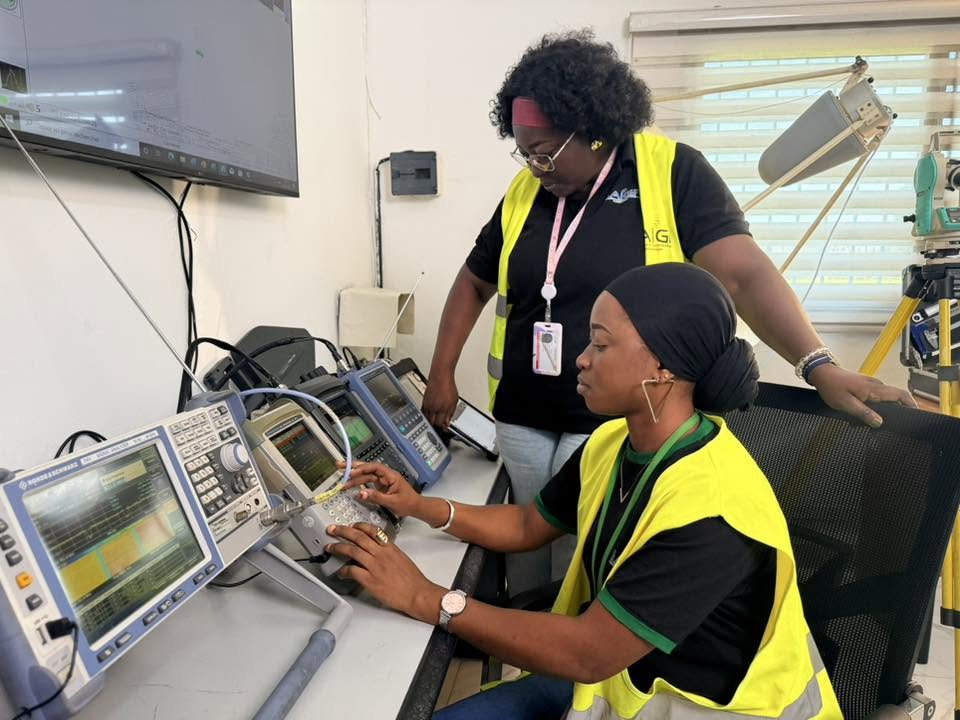
Abidjan, September 28, 2026 – Every phone call, radio broadcast, and mobile data connection in Côte d’Ivoire depends on a hidden resource: radio frequencies. But what happens when those frequencies are poorly managed? The consequences are far from abstract. They ripple through households, businesses, hospitals, and the broader economy. On Tuesday, September 29, 2026, a public forum titled “Tout Savoir Sur” (TSS) will put the spotlight on exactly these real-world effects, focusing on “The management and control of radio frequencies in Côte d’Ivoire.”
Organized by the Centre d’Information et de Communication Gouvernementale (CICG), the event kicks off at 3:00 PM and will be streamed live on the government’s digital platforms, including Facebook, X, and YouTube. Citizens are encouraged to follow the discussions and submit their questions in real time.
The featured speaker is Aliou Bamba, Director of National Frequency Management at the Agence ivoirienne de Gestion des Fréquences (AIGF). He will explain the agency’s role in managing the radio spectrum and the mechanisms used to ensure frequencies are used rationally, efficiently, and securely across the country.
Why spectrum management hits close to home
When frequencies are not properly controlled, the results are tangible: dropped calls, slow internet, disrupted TV signals, and even safety risks for emergency services. For businesses, interference can mean lost sales and higher operating costs. For the economy, an inefficient spectrum slows down digital growth and discourages investment.
The stakes for everyday users
From mobile money transactions to remote learning, Ivorians rely on stable networks. Poor frequency management can lead to network congestion, especially in crowded urban areas like Abidjan. The forum will address how the AIGF monitors usage and intervenes when interference occurs.
Impact on businesses and innovation
Startups, telecom operators, broadcasters, and transport companies all depend on reliable spectrum access. Unclear allocation rules or unchecked interference can delay new services and inflate costs. The discussions will cover licensing procedures and the conditions for using the spectrum, offering a clearer picture of what companies can expect.
Inside the AIGF’s control mechanisms
Bamba will detail the surveillance and enforcement tools the agency uses to detect and resolve jamming and interference. This includes technical monitoring stations and coordination with international bodies to protect cross-border communications.
Allocation and assignment: how frequencies reach users
The presentation will walk through the step-by-step process of assigning frequencies to operators, broadcasters, and public institutions. Transparency in these procedures is crucial for fair competition and for avoiding monopolies that could drive up prices for consumers.
Lessons learned and future plans
The AIGF will also share an assessment of its past actions and outline its strategy for improving spectrum management. Future plans may include tighter enforcement against illegal transmitters and better public awareness about the consequences of unauthorized use.
Where and how to follow the forum
The event will take place at the Système intégré de gestion du foncier urbain (SIGFU) in the administrative district of Abidjan-Plateau, with journalists and industry stakeholders present. For those unable to attend in person, the live stream offers a chance to engage directly.
Held every Tuesday by the CICG, “Tout Savoir Sur” serves as a bridge between public institutions, the media, and citizens, helping people understand policies and services that shape their daily lives.
CICG
You may also like
How Burkina Faso’s phantom armored vehicle program drains resources and erodes public trust
How Benin’s AEO customs status is reshaping export economics for local businesses
Northern Niger’s power and water deficits: the tangible toll on livelihoods under Tiani
Air Sénégal smuggling inquiry: the real-world fallout for passengers, workers and the economy
Senegal’s delayed local elections: how the waiting game hits households, businesses and the wider economy