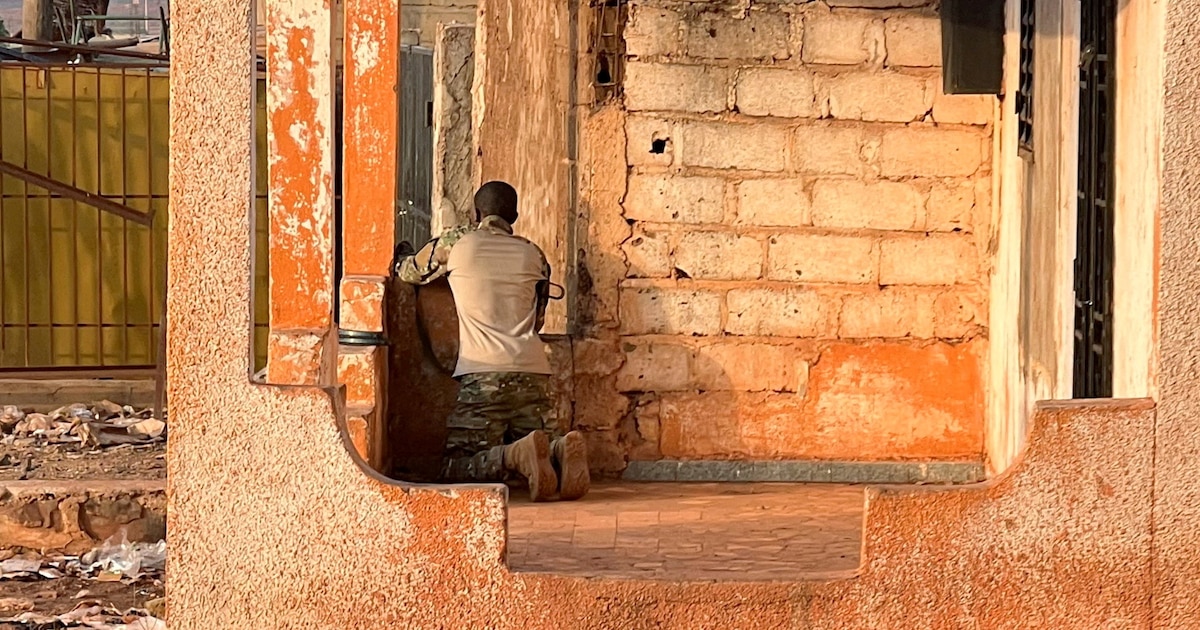
In a significant setback for Moscow’s military involvement in West Africa, Russian mercenaries from Africa Corps—the successor to the Wagner Group—were forced into a humiliating withdrawal from Kidal, a strategic northern city in Mali. On April 26, graphic videos circulating on social media showed the mercenaries retreating under heavy pressure from jihadist forces of the Group for the Support of Islam and Muslims (GSIM), affiliated with Al-Qaeda, alongside Tuareg rebels from the Azawad Liberation Front (FLA). The rapid collapse left behind a trail of abandoned armored vehicles, helicopters, and several Malian soldiers captured in brief clashes.
coordinated jihadist offensives shake Mali’s fragile stability
Just a day before the retreat, Mali experienced a wave of coordinated attacks launched by GSIM militants—allied with the FLA—targeting key positions held by the Bamako junta. Cities including Bamako, Kati—home to the country’s main military base—and Gao, a former UN stronghold, were hit. The assaults marked the latest escalation in a conflict that has turned central West Africa into a global hotspot for terrorism and violence.
a strategic city lost twice in 18 months
Kidal, a historic Tuareg stronghold, had been seized by Wagner mercenaries in November 2023 and proudly displayed their infamous skull-and-crossbones banner. Its sudden recapture by jihadist forces represents a major blow to Russia’s strategic influence in the Sahel. “The fall of Kidal is not just a tactical defeat—it’s a political and symbolic failure for the junta and its foreign backers,” noted Djenabou Cissé, associate researcher at the Foundation for Strategic Research.
failed security partnership fuels civilian suffering
Since the Malian junta took power in 2021, it has relied on Russian mercenaries—first Wagner, now Africa Corps—to combat rising jihadist violence. Yet despite their presence, attacks have intensified, with some of the deadliest assaults on civilians attributed to Russian mercenaries and Malian troops. Reports by the United Nations and Human Rights Watch have documented a surge in sexual violence linked to these forces, particularly in conflict zones.
“It was always clear that Russian mercenaries were ineffective in counterterrorism operations,” said Wassim Nasr, a senior fellow at The Washington Post and expert on jihadist movements. “Saturday’s attacks only confirmed what many analysts had long suspected.”
blame and denial amid growing unrest
As the situation unraveled, Malian Prime Minister Abdoulaye Maïga paid tribute to the fallen Defense Minister Sadio Camara, killed in an explosion that destroyed his home in Kati, the junta’s headquarters. Junta leader Assimi Goïta later declared the situation “under control” and vowed to pursue those responsible “until full neutralization.”
Yet local voices tell a different story. “The Russians betrayed us in Kidal,” an unnamed Malian officer told RFI. Allegedly warned three days before the attack, the mercenaries allegedly negotiated their exit instead of defending the city. Sources suggest Africa Corps may now be withdrawing from other northern strongholds, further weakening Mali’s already fragile armed forces.
The Kremlin has remained silent on the mercenaries’ future role. During a press briefing on April 28, spokesman Dmitri Peskov refused to comment on Africa Corps’ ability to regain control but claimed their forces had prevented a coup attempt by FLA and GSIM militants, according to Reuters.