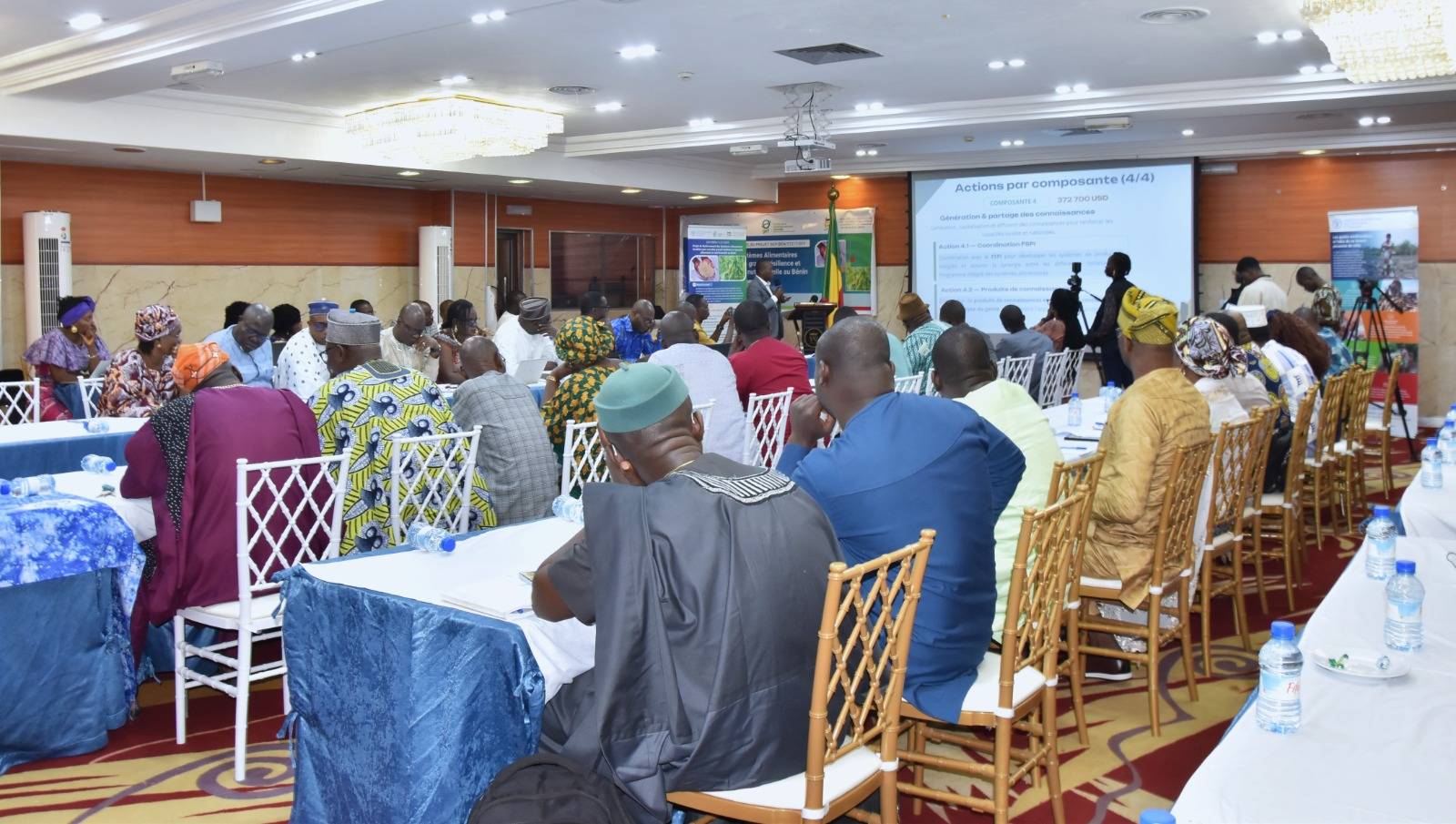
In response to the alarming decline in soil fertility threatening both food security and the national economy, the government of Bénin, in partnership with the Food and Agriculture Organization (FAO) and the Global Environment Facility (GEF), has officially launched the Food Systems initiative. With a robust budget exceeding $20 million, this ambitious program aims to revitalize degraded lands and revolutionize the maize and rice value chains by 2030.
soil degradation: a silent crisis undermining Benin’s economy
The agricultural sector remains the backbone of Bénin’s economy, accounting for nearly 70% of employment, 26% of GDP, and providing roughly 80% of export earnings. Yet, this vital sector is under severe strain from a growing yet often overlooked threat: soil degradation. Speaking at the project’s launch on July 24, 2026, at the Bénin Royal Hotel in Cotonou, the Minister of Agriculture, Livestock, and Fisheries, Adin Yeton Bloukounon Goubalan, delivered a stark warning about the country’s rapidly deteriorating arable lands.
The minister emphasized the severe consequences of this crisis, stating, “Degraded soil leads to low agricultural output, trapping farmers in a cycle of poverty and vulnerability.”
Recent national data paints a grim picture: over 5 million Béninois—nearly 40% of the population—are directly impacted by land degradation. Shockingly, approximately 38% of the country’s total land area is now classified as degraded. This has slashed agricultural productivity by at least 50%, depriving rural communities of essential ecosystem services such as clean water and food security while exacerbating poverty.
food systems: a transformative blueprint for sustainable agriculture
The Food Systems project, officially titled “Sustainable Food Systems for Enhanced Resilience and Food and Nutrition Security in Bénin,” was developed to address this systemic challenge. Spearheaded by the Bénin government with technical and financial support from the FAO and GEF, the initiative goes beyond treating symptoms—it seeks a holistic overhaul of the nation’s agricultural framework.
The primary goal is to modernize public policies, enhance production techniques, and improve market access. The project zeroes in on two critical staple crops—rice and maize—consumed widely across rural and urban areas. The aim is to transition these value chains from low-productivity, environmentally harmful systems to integrated, high-performing models that deliver tangible socio-economic benefits.
a targeted investment with ambitious outcomes
To drive this agroecological shift, substantial financial and technical resources have been allocated. The total project budget stands at $20,766,207, funded through a tripartite collaboration: the GEF contributes $5,966,207, while the Bénin government provides a national counterpart funding of $14,800,000.
The five-year implementation plan, spanning until 2030, will focus on five key districts: Karimama, Malanville, Glazoué, Kétou, and Les Aguégués. The project’s anticipated impact is vast:
- Restoration of 20,000 hectares of degraded land
- Adoption of sustainable farming practices across 114,900 hectares
- Direct benefits for 36,000 farmers
- Indirect reach to nearly 356,000 beneficiaries in targeted regions
a collaborative approach to ensure lasting success
While the project’s goals inspire optimism, its leadership acknowledges the operational hurdles ahead. Minister Goubalan stressed the critical need for rigorous evaluation of soil restoration technologies before scaling up efforts. “The effectiveness of methods deployed on the ground will determine the program’s success,” he noted.
The FAO’s Resident Representative in Bénin, Paul-Henri Zoéwindé Bouda, echoed this sentiment, emphasizing that technology alone is insufficient without full buy-in from the farming community. “Achieving the project’s vision requires unwavering collective commitment from all stakeholders, implementers, and direct beneficiaries,” he asserted.
paving the way for a resilient agricultural future
By tackling the root cause of soil degradation, the Food Systems initiative lays the groundwork for a more food-secure Bénin. If the 2030 targets are met, the country could not only secure its rice and maize supply but also serve as a model for ecological transition across West Africa.