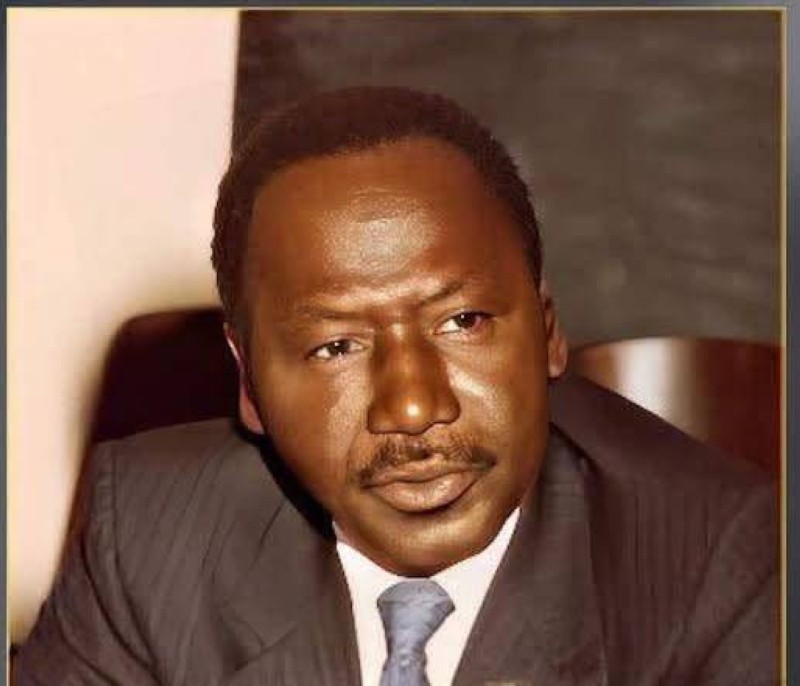
Abdoulaye Koné passed away on Saturday, September 19, 2026, at the age of 91. The news has triggered a wave of reactions across Côte d’Ivoire, with public figures and ordinary citizens weighing in on the legacy of the former Economy and Finance Minister. The immediate fallout centers on how the country will preserve the memory of a man who spent decades shaping its economic institutions — and who, according to President Alassane Ouattara, helped consolidate the West African Economic and Monetary Union (UEMOA).
President Ouattara leads tributes: ‘a great servant of the state’
In a statement released shortly after Koné’s death, President Alassane Ouattara paid tribute to a man of “experience and conviction” whose engagement contributed to the country’s economic and social development. But the president went further, highlighting Koné’s role in building the West African economic space under the leadership of former President Félix Houphouët-Boigny.
Ouattara also revealed a personal dimension to their relationship. He described Koné as “a true source of inspiration and unwavering support” during his own career, particularly when Ouattara served at the Central Bank of West African States (BCEAO). That acknowledgment has fueled public discussion about the quiet influence Koné wielded behind the scenes — and what his absence means for the networks he helped build.
From budget director to regional architect: the career that shaped a debate
Koné’s professional path took him from Director of the Budget to Secretary of State for the Budget, before he assumed the Economy and Finance portfolio. Those roles placed him at the heart of the state’s financial machinery, where budget balances and public spending priorities are decided.
His tenure coincided with a period when Côte d’Ivoire was trying to strengthen the foundations of its economic development and deepen its integration into regional dynamics. That regional dimension — especially his work on UEMOA — has become a central theme in the reactions pouring in from economists, former colleagues and citizens alike.
What the public debate is focusing on now
Reactions have not been limited to official statements. Across the country, the discussion has turned to broader questions: How will Côte d’Ivoire preserve the administrative and economic memory that Koné embodied? Who will carry forward the institutional knowledge accumulated over decades of service?
Some voices have called for concrete steps — archiving his contributions, documenting the early economic decisions he helped shape, and ensuring that younger generations understand the role played by figures like Koné in the country’s development. Others emphasize the need to continue the regional integration work he championed.
The road ahead: memory, institutions and the next generation
With Koné’s passing, a part of Côte d’Ivoire’s administrative and economic memory moves further away. For decades, he witnessed the transformations of the Ivorian state — its periods of economic consolidation and the shifts in its regional environment. From the Budget Directorate to the government, and later in roles tied to regional economic cooperation, his career mirrors a significant portion of the country’s financial and economic institutional history.
President Ouattara extended his condolences to Koné’s wife, children, family and all his loved ones. But beyond the official mourning, the question remains: what comes next for the legacy he leaves behind?
The full assessment of this long career will come with time. For now, what remains is the memory of an economist, a senior civil servant and a minister who devoted decades to the state. At 91, Abdoulaye Koné has departed — leaving behind an administrative legacy, a body of experience accumulated through years of responsibility, and a memory that Côte d’Ivoire must now transmit to generations who never knew this man of the shadows, long present in the machinery of the Republic.
You may also like
Niger’s August mutiny: the fallout, the unanswered questions, and what lies ahead
What Benin’s AirBadminton gold over Mauritius really changes for the sport
Benin’s CCI budget for 2027 sparks debate: what the 6.6 billion FCFA plan means for businesses
Bambali agro park: what the launch means for Sédhiou and Senegal
Senegal’s palm oil deal with Indonesia: reactions, debate and what happens next