When official routes fail, alternative diplomacy takes center stage
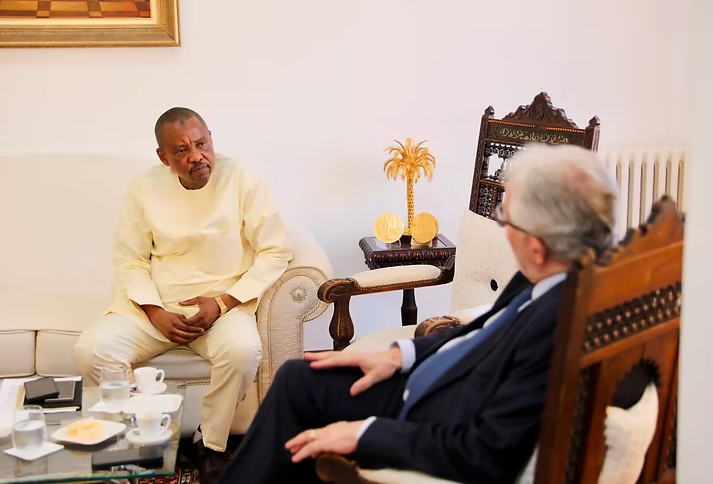
The recent meeting between Hamadou Saley, chargé d’affaires at the Niger embassy in France, and Chems-eddine Hafiz, rector of the Great Mosque of Paris, has sparked intense speculation. While framed as a cultural or religious collaboration, this encounter reveals a far more calculated political maneuver—a desperate attempt by Niamey to re-engage with Paris through unconventional channels, blocked from conventional diplomatic pathways.
Diplomacy in the shadows: bypassing traditional channels
Following political upheavals in Niamey and a sharp deterioration in bilateral ties with France, formal communication between the two nations has effectively come to a standstill. Diplomatic expulsions, fiery rhetoric on sovereignty, and the collapse of cooperation agreements have frozen relations between Paris and Niger. Yet, economic necessity, migration flows, and geopolitical realities often force even the most hardened positions to soften. Niger knows it cannot afford a complete rupture with France—but with official routes sealed, alternative strategies become essential.
This is where shadow diplomacy comes into play, particularly through religious channels. By sending its chargé d’affaires to an institution as influential as the Great Mosque of Paris, the Nigerien government is making a bold move. Denied high-level ministerial reception at the Quai d’Orsay, Niamey seeks not just an audience but a platform within a cornerstone of France’s Muslim community.
A calculated shift toward faith-based engagement
This approach is far more than a gesture of spiritual courtesy. Leveraging religious institutions to convey messages or test political waters represents a deliberate effort to bypass institutional boycotts. The Great Mosque of Paris, with its deep-rooted ties to the French state, serves as an ideal entry point for Niger to re-enter public discourse in France—after being shut out of formal channels.
Yet this strategy raises serious questions about consistency. While Niamey’s official rhetoric condemns foreign interference and demands a complete break from France, its backchannel diplomacy relies on exploiting religious structures in a third country to soften its image and restore indirect dialogue. Cultural and religious projects should not serve as a smokescreen for covert political normalization. If Niger truly seeks to rebuild constructive relations with France, it must do so openly, through official state channels and international protocols—not by manipulating religious sensitivities.