West Africa, a region already grappling with geopolitical fragmentation, observes with keen interest and growing concern the latest commercial directives issued by Niger’s transitional government. These decisions have prompted significant questions among both economic stakeholders and regional analysts.
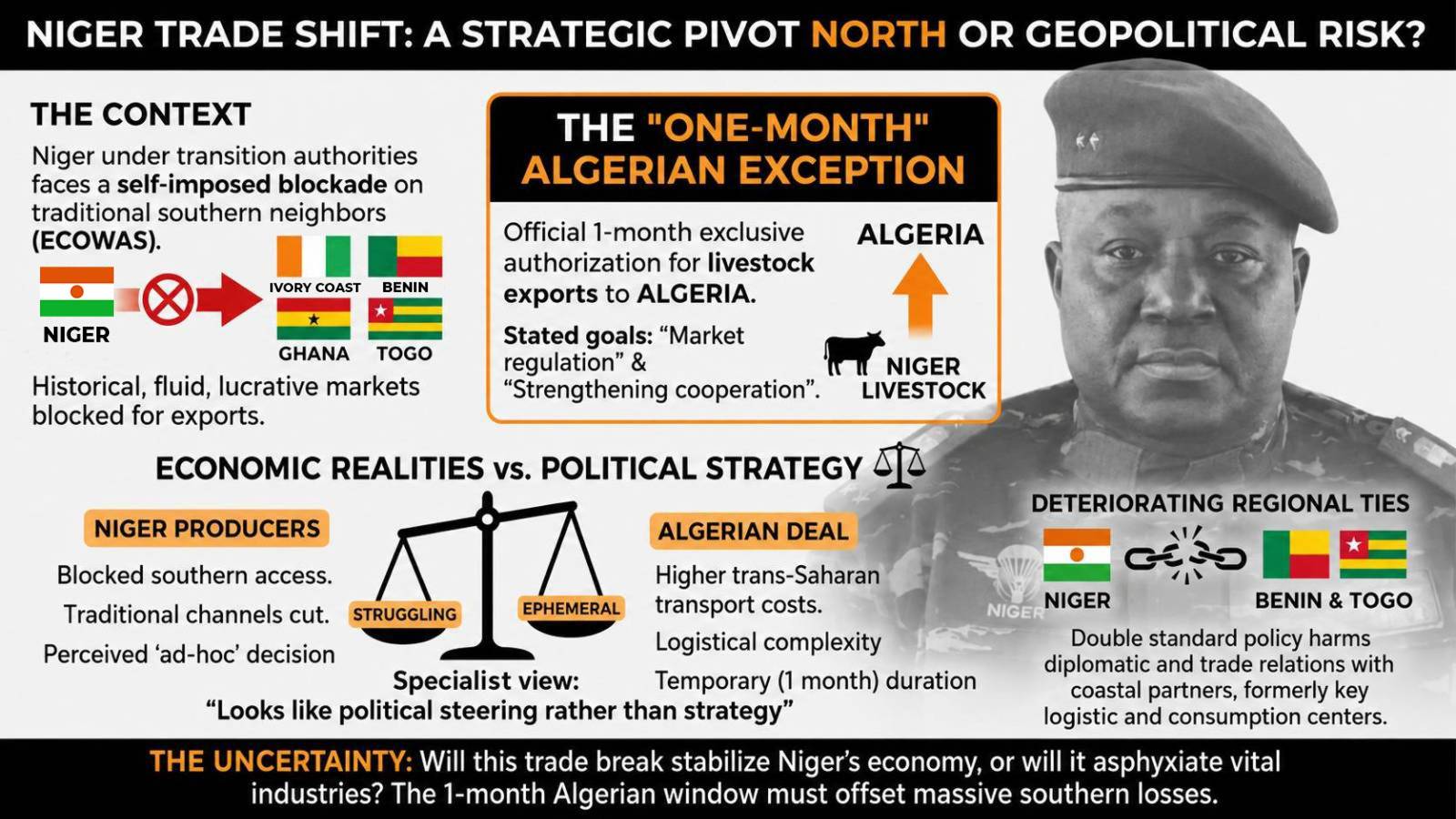
While commercial borders largely remain sealed or heavily restricted for exports destined for the Gulf of Guinea nations, including Côte d’Ivoire, Bénin, Ghana, and Togo, Niamey has unexpectedly forged a new trade path northward.
An exclusive trade concession for Algiers
Niger’s government has formally granted a special one-month permit specifically for the export of livestock to Algeria. Official statements suggest this temporary waiver is intended to “regulate the domestic market” and forms part of a broader effort to “strengthen economic cooperation” between the capitals of Niamey and Algiers.
Although the rationale of diversifying partnerships is officially promoted, the practical economic realities on the ground paint a far more intricate and challenging picture for Nigerien producers.
Economic actors express bewilderment
Many observers find this disparate treatment of long-standing trade partners raises serious questions about the long-term rationale behind such policies. Historically, the Gulf of Guinea region has represented the most natural, efficient, and profitable market for Nigerien livestock.
“To simultaneously block access to established southern markets while opening a fleeting one-month window to the North appears more akin to politically driven improvisation than a well-considered economic strategy,” remarked a specialist in Sahelian cross-border trade flows, who requested anonymity due to the sensitivity of the matter.
By favoring Algeria over its immediate ECOWAS neighbors, the ruling junta in Niamey seems to be signaling an ideological shift, potentially at the cost of further destabilizing a pastoral sector already vulnerable from successive crises.
Regional relations face increasing strain
This “double standards” approach continues to perplex regional partners and is steadily eroding diplomatic and fraternal ties with coastal nations. Bénin and Togo, traditionally vital logistical arteries and consumer markets for Niger, now find themselves marginalized in favor of a trans-Saharan route that presents significantly greater logistical challenges.
Confronted with decisions that some perceive as impulsive or lacking comprehensive consideration for the microeconomic fabric, Nigerien herders are caught in the crosscurrents of geopolitics. It remains highly uncertain whether a mere one-month export window to Algeria can adequately offset the substantial revenue losses from the Ivorian, Beninese, or Ghanaian markets, especially given that the formidable costs of trans-Saharan transport are likely to consume a significant portion of any potential profits.
Only time will reveal if this disruptive economic diplomacy will succeed in stabilizing the nation’s economy, or if it will ultimately stifle Niger’s crucial vital sectors.