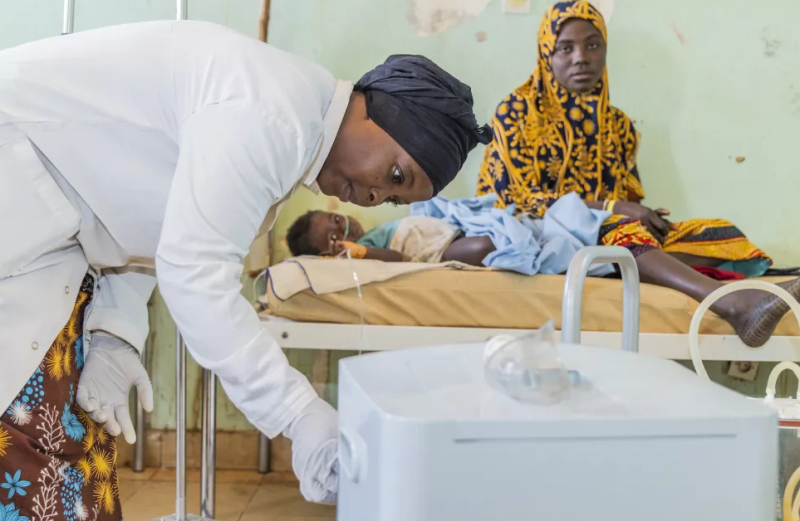
The Niger government is advancing its healthcare ambitions through a landmark bilateral agreement with the United States, pledging a total investment of $179.3 million over five years to build a robust, integrated health ecosystem.
This strategic partnership aligns with the U.S. global health initiative under its America First framework, focusing on critical health priorities such as malaria elimination, maternal and child health improvement, and strengthening epidemic response systems.
funding breakdown and national commitment
The $179.3 million initiative is co-funded with a significant contribution from Washington. The U.S. will allocate up to $107.4 million to support Niger’s health sector, including:
- Malaria control and prevention programs
- Enhancement of maternal and child healthcare services
- Strengthening epidemic surveillance and rapid response systems
In a strong show of national ownership, the Government of Niger has pledged $71.9 million from domestic resources, demonstrating its dedication to sustainable health system development and long-term resilience.
building a digital health infrastructure
A key pillar of this initiative is the creation of a comprehensive digital health ecosystem. A $5 million allocation will fund six interconnected information systems designed to:
- Digitalize medical records through electronic health records (EHRs)
- Improve laboratory and pharmacy management
- Enhance real-time epidemic surveillance capabilities
- Optimize health product supply chain management
- Establish a national health data warehouse for analytics and decision-making
This digital framework is expected to significantly improve early detection and rapid response to health threats, helping Niger preempt and contain outbreaks more effectively.
broader impact and regional partnership
While this agreement centers on Niger, it reflects a growing trend in global health collaboration. The U.S. has signed a similar $60.8 million pact with the Dominican Republic, aimed at HIV/AIDS response and the implementation of a ‘7-1-7’ surveillance system—ensuring outbreak detection within seven days, investigation within one day, and response within seven days.
Together, these agreements represent a combined investment exceeding $240 million, combining U.S. support with local contributions to strengthen health security across partner nations.