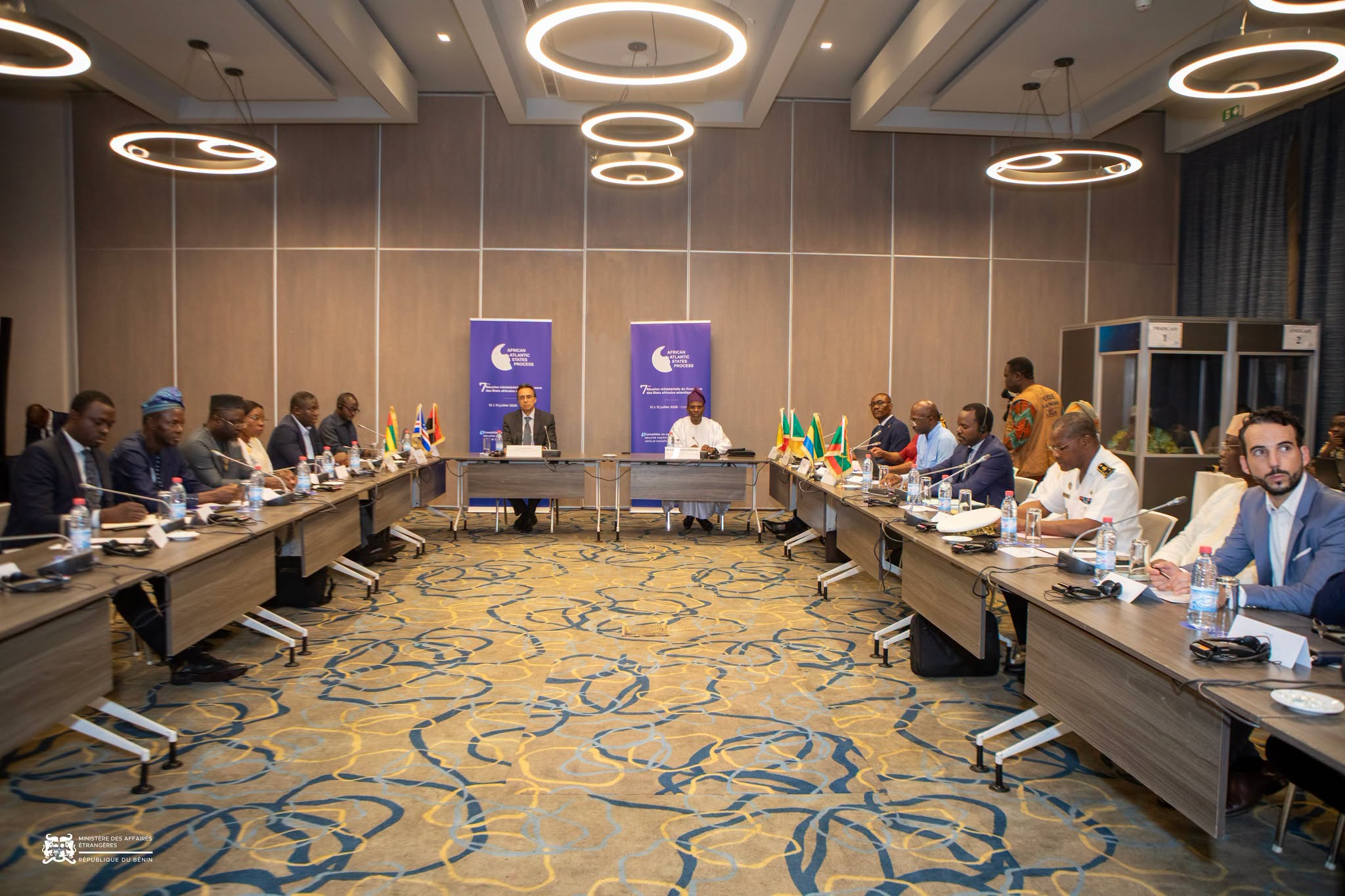
The seventh ministerial meeting of the Processus des États Africains Atlantiques (PEAA) kicked off this Monday in Cotonou, Bénin, under the joint leadership of the Morocco and Bénin. This high-level gathering aims to deepen collaboration among Atlantic-facing African nations while advancing regional integration, aligning with His Majesty King Mohammed VI’s vision for a shared Atlantic African space rooted in peace, stability, and mutual prosperity.
The Moroccan delegation, led by Mohamed Methqal—Ambassador and Director-General of the Moroccan Agency for International Cooperation (AMCI)—includes key figures such as Tarik Iziraren, PEAA Permanent Secretary, and Rachid Rguibi, Morocco’s Ambassador to Bénin. Senior officials from the Ministry of Foreign Affairs, African Cooperation, and Moroccans Abroad also joined the delegation.
milestones achieved since 2022
Since its inception in Rabat in June 2022, the PEAA has made significant strides, including establishing a permanent secretariat in Rabat, forming thematic working groups, and adopting an action plan focused on political dialogue, maritime security, blue economy, connectivity, energy transition, and marine environmental protection.
The Cotonou meeting follows prior sessions held in Rabat, New York, and Praia, serving as a pivotal platform to strengthen coordination among member states. Discussions will center on sustainable development, improved maritime governance, and equitable co-development across Africa’s Atlantic coastline.
strategic priorities and regional impact
With a renewed emphasis on collaboration, the PEAA seeks to:
- Enhance maritime security to safeguard critical trade routes and coastal communities;
- Promote the blue economy for job creation and economic diversification;
- Foster energy transition through renewable resources and innovation;
- Strengthen regional connectivity via infrastructure and digital integration.
The outcomes of this gathering are expected to shape the future of Atlantic African cooperation, reinforcing economic resilience and geopolitical stability in the region.