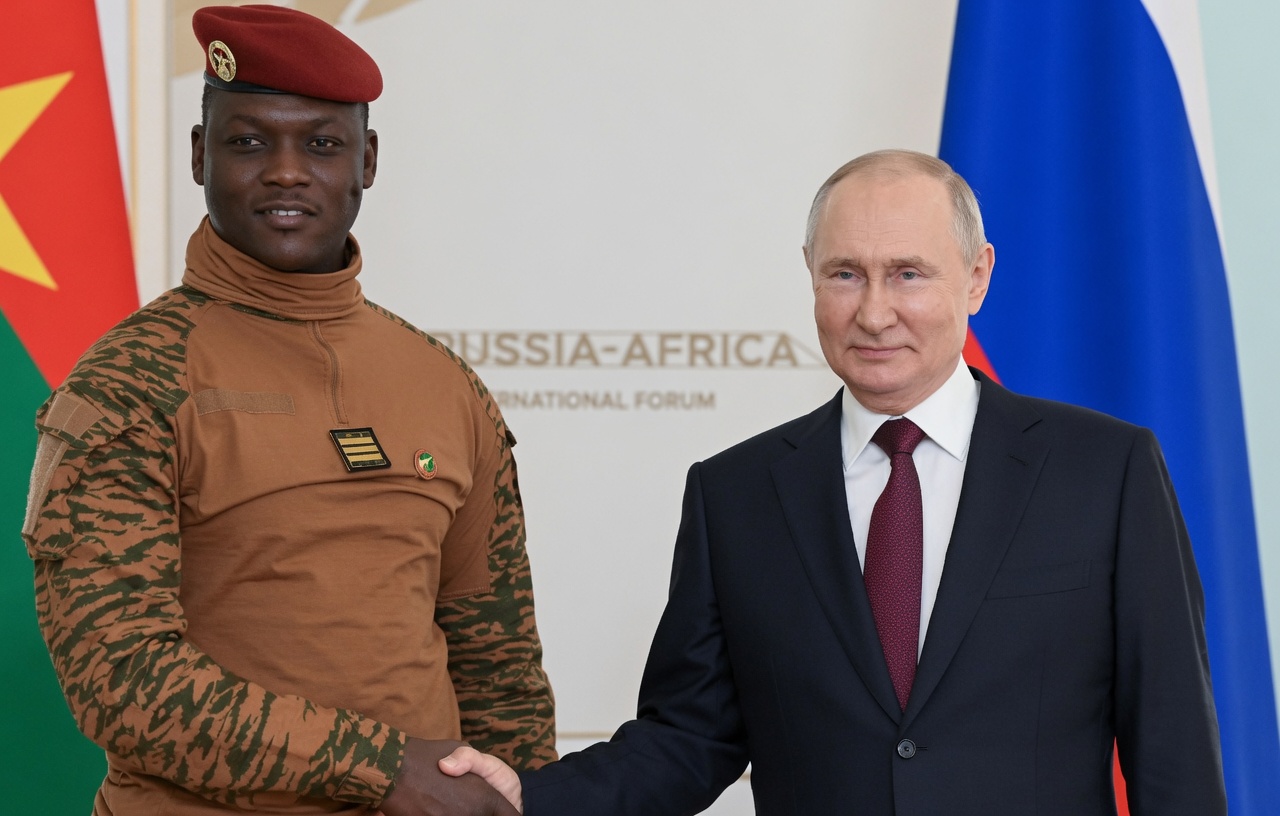
Since forging closer ties with Moscow, Burkinabè authorities have consistently portrayed Russia as a pivotal ally, capable of supporting the nation in its pursuit of sovereignty and enhanced security. The official narrative champions a cooperative framework built on mutual respect, devoid of political preconditions, and characterized as a truly “win-win” relationship. However, beneath this carefully crafted public image, more nuanced realities are emerging, prompting questions about the genuine scope and impact of this burgeoning partnership.
Foremost among the arguments put forth is the notion of reclaimed sovereignty. By diversifying its international alliances following a break with several Western partners, Ouagadougou asserts it has reasserted control over its diplomatic choices. Yet, merely substituting one form of dependency for another does not inherently constitute a victory for sovereignty. A truly balanced collaboration necessitates the capacity to maintain independent decision-making, to cultivate a diverse range of partners, and to prevent any single actor from becoming indispensable in critical sectors such as security or natural resources.
On the security front, definitive success remains elusive. Despite intensified military cooperation with Russia, Burkina Faso continues to grapple with devastating attacks and persistent instability across numerous regions. Violence against civilians, widespread population displacement, and relentless pressure from armed groups persist as formidable challenges. In this context, it is difficult to contend that the partnership, on its own, has fundamentally altered the balance of power on the ground.
The economic dimension also warrants careful consideration. While numerous announcements detail prospective investments and new opportunities, the tangible benefits for the Burkinabè economy largely remain limited. Economic indicators continue to face pressure, while local businesses endure the repercussions of insecurity, reduced activity in certain sectors, and supply chain disruptions. Promises of cooperation cannot be assessed solely by official declarations; their true value must be measured by their concrete, measurable impact on the population.
This backdrop also brings another crucial question into sharp focus. For President Ibrahim Traoré, trading a portion of Burkina Faso’s gold resources for Russian wheat supplies reportedly represents a novel interpretation of sovereignty. This perspective, however, raises numerous concerns. If gold, the nation’s primary wealth, is being exchanged to secure access to an essential food commodity, does this imply that Burkina Faso lacks the means to feed its own population through its domestic capabilities? In essence, should one conclude that Burkinabè citizens are compelled to leverage their mineral wealth simply to address food insecurity? Such an equation appears to reflect symptoms of economic dependence rather than the expression of fully realized sovereignty. Robust sovereignty extends beyond merely selecting a new trading partner; it is also gauged by a state’s ability to ensure its food security, transform its own resources into sustainable development, and tangibly improve the living conditions of its people.
University cooperation arguably stands as one of the more positive facets of this rapprochement. The opportunity for certain Burkinabè students to access Russian academic institutions can contribute to the development of national expertise. Nevertheless, these programs currently benefit a relatively limited number of individuals and cannot, by themselves, offset the structural difficulties confronting Burkina Faso’s educational system and the employment challenges faced by young graduates.
The assertion that Russia imposes no conditions also requires critical examination. In the realm of international relations, no state acts purely out of philanthropy. Every partnership serves strategic, economic, or geopolitical interests. Moscow seeks to bolster its influence across Africa, solidify its diplomatic standing, and expand its economic partnerships within an international landscape marked by Western sanctions. Presenting this relationship as entirely disinterested leans more towards political communication than objective geopolitical analysis.
Furthermore, concentrating partnerships around a restricted number of allies carries inherent risks. Excessive reliance on a single power can constrain Burkina Faso’s diplomatic maneuverability, diminish its capacity to attract diverse investors, and complicate its relationships with other international partners. In an increasingly multipolar world, genuine diversification entails maintaining open relations with multiple actors, rather than simply substituting one bloc for another.
Ultimately, the true benchmark for evaluating any international partnership remains its direct impact on the daily lives of citizens. Sovereignty is not solely measured by rhetoric or diplomatic symbols. It manifests through tangible improvements in security, access to public services, economic growth, and the opportunities available to the youth. On these crucial fronts, the outcomes currently fall considerably short of the stated aspirations.
Therefore, characterizing the Russia-Burkina Faso relationship today as a fully “win-win” partnership appears premature. While this cooperation certainly opens new diplomatic avenues, it has yet to conclusively demonstrate its capacity to provide enduring solutions to the primary challenges confronting Burkina Faso. The ambitions articulated must now be rigorously tested against an undeniable reality: only concrete, measurable, and sustainable results will determine whether this diplomatic reorientation truly serves as a catalyst for development or merely represents a shift in alliances whose benefits for the Burkinabè populace largely remain unproven.