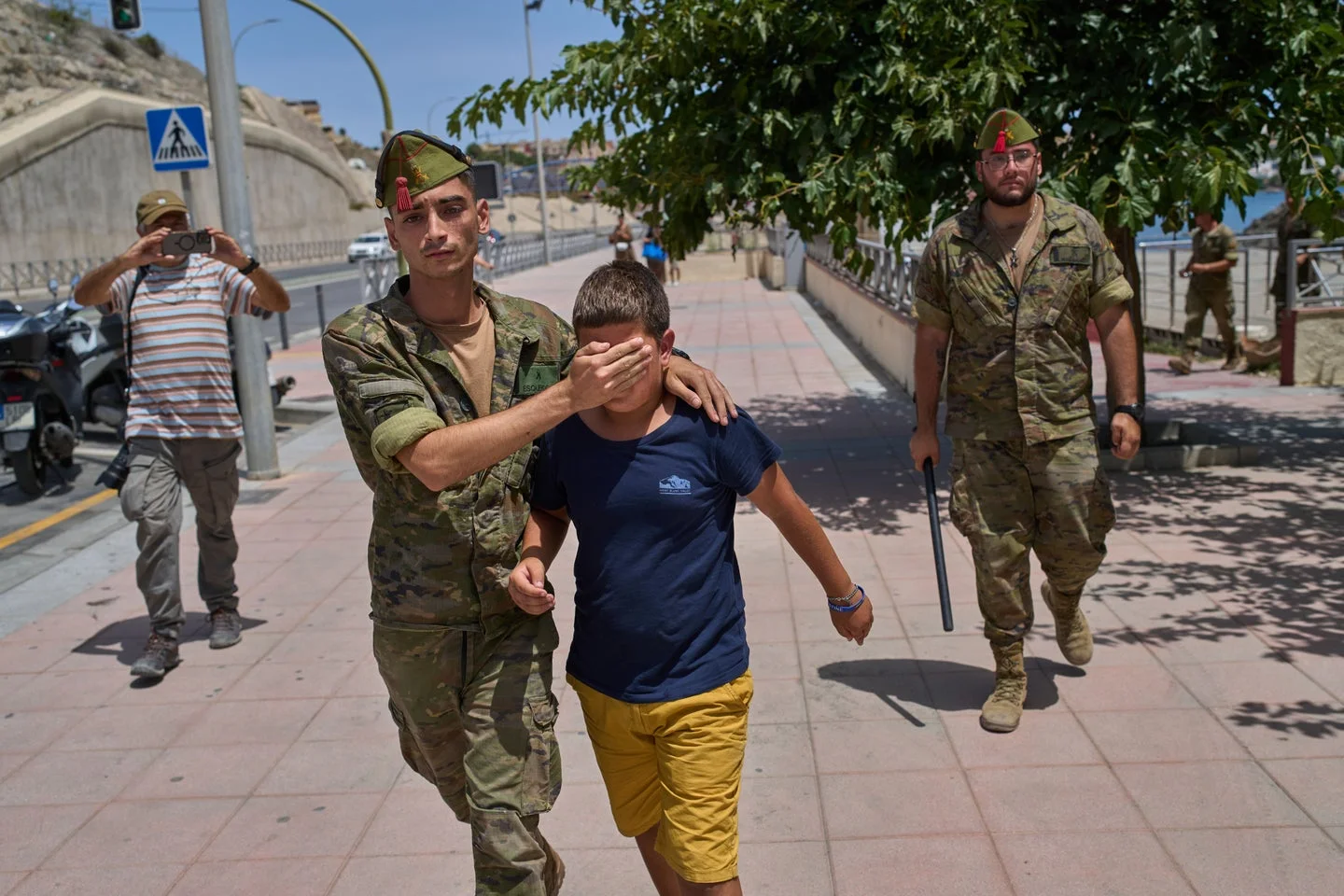
The Moroccan Minister of Justice, Abdellatif Ouahbi, has reiterated the urgency of repatriating Moroccan minors currently in Spain, including those who arrived in Ceuta during the latest migration surge. This directive follows royal instructions aimed at streamlining the identification and return process for these young individuals.
However, the exact number of affected minors remains unclear. Spanish authorities reported 1,527 unaccompanied minors in Ceuta following the crisis, though this figure may not reflect arrivals from July 30–31, as some were already present in the enclave before the influx.
Existing agreements guide repatriation efforts
Contrary to misconceptions, Moroccan minors are not barred from repatriation under Spanish law. Since 2007, Morocco and Spain have maintained a bilateral agreement focused on preventing irregular migration by unaccompanied minors, ensuring their protection, and facilitating their coordinated return. The agreement mandates cooperation between both nations to trace the families of these minors and, when feasible, either reunite them with relatives or transfer them to Moroccan authorities. However, the return process is neither collective nor automatic.
Spanish law requires a case-by-case assessment to determine whether repatriation aligns with the child’s best interests. Authorities must gather family background details, consult Moroccan counterparts, and allow each minor to present their perspective. Public prosecutors play a pivotal role in this evaluation. This meticulous process explains why minors could not be swiftly repatriated alongside adults during the initial crisis response. Their irregular entry does not negate their status as minors under Spanish protection.
The 2021 precedent casts a long shadow
The cautious approach stems from the Ceuta migration crisis of August 2021, when hundreds of minors were repatriated to Morocco in an operation coordinated by Spanish authorities. The subsequent judicial review, however, ruled these returns illegal in January 2024, citing failures to comply with Spanish safeguards—particularly the lack of individualized assessments for each minor.
This legal precedent has become a significant barrier to any swift collective repatriation. While both Rabat and Madrid seek solutions to alleviate Ceuta’s overcrowding, Spanish authorities must rigorously adhere to legal guarantees to avoid further legal challenges. Even with Morocco’s willingness to accept the minors, Spain cannot bypass the procedural requirements.
Alternative measures ease pressure on Ceuta
In the interim, Spain is deploying another strategy to manage the crisis: redistributing unaccompanied minors across autonomous communities. This relocation effort operates independently of repatriation discussions but serves as a critical stopgap to ease Ceuta’s overloaded facilities.
The policy has sparked political debate in Spain. While the central government advocates for regional distribution to ease pressure, opposition voices—including the Partido Popular and Melilla’s President Juan José Imbroda—urge prioritizing repatriation under the 2007 agreement. The tension underscores a broader challenge: balancing humanitarian needs with legal and political constraints.
The coming weeks will test whether bilateral cooperation can accelerate family tracing and fulfill the conditions for repatriation. The 2021 judgment serves as a stark reminder that rushed collective operations risk renewed legal scrutiny and potential invalidation.