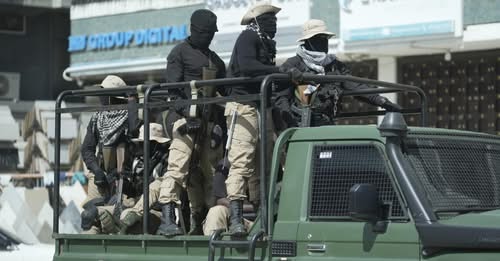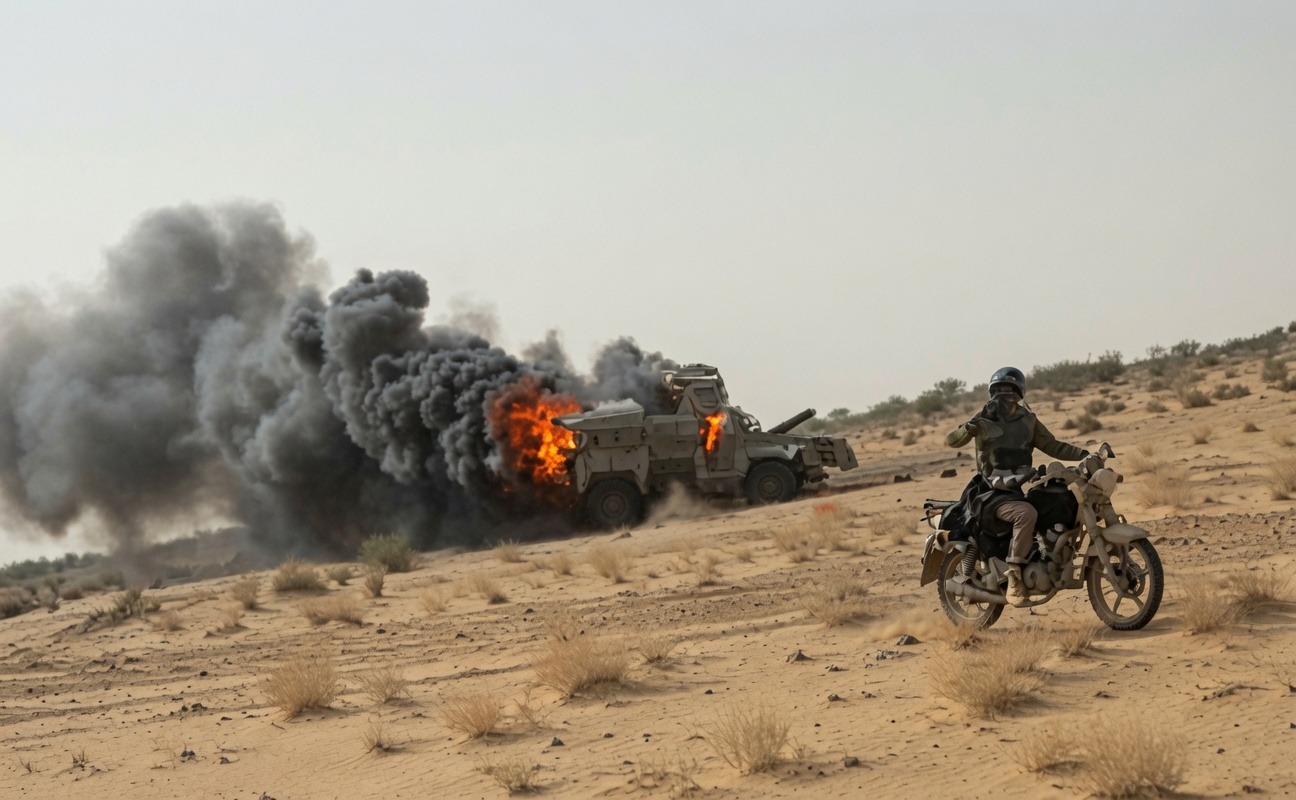
On July 18, a military convoy comprising Malian Armed Forces (FAMa) troops and Russian paramilitary group Africa Corps personnel was ambushed near Tabrichat in northern Mali. The assault, described as unprecedented in its ferocity, resulted in provisional casualties exceeding 50 dead among FAMa ranks and dozens more taken prisoner. This attack stands as one of the deadliest incidents in the region over the past fifteen years, prompting widespread concern about the conflict’s trajectory and raising serious questions about operational failures and war crimes.
Tabrichat ambush: the anatomy of a ruthless trap
 After weeks of intense clashes to secure control over the strategic Anéfis camp, forces on the ground initiated a repositioning maneuver on July 18. A substantial convoy of dozens of armored vehicles and troop transporters departed Anéfis bound for Gao, the northern Mali’s key urban hub.
The military column split into two distinct sections: Russian Africa Corps mercenaries at the forefront and Malian troops trailing behind. The ambush unfolded near Tabrichat, a locality situated north of Tarkint and close to the critical junction linking Gao, Bourem, and Kidal. Exploiting rugged terrain and the convoy’s stretched formation, fighters from the Jama’at Nusrat al-Islam wal Muslimin (JNIM) coalition and the Cadre pour la Défense du Peuple de l’Azawad (FLA) launched a coordinated assault of extreme intensity. The attack focused almost entirely on the Malian rear section, leaving the FAMa troops isolated under a relentless barrage of gunfire.
Grim casualties and documented atrocities
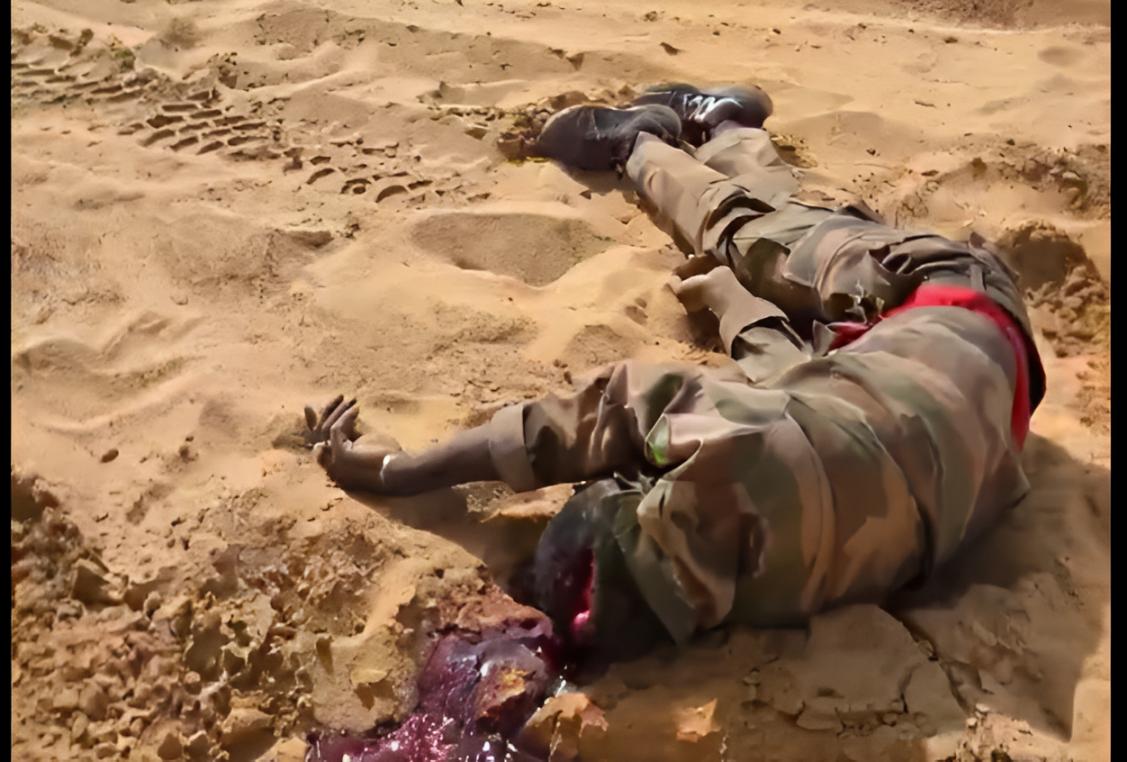
The confrontation left behind a scene of devastation. Field reports indicate provisional losses of at least 50 Malian soldiers killed and around thirty others missing or captured—one of the most devastating setbacks for the Malian army in over a decade.
A tense aftermath: Beyond immediate combat losses, the fate of prisoners quickly turned tragic. Despite being completely disarmed, approximately ten captured FAMa soldiers were executed at close range by JNIM/FLA fighters, in clear violation of international laws governing armed conflict. The circulation of images and videos documenting these atrocities on social media triggered national outrage. The unfolding tragedy took an unexpected turn when some of these visuals were initially shared via channels linked to the Africa Corps, deepening the unease and anger among the Malian public.
Hamza Ag Gali’s presence and the insurgent coalition’s rising power
Analysis of visual evidence collected after the ambush reveals a significant strategic detail: the presence of Hamza Ag Gali, son of Iyad Ag Gali, the long-standing leader of JNIM and founder of Ansar Dine. This involvement confirms the direct, high-level participation of top insurgent command in planning the operation, underscoring generational continuity within jihadist leadership and solidifying the operational reality of the JNIM-FLA alliance. By merging their tactical capabilities along the Anéfis-Gao corridor, these groups demonstrate a mobility, intelligence, and firepower that many believed had been diminished by recent security reorganizations.
Russia’s Africa Corps: strategic retreat or failure to assist?
At the heart of the controversy lies the conduct of the Russian contingent. Positioned at the front of the convoy, Africa Corps troops emerged unscathed during the initial phase of the assault. Yet, while the Malian section endured the brunt of the attack a few kilometers behind, the Russian forces proceeded directly to Gao without turning back to support their FAMa allies.
This tactical decision raises critical questions:
- Coordination breakdown: How could two components of the same convoy operate with such a lack of mutual support protocols?
- Commitment failure: Was the absence of intervention due to strict orders to preserve forces or an operational inability to respond within an ambush zone?
Public outrage and the future of security in Mali
From the streets of Bamako to the major cities of northern Mali, public reaction was swift. While national mourning followed the loss of soldiers, anger intensified regarding the actions of Russian partners. Calls for official explanations have grown louder, demanding answers from military command and government officials about the convoy’s management and Africa Corps’ behavior during the ambush.
This tragedy has exposed the fragility of communication routes in northern Mali and casts doubt on the sustainability of the current security strategy. As the JNIM/FLA coalition displays renewed resilience and aggression, the Tabrichat disaster may force authorities to fundamentally rethink their coordination with allied forces on the ground.