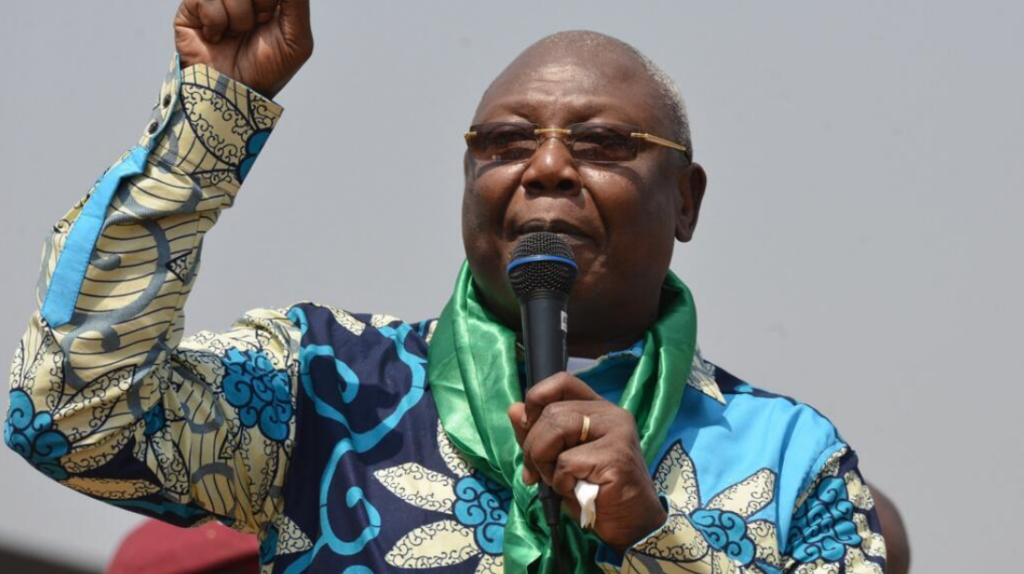
More than two weeks after the inauguration of Faustin Archange Touadéra, which ushered in the Seventh Republic, Martin Ziguélé, a former head of government and leader of the MLPC, has broken his silence. His intervention comes amidst a tense political atmosphere, characterized by persistent friction between the ruling power and the opposition in the Central African Republic (CAR).
Interviewed from Bangui, Ziguélé presented a somber assessment. According to him, after a decade under the current regime, the daily lives of Centrafricans have not improved. He stressed the urgent need for genuine dialogue between political leaders and civil society actors to reverse this concerning trend.
To support his claims, the opposition figure cited striking statistics on poverty. Based on a 2016 benchmark, over half of the population lived below the poverty line (earning less than 1,000 CFA francs per day); by 2026, this proportion is projected to reach approximately two-thirds of residents. This widespread destitution is further exacerbated by systemic challenges such as inadequate access to clean water and electricity, degraded transportation infrastructure, and the proliferation of illegal roadblocks across the country.
The decline in agricultural sectors, in Ziguélé’s view, illustrates the nation’s economic regression. Key productions have plummeted—cotton cultivation, which once approached 100,000 tonnes, is now estimated at around 2,000 tonnes—and historical crops like coffee no longer have reliable statistics. Under these conditions, Ziguélé believes that national revitalization will require a comprehensive political and economic overhaul.
Dialogue: essential for renewed progress
For Ziguélé, discussions between political factions are non-negotiable. He emphasized that in a democratic system, dialogue must be regarded as a crucial instrument for resolving stalemates. He highlighted that the majority of the population resides in rural areas, directly suffering from isolation and the collapse of production chains.
Following his investiture on March 30, 2026, President Faustin Touadéra presented a positive review of his two mandates, while acknowledging significant challenges that still need addressing. However, Martin Ziguélé contends that without broad and sincere consultation involving all vital national stakeholders, implementing the necessary reforms for the country’s recovery will prove difficult.
You may also like
Senegal’s December 2 deadline: how a possible assembly dissolution could hit wallets and stability
Senegal’s 2026 budget revision: how the deficit surge hits households, businesses and the Pastef majority
Benin’s €544,042 UNAIDS funding: the tangible consequences for patients, communities and the economy
Senegal-Azerbaijan pact in New York: what it means for jobs, trade and cooperation
What Luxembourg’s 9.8 billion FCFA port training pledge means for Benin’s workers and businesses