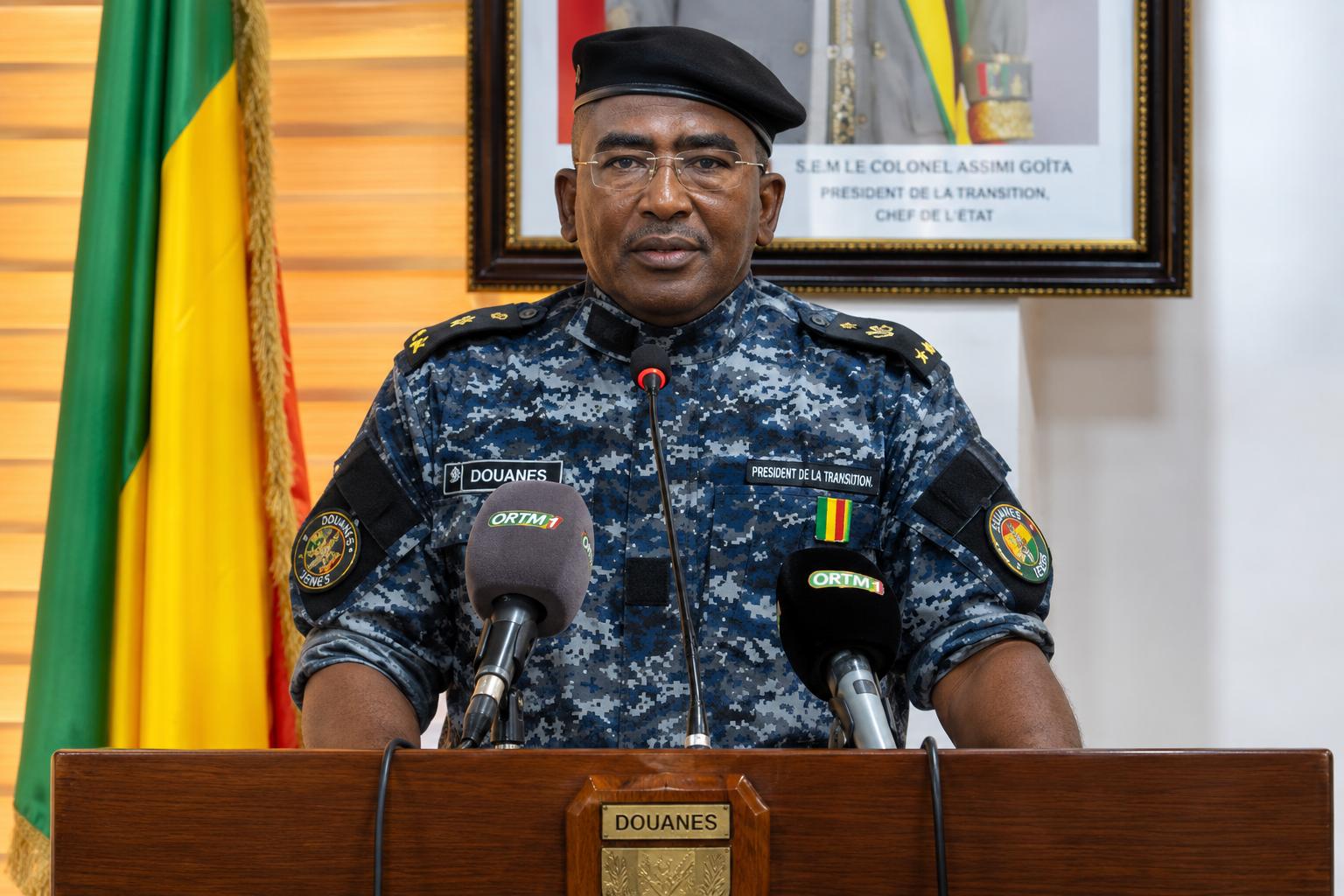
Under the leadership of Assimi Goïta, Mali has undergone a dramatic political transformation following the military coups of 2020 and 2021. The transitional government has positioned itself as a champion of national sovereignty, deliberately distancing Bamako from traditional Western partners while actively pursuing new relationships with actors such as Russia and the United Arab Emirates. However, this realignment has yielded far fewer tangible benefits than anticipated, with persistent insecurity, stagnating economic conditions, and deepening democratic backsliding replacing the promised stability.
a sovereigntist discourse and its unintended consequences
Goïta’s leadership has been defined by a strong sovereigntist narrative that emphasizes national independence, state control, and resistance to external interference. This rhetoric resonates with many Malians who have grown weary of years of instability, governance failures, and what they perceive as overbearing influence from former colonial power France. While such rhetoric has bolstered the regime’s domestic legitimacy, it has not translated into meaningful improvements in the country’s security or socioeconomic landscape.
Rather than consolidating stability, the government’s sovereigntist posture has fostered a transactional post-alignment strategy. Instead of adhering to a fixed alliance structure, Bamako selectively engages with competing external actors—both state and non-state—to maximize short-term regime security, extract material benefits, and reinforce its domestic standing. This approach provides tactical flexibility but leaves Mali increasingly vulnerable to shifting geopolitical priorities and external pressures.
Internally, the regime has struggled to deliver on its promises of reform and anti-corruption measures. Despite populist rhetoric aimed at addressing popular grievances, tangible improvements in governance and public services remain elusive. The postponement of elections, initially scheduled for February 2022, has been repeatedly justified on technical grounds, while proposals to extend the presidential mandate until 2030 have raised serious concerns about democratic erosion. In May 2025, the government took further steps toward authoritarian consolidation by dissolving all political parties and banning their activities under the guise of maintaining public order.
economic stagnation and rural neglect
Mali’s economic performance continues to lag behind the expectations set by its new leadership. Growth remains concentrated in urban centers, while rural and border regions suffer from chronic underdevelopment, limited access to basic services, and few economic opportunities. This urban-rural divide is stark: income disparity in Mali stands at approximately 5.5%, compared to 2.7% in India. The country ranks 188th out of 193 countries on the United Nations Human Development Index, underscoring persistent challenges in health, education, and living standards.
Corruption remains a systemic issue. Although the post-coup authorities acknowledged its prevalence and pledged reform, little progress has been made. Meanwhile, signs of elite enrichment have become more visible, reinforcing perceptions of inequality and governance failure. These challenges are compounded by Mali’s status as one of the world’s poorest nations, with limited industrial capacity and heavy dependence on imports, making it particularly vulnerable to global price fluctuations in fuel and food.
security crisis deepens despite new partnerships
Insecurity remains Mali’s most pressing challenge. Armed groups such as Jama’at Nusrat al-Islam wal-Muslimin (JNIM) and ISIS-Sahel continue to exploit local grievances, expand their influence, and carry out attacks across the country. Despite repeated pledges by the transitional government to eradicate terrorism, operational security remains fragile. The Malian Armed Forces, bolstered by external support, have achieved some tactical victories, but these gains have not led to sustainable stability.
Russia has played a central role in Mali’s evolving security architecture. Following the withdrawal of French and UN forces, the Wagner Group provided combat support, training, and regime protection. While its involvement contributed to tactical successes such as the recapture of Kidal in 2023, it was also accompanied by serious allegations of human rights abuses. In June 2025, Wagner formally withdrew and was replaced by the Africa Corps, a Russian Defense Ministry-controlled force composed largely of former Wagner personnel. This transition signals a deeper, more formalized Russian presence in Mali, now embedded within bilateral defense agreements and expanding economic cooperation.
Mali’s strategic flexibility was further demonstrated in early 2026 when Washington reportedly neared an arrangement with Bamako to resume intelligence-gathering flights over Malian territory. This pragmatic move, despite the sovereigntist posture, highlights the regime’s ability to navigate competing external pressures without committing to a single alignment.
Other external actors have also entered the fray. Ukraine, through indirect involvement involving intelligence support and drone technology, has contributed to escalating tensions. In July 2024, Ukrainian-linked support reportedly enabled a deadly ambush near Tinzaouatene, prompting Bamako to sever diplomatic ties with Kyiv. Meanwhile, the United Arab Emirates has quietly expanded its influence in Mali and the broader Sahel, despite publicly condemning recent coups in the region. These engagements reflect the UAE’s broader competition with regional actors such as Algeria and Qatar, as well as its pursuit of economic and geopolitical leverage.
entangled in global rivalries
Mali’s transformation into a theater of competing external interventions has drawn it deeper into global rivalries. The war in Ukraine has increased volatility in global energy and commodity markets, driving up fuel and food prices in import-dependent economies like Mali. This economic strain risks fueling further grievances and recruitment opportunities for armed groups. Meanwhile, the Middle East remains a source of instability, with shifting alliances and regional tensions affecting Mali’s broader geopolitical environment.
The result is a precarious balancing act. While Mali’s transactional post-alignment strategy offers short-term regime resilience and flexibility, it deepens long-term risks. The country’s growing exposure to external shocks, fragmenting security governance structures, and entrenchment as a secondary theater in wider strategic rivalries undermine prospects for durable stability. Without comprehensive political, social, and economic reforms, Mali’s crisis is likely to persist and intensify, potentially spilling instability into neighboring states along the Gulf of Guinea.