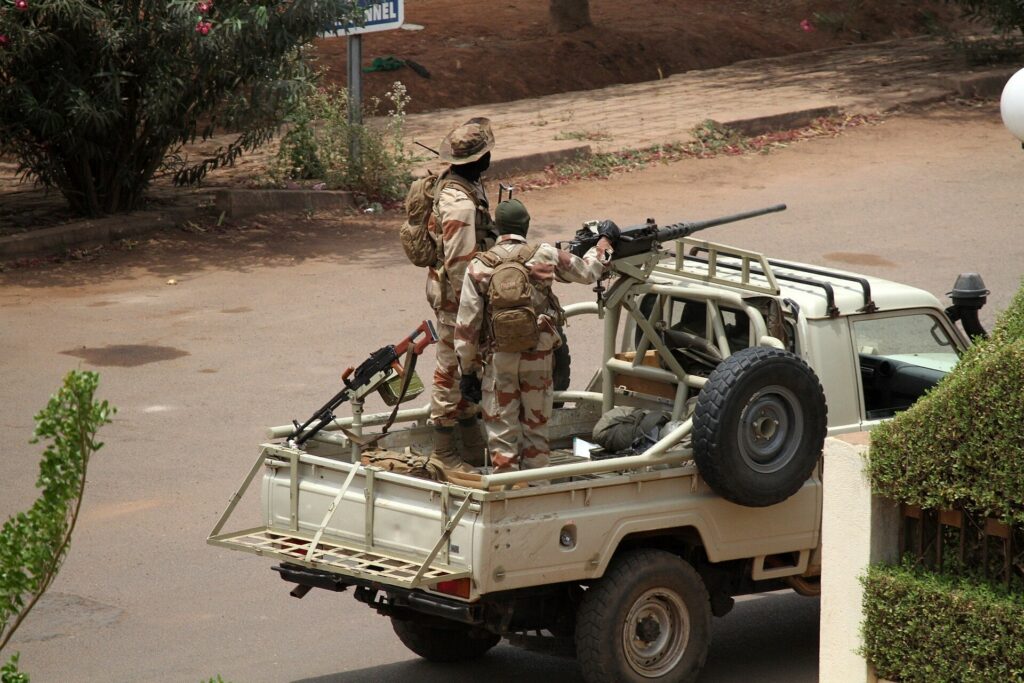
On April 25, a coordinated assault unfolded across Mali, marking more than just another chapter in the nation’s ongoing turmoil. It represented a pivotal shift in the conflict’s trajectory. Islamist militants and Tuareg separatists launched simultaneous strikes on military outposts and vital population hubs, seizing control of the strategic northern stronghold of Kidal from Russian-backed government forces. This bold move underscored their growing operational capacity, pushing their reach dangerously close to Bamako. For the wider Sahel region—particularly Algeria—the pressing question is no longer whether instability is spreading, but whether any power can rein it in before it spirals further out of control.
The junta’s risky gamble backfires
To grasp how Mali reached this critical juncture, we must look back at the pivotal decisions made after the 2021 military takeover. Colonel Assimi Goita’s junta expelled French troops, terminated the MINUSMA UN peacekeeping mission, and turned to the Wagner Group—now operating under direct Russian state control—as its primary security provider. Western observers cautioned that this shift would leave Mali vulnerable. The junta dismissed these concerns as interference. The recent offensive has proven those warnings tragically accurate.
The Wagner Group’s replacement forces, far from delivering on their promise of decisive counter-insurgency action, have now been forced out of Kidal—a city steeped in historical significance as the heartland of Tuareg resistance. The militants didn’t just withstand Russian firepower; they adapted, synchronized their efforts, and advanced. What the junta traded for French logistical expertise and Sahelian institutional knowledge is proving woefully insufficient against an enemy that has only grown more formidable.
The emergence of a united front between Islamist factions and Tuareg separatists is another alarming development. Traditionally, these groups have operated in opposition, competing for dominance in Mali’s ungoverned northern territories. Their current alliance signals a shared assessment: the junta’s position is so weakened that simultaneous pressure can be applied across multiple fronts. They may well be right.
Algeria faces an uneasy reckoning
No nation has a sharper view of Mali’s unraveling than Algeria. Algiers shares a long, poorly secured southern border with Mali, a route long exploited by arms traffickers, drug cartels, people smugglers, and militant networks. Algerian leaders know from hard experience that crises left unchecked rarely stay confined. They spread. They metastasize.
The irony of Algeria’s current dilemma is striking. For years, Algiers positioned itself as the region’s indispensable mediator, playing a key role in brokering the 2015 Algiers Peace Agreement between Bamako and Tuareg leaders. That accord collapsed in early 2024 when Goita formally withdrew from it—a move Algiers saw as a deliberate snub. Tensions escalated further in March 2025 when Algerian forces intercepted and shot down a Malian drone near the shared border, sparking a diplomatic rift with Bamako and its allies in Burkina Faso and Niger—all members of the Russia-aligned Alliance of Sahel States.
Now, Algeria finds itself sidelined from a crisis it is most exposed to. It lacks the leverage to impose a solution on Mali. It struggles to coordinate with a junta that views it with suspicion. Yet Algeria cannot afford to remain passive, as the alternatives—including armed groups establishing permanent footholds along its southern frontier—pose a direct threat to its national security.
Algerian Foreign Minister Ahmed Attaf recently delivered a resolute public statement, affirming support for Mali’s territorial unity and condemning terrorism without ambiguity. Yet strong words alone cannot restore a diplomatic channel that no longer exists.
Washington’s absence leaves a dangerous void
The Sahel’s collapse is also a story of American disengagement. Under pressure from governments aligning with Moscow, the United States significantly reduced its counter-terrorism presence across West Africa and has not replaced it with a coherent alternative. The result is a power vacuum that Russia fills through mercenary deployments, while Islamist networks fill it through governance, taxation, and recruitment in areas abandoned by the state.
The lesson unfolding in real time in Mali is one Washington must heed. Military cooperation, intelligence exchange, and sustained counter-terrorism efforts are not optional luxuries for regional stability—they are its foundation. When they vanish, the void is not left empty. It gets filled.
Three possible futures for Mali
Three potential outcomes now loom on the horizon. The Malian junta could pursue a political settlement with Tuareg factions, halting further military losses at the cost of major territorial concessions. It could escalate its military campaign, leaning on Russian air and ground support to contest the north, though the prospects remain uncertain. Or it could continue its pattern of tactical withdrawals while maintaining a facade of legitimacy, until Bamako itself becomes a battleground.
Algeria watches all three scenarios with mounting dread. The Sahel’s unraveling is no longer a distant concern—it is arriving at the border.
You may also like
Senegal’s 2026 budget revision: how the deficit surge hits households, businesses and the Pastef majority
Benin’s €544,042 UNAIDS funding: the tangible consequences for patients, communities and the economy
Senegal-Azerbaijan pact in New York: what it means for jobs, trade and cooperation
What Luxembourg’s 9.8 billion FCFA port training pledge means for Benin’s workers and businesses
Burkina Faso: shrinking civil service payroll exacts a heavy toll on households and local economies