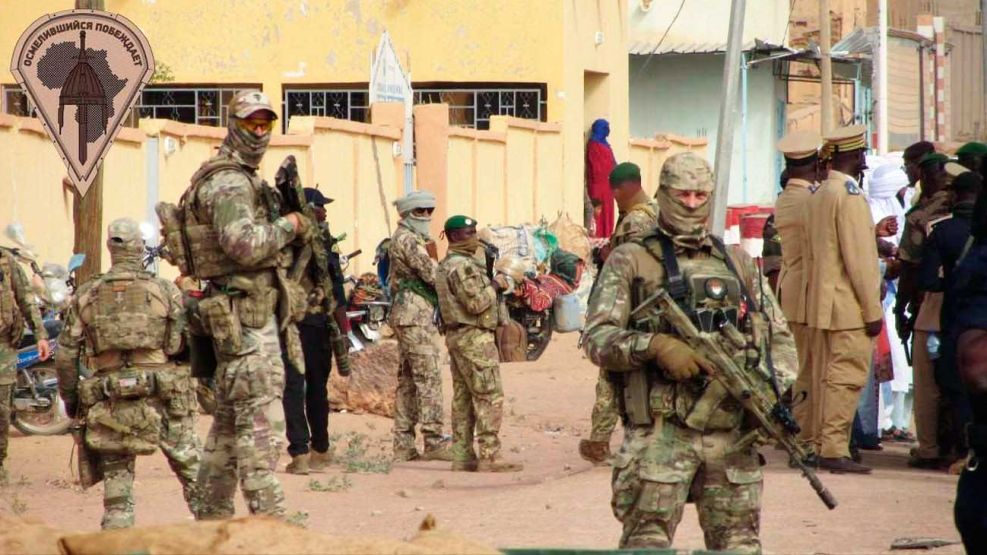
In the arid expanse of Mauritania, Malian refugees like Mosso* cling to a fragile hope: “If the Russian mercenaries leave, we will return home.” Mosso, who escaped the devastating conflict in his native Mali, voiced this sentiment following significant attacks in late April targeting the Malian army and its Russian partners, now known as the Africa Corps. These synchronized assaults, executed by the separatist Front de libération de l’Azawad (FLA) and the jihadist Groupe de soutien à l’islam et aux musulmans (Jnim), an Al-Qaïda affiliate, delivered an unprecedented blow to Mali’s ruling junta, which seized power in a 2020 coup. The violence even claimed the life of the Defense Minister.
For many refugees in Fassala, a Mauritanian locality situated near the Malian border, the actions of Russian paramilitaries have etched a painful memory. Locals still refer to them as “Wagner,” recalling the private Russian militia that has evolved into the “Africa Corps,” supporting the Malian army in its anti-jihadist operations since French forces withdrew.
“Goïta brought Wagner here”
Sheltering under a makeshift tent from the intense Saharan heat, Mosso* expressed his fervent wish for the “downfall of Assimi Goïta,” Mali’s junta leader, asserting, “because he is the one who brought Wagner to our land.” The 57-year-old nomadic Tuareg herder, with his distinctive long white beard, recounted fleeing Mali’s central Mopti region just three weeks prior. He described how white-skinned men, whom he identified as Russian paramilitaries, arrived at his encampment and abducted several individuals. A year ago, his own brother was killed by these Russian forces, an event witnessed by his then 14-year-old son.
Across Mali, civilians frequently endure retaliatory violence and abuses, caught between the Malian army and its Russian auxiliaries, or jihadist groups, often accused of collaborating with opposing factions. On April 20, a formal complaint was lodged with the African Court on Human and Peoples’ Rights (CADHP) by three civil society organizations, including the International Federation for Human Rights (FIDH). This complaint detailed alleged violations committed in Mali, implicating both the Malian armed forces and the Wagner group.
Footage circulating of a Russian convoy departing Kidal, a crucial northern Malian city that fell under Tuareg rebel control in late April, sparked a cautious glimmer of hope among many refugees that the paramilitaries might finally exit their homeland. Similar to Mosso, an estimated 300,000 Malians have sought sanctuary in Mauritania’s Hodh Chargui region since the conflict first erupted in 2012.
The FLA-Jnim Alliance Under Scrutiny
Roughly fifty kilometers from the border, the Mbera camp currently shelters 120,000 individuals who have fled the indiscriminate violence perpetrated by all warring factions: jihadists, the Malian army, Russian mercenaries, and communal groups. Within the camp’s sandy pathways, Ahmed*, 35, voiced his longing for “the return of peace and to go back to my country.” He, too, expressed a desire for the military regime to fall, blaming them for “bringing all the problems to the country.” This Tuareg refugee insisted, “It’s because of Wagner that everyone came here,” explaining his flight from the “amalgamation” created by the Malian army and its Russian auxiliaries.
Abdallah*, a 77-year-old Tuareg refugee with a kind gaze and sun-weathered skin, did not share in the jubilation over the recent rebel offensive. “I am far from happy that the FLA has retaken Kidal,” he stated quietly. In his view, the alliance between the FLA and the jihadists constitutes a grave misstep. “For me, Jnim is a terrorist movement. Their objectives are completely incompatible with our ideology as moderate, peaceful Muslims.”
Since last October, blockades enforced by Jnim jihadists in various Malian localities have triggered a fresh wave of displacement. This new influx has brought nearly 14,000 additional refugees, predominantly women and children, into the region, as reported by the United Nations High Commissioner for Refugees (HCR).
Concerns over a New Refugee Influx
The recent intensification of hostilities in Mali has raised significant alarm among humanitarian organizations, who fear a fresh surge of refugees into this already resource-strained desert region. “We are monitoring the evolving situation with keen attention and profound concern,” affirmed Omar Doukali, spokesperson for the HCR in Mauritania.
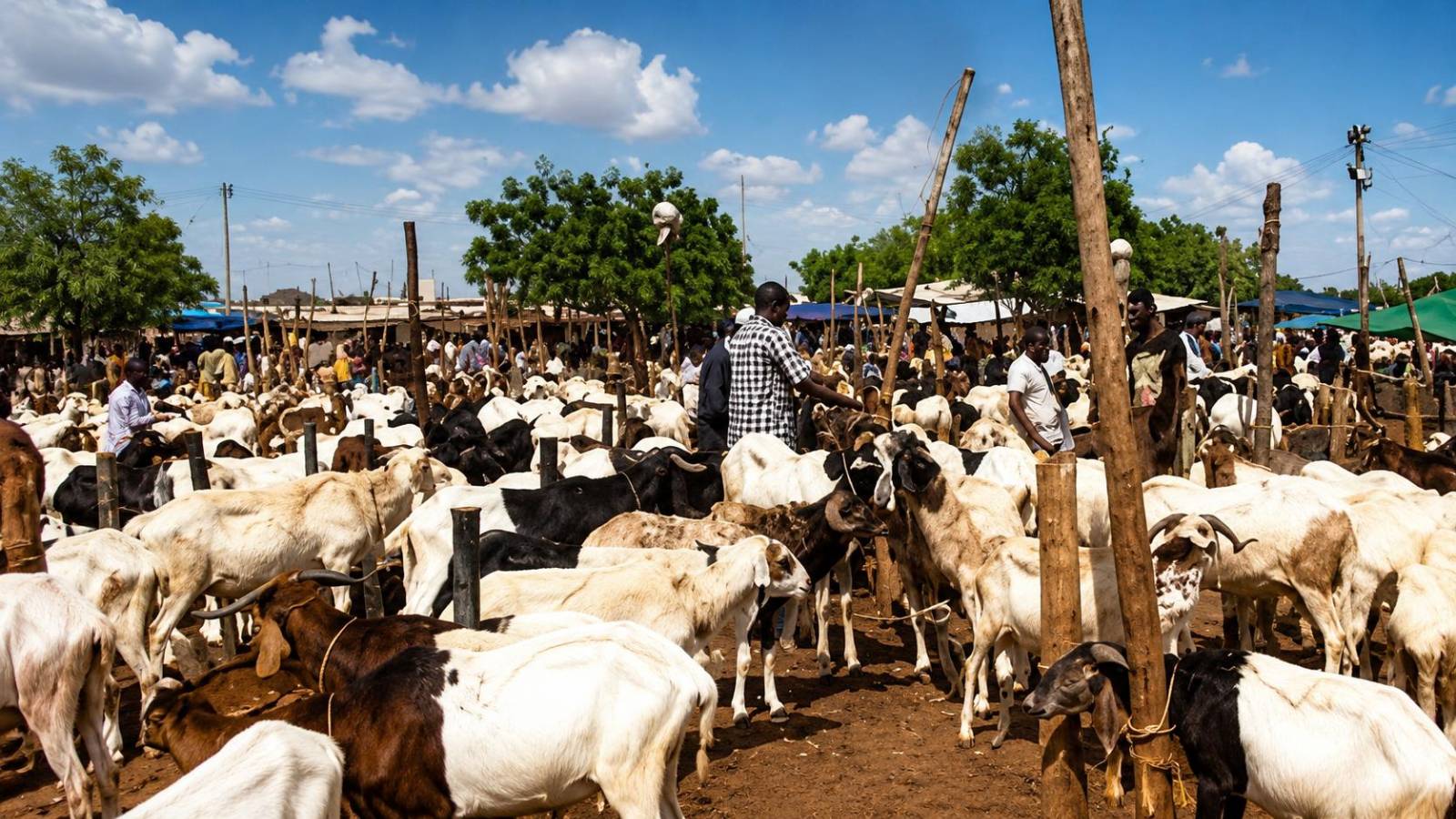
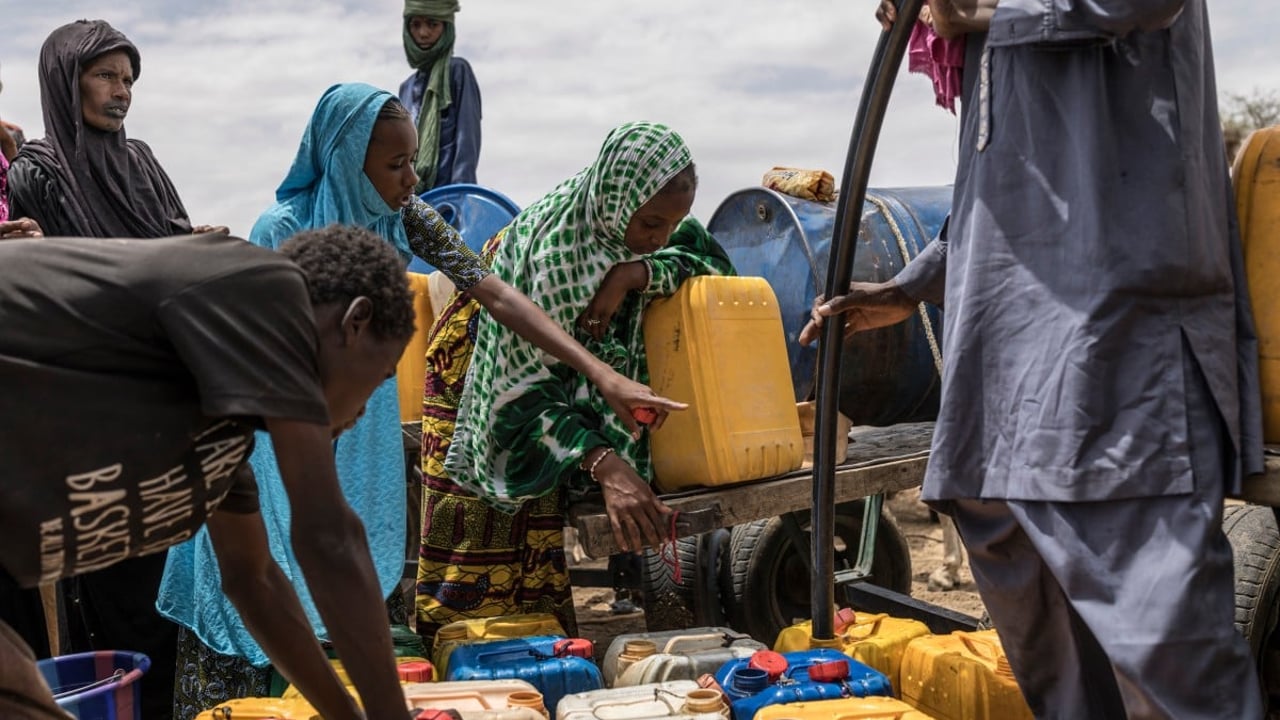
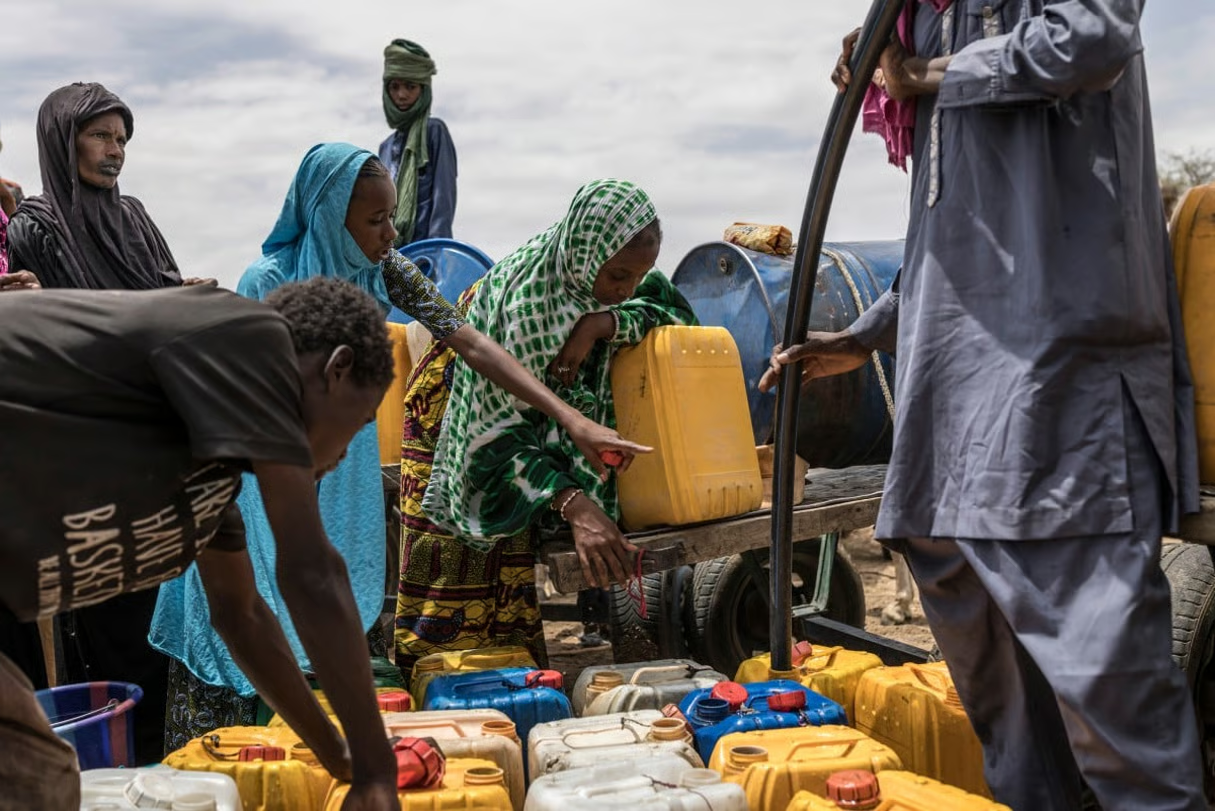
While the Sahel has emerged as a global epicenter for jihadist violence, Mauritania, a vast desert nation of 5.5 million, stands out for its remarkable stability. However, the presence of over 300,000 Malian refugees is straining local resources. Cheikhna Ould Abdallahi, the mayor of Fassala, a commune hosting 70,000 refugees, highlighted the growing pressures “on pastures, water resources, and all basic services, including healthcare,” expressing deep concern over the escalating conflict in neighboring Mali.
The situation in the region remains profoundly uncertain. The FLA has declared its ambition to seize major cities across northern Mali and has predicted the downfall of the ruling junta in the face of its ongoing offensive. Tilleli*, a 22-year-old mother cradling her one-year-old daughter, recounted her flight from Mali just a month ago after Russian forces and the army plundered and torched her village in the central Mopti region. “I can only return home once Wagner leaves my country,” she asserted, adding with a sigh, “I don’t have hope that peace will come anytime soon.”