Coordinated assaults signal deepening insecurity in central Mali
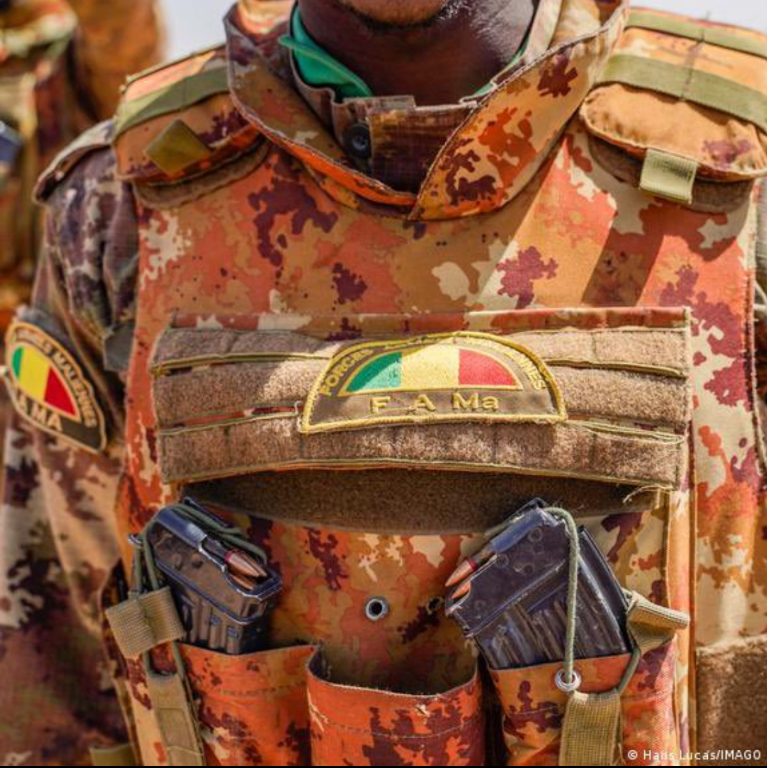
On the evening of July 19, the region of Mopti became the latest flashpoint in a relentless wave of violence sweeping across Mali. The Group for the Support of Islam and Muslims (JNIM), an Al-Qaeda affiliate, claimed responsibility for four synchronized attacks targeting Malian Armed Forces (FAMa), their Africa Corps allies, and local militias. This bold maneuver underscores the group’s operational freedom and exposes the widening gap between Bamako’s security promises and ground-level realities.
Five years after Colonel Assimi Goïta’s ascent to power, his administration’s pledge to reclaim the nation’s sovereignty remains unfulfilled. Instead, Mali grapples with an unparalleled security and humanitarian crisis, exacerbated by the underperformance of Africa Corps—the Russian-backed force replacing former Western partners—and the creeping loss of state control over vast territories.
Mopti under siege: a day of coordinated violence
The JNIM executed its attacks with precision, targeting key logistical and military movements in the Douentza area. Three improvised explosive devices (IEDs) were detonated, striking a supply convoy, a military truck, and a motorcycle detachment shared by FAMa soldiers and Africa Corps mercenaries. Further west, near Kansila, the group launched a direct assault on a local self-defense militia, the Dozo hunters, resulting in three fatalities among the militia members.
The claims of success by the insurgents highlight a critical vulnerability: Mali’s security apparatus is struggling to protect both its forces and civilian allies. The simultaneous nature of the assaults suggests heightened coordination and tactical sophistication, complicating countermeasures for Malian and allied troops.
Goïta’s leadership: a legacy of unmet promises
When Assimi Goïta seized power in 2019, his junta vowed to restore state authority across Mali—a mission left unfinished by democratic governments and international partners like Operation Barkhane. Current conflict data paints a starkly different picture. Fatalities from political violence and terrorist attacks have surged, with some provinces reporting a two- to threefold increase compared to pre-coup figures.
The emergence of Africa Corps and the systematic targeting of ethnic communities have deepened interethnic tensions, inadvertently fueling recruitment for jihadist factions. Road ambushes and IED strikes, once rare, now occur with alarming frequency, crippling transportation networks and economic lifelines.
State retreat and humanitarian collapse
Official narratives from Bamako celebrating military advances contrast sharply with ground realities. While symbolic victories—such as the recapture of Kidal in late 2023—have been achieved, maintaining control proves elusive. Central and northern Mali have largely slipped into lawless gray zones, where state institutions are absent, and terrorist groups operate with impunity.
According to United Nations agencies, over 400,000 internally displaced persons now roam the country, fleeing both jihadist brutality and collateral damage from military operations. Blockades imposed by the JNIM and the Islamic State in the Greater Sahara (EIGS) have plunged entire regions into severe food shortages. The inability to secure supply routes has crippled humanitarian aid delivery, transforming a security crisis into a silent humanitarian catastrophe.
Africa Corps: a strategic miscalculation
To fill the void left by departing French troops and the UN mission, Mali turned to Russia, first through the Wagner Group and later via Africa Corps, a unit directly tied to the Russian Ministry of Defense. Despite the deployment of hundreds of mercenaries, the partnership has yielded minimal military gains and significant reputational damage.
Reports of civilian abuses by Africa Corps personnel—including allegations stemming from the Moura massacre—have eroded local trust and pushed communities toward insurgent factions, who position themselves as protectors. Militarily, the Russian-backed force has failed to curb the threat; frequent losses and insufficient troop numbers render it incapable of conducting effective counterinsurgency operations across Mali’s vast terrain.
Air power’s limitations: a flawed trump card
Facing a shortage of ground troops, the Goïta regime invested heavily in aerial firepower, procuring drones and attack helicopters—primarily from Russia and Turkey. Initially, these assets enabled large-scale strikes, but their effectiveness is now in question.
Technical failures have grounded several aircraft, including L-39 Albatros jets and Mi-24 helicopters, lost to crashes or rebel fire. Maintenance hurdles—compounded by reliance on hard-to-obtain Russian spare parts—have slowed operations. Meanwhile, insurgents have adapted, shifting to smaller units, exploiting dense vegetation, and embedding within civilian populations. This evolution has rendered air strikes less precise and more likely to inflict collateral damage, further alienating local communities.
All-military strategy: a dead end
The July 19 attacks in Mopti are not isolated incidents but symptoms of a systemic failure. Bamako’s all-military approach, marked by the abandonment of dialogue and the alienation of regional and international partners, has reached a deadlock.
By aligning with Russian mercenaries more focused on resource extraction than stabilization, and by neglecting governance, public services, and civilian protection, the government has entrenched itself in a losing strategy. Without a holistic political solution that addresses root causes, Mali risks continued territorial erosion at the hands of an expanding Sahelian jihadism.