The JNIM’s calculated strikes against Mali’s power grid
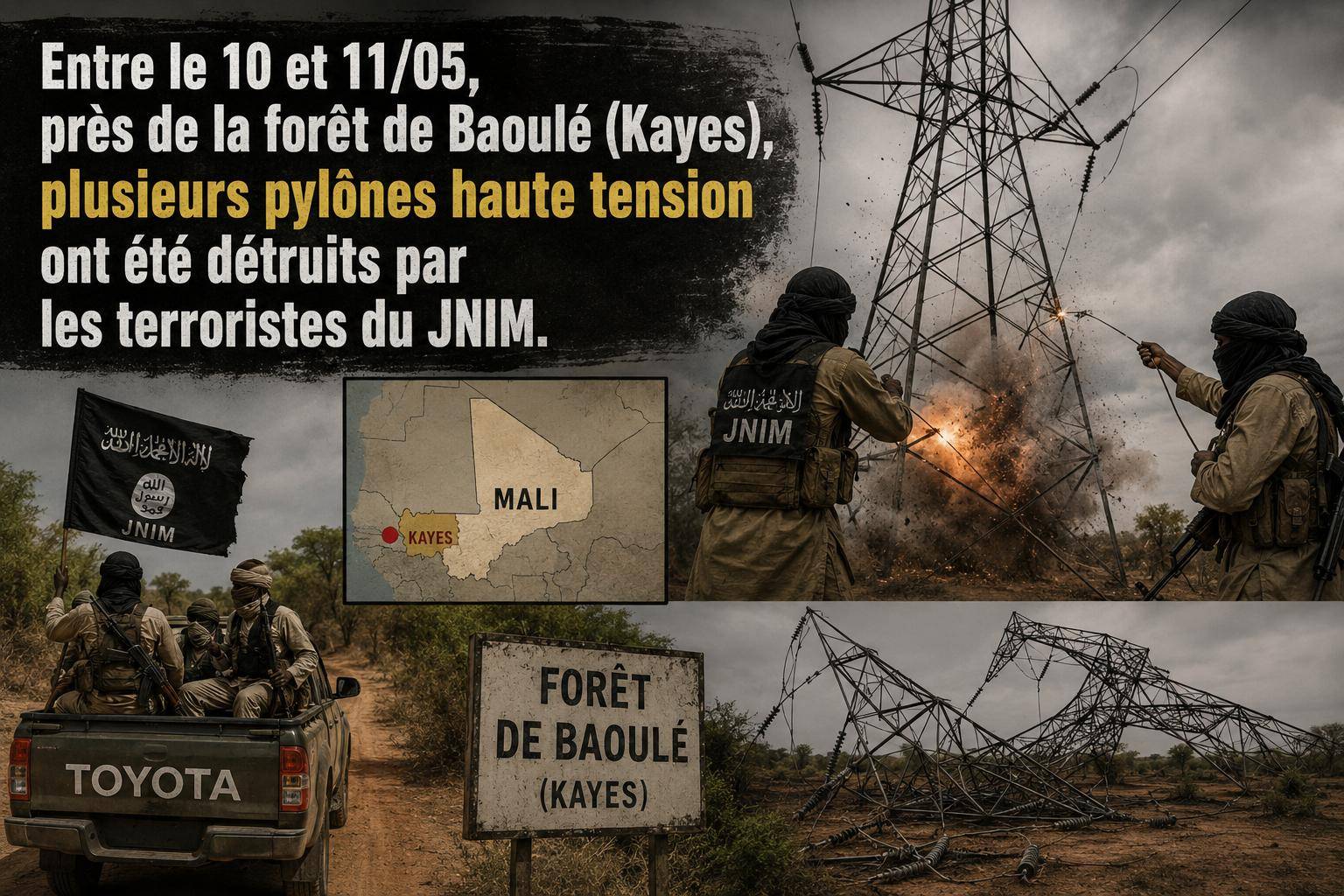
Between May 10 and 11, 2026, the Group for the Support of Islam and Muslims (JNIM) executed a coordinated assault on Mali’s energy backbone, detonating multiple high-voltage pylons near the Baoulé forest in the Kayes region. This deliberate act of sabotage has left the capital, Bamako, shrouded in darkness, while casting doubt on the effectiveness of Russian-backed forces—specifically the Africa Corps—in safeguarding critical infrastructure.
Temperatures in Bamako have soared to unprecedented levels, reaching 45°C, and the absence of electricity has crippled essential services. Water pumps, medical facilities, and cooling systems lie idle, plunging the city into a humanitarian crisis. Meanwhile, the JNIM’s strategic shift signals a deeper intent: to destabilize Mali’s economy and test the resilience of its transitional government.
How the attack unfolded
The insurgents demonstrated surgical precision in targeting pylons nestled in remote, heavily forested areas. Their ability to transport explosives, execute the strikes, and vanish undetected raises serious concerns about the Africa Corps’ operational reach. Despite official claims of securing these zones, the sabotage exposed glaring vulnerabilities in Mali’s defense strategy.
For residents of Bamako, the blackout is the final blow in a relentless wave of hardship. Fuel convoys, while publicized as a solution, are insufficient to offset the collapse of the national grid. Hospitals, already strained, now operate under emergency conditions, risking countless lives with each passing day.
Regional stakes: Manantali and Sélingué under threat
The JNIM’s ambitions extend far beyond Bamako. Intelligence reports indicate that the group is now eyeing the Manantali and Sélingué hydroelectric dams—vital arteries for West Africa’s energy and water supply. A successful attack on these facilities would plunge not only Mali into darkness but also neighboring countries like the Senegal and Mauritania, triggering a domino effect of economic and agricultural collapse.
The river basin, a lifeline for irrigation across the region, would face irreversible damage, threatening food security for millions. This escalation—from roadside ambushes to energy infrastructure sabotage—reveals a calculated campaign to undermine regional stability. Yet, the Africa Corps and Malian forces have struggled to counter this hybrid warfare, leaving both the government and its citizens questioning the true cost of foreign military partnerships.
What’s next for Mali’s battered infrastructure?
The transitional government now faces an existential challenge. Promises of territorial liberation ring hollow as the nation’s economic heart—the power grid—lies in ruins. The Africa Corps’ deployment, though costly, has failed to shield Mali’s critical assets or restore basic services. With hydroelectric dams in the crosshairs, the stakes couldn’t be higher.
Bamako’s residents are no longer satisfied with rhetorical assurances. They demand tangible action: reliable electricity, clean water, and real security—not just slogans. The coming weeks will determine whether Mali can avert a full-scale catastrophe or succumb to the JNIM’s shadow over its infrastructure and sovereignty.