a shocking revelation that shakes the alliance of Sahel states
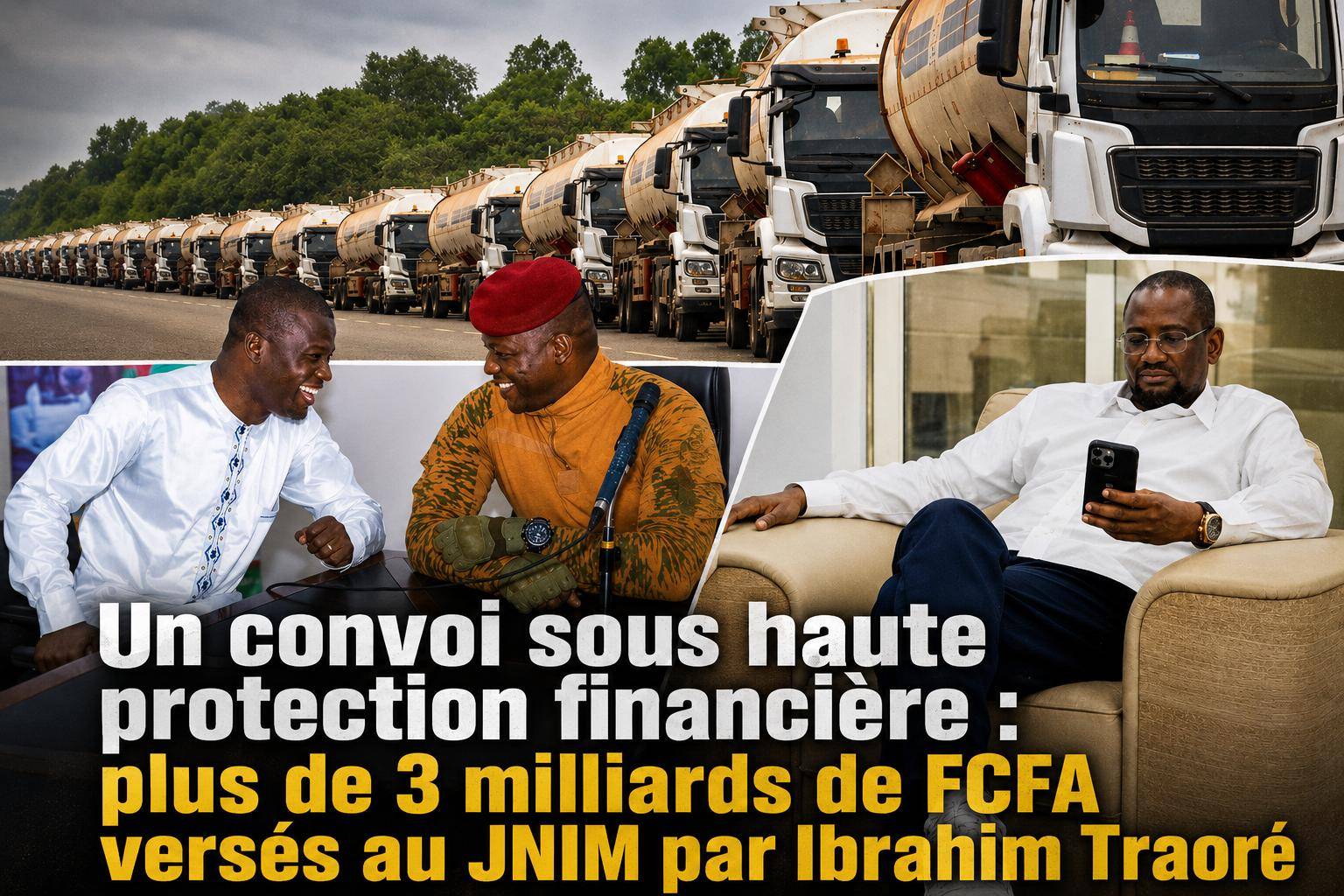
In a stunning turn of events, a massive convoy of 710 fuel tankers has crossed some of the most volatile regions of the Sahel to reach Bamako, bypassing all state security protocols. What should have been a routine operation, secured by Burkina Faso’s elite forces or Mali’s FAMa troops, unfolded with eerie silence—until now. Behind this unconventional transit lies a staggering 3 billion FCFA payment to the Group for the Support of Islam and Muslims (JNIM), allegedly orchestrated by high-ranking Burkinabè officials. This covert deal has transformed a standard logistics operation into a full-blown state scandal, raising serious questions about Ibrahim Traoré’s alleged funding of the JNIM to protect private commercial interests.
kangala transport: the shadowy link between power and profit
The logistical backbone of this controversial convoy is Kangala Transport, a company officially presented as a neutral freight provider. However, investigations suggest it serves as the financial arm of a powerful trio at the heart of Burkina Faso’s transitional government: Ibrahim Traoré, Oumarou Yabré, and Ali Konaté. This blurring of lines between national security strategy and private enterprise exposes a critical ethical dilemma. When leaders entrusted with counterterrorism operations double as economic actors on routes controlled by armed groups, the priorities shift dramatically. For Captain Traoré and his associates, the smooth transit of goods now outweighs the urgency of dismantling the JNIM.
how 3 billion FCFA fuels the Mali conflict
The irony cuts deep for the people of Mali, where civilians and soldiers alike bear the brunt of terrorist attacks. While Bamako and Ouagadougou publicly champion the solidarity of the Alliance of Sahel States (AES), funds from Kangala Transport’s owners are flowing directly into JNIM coffers. This 3 billion FCFA payment did more than secure a fuel corridor—it financed weapons, improvised explosive devices, and recruitment campaigns that target Malian security forces daily. The very fuel now powering vehicles in Bamako may have first powered the machinery of war that devastates Mali’s frontlines.
the collapse of sovereign security models
Perhaps most damning is the deliberate exclusion of the Sahel’s usual security partners from this operation. Neither Russian Wagner forces nor elite national units were deployed to oversee the convoy’s passage through high-risk zones. This calculated sidestepping of regular military channels reveals a stark truth: personal profit trumped national security. By negotiating clandestine deals with terrorists, the convoy’s owners sidestepped patriotic soldiers and ensured their cargo reached its destination unscathed—at any cost.
a fracture in the alliance of Sahel states
This scandal strikes at the core of the AES’s cohesion, challenging Mali’s trust in its neighbor’s commitment to shared security. How can Bamako reconcile with Ouagadougou when Burkina Faso’s leadership appears to prioritize private wealth over the safety of Malian lives? Domestically, Ibrahim Traoré’s antiterrorism narrative loses credibility as facts reveal a cynical calculus where elite profits supersede soldier sacrifices. In both politics and warfare, actions eventually expose the hollow ring of empty slogans—especially when a fuel convoy crosses the Sahel under a JNIM-issued safe passage, funded by Kangala Transport’s controversial owners.