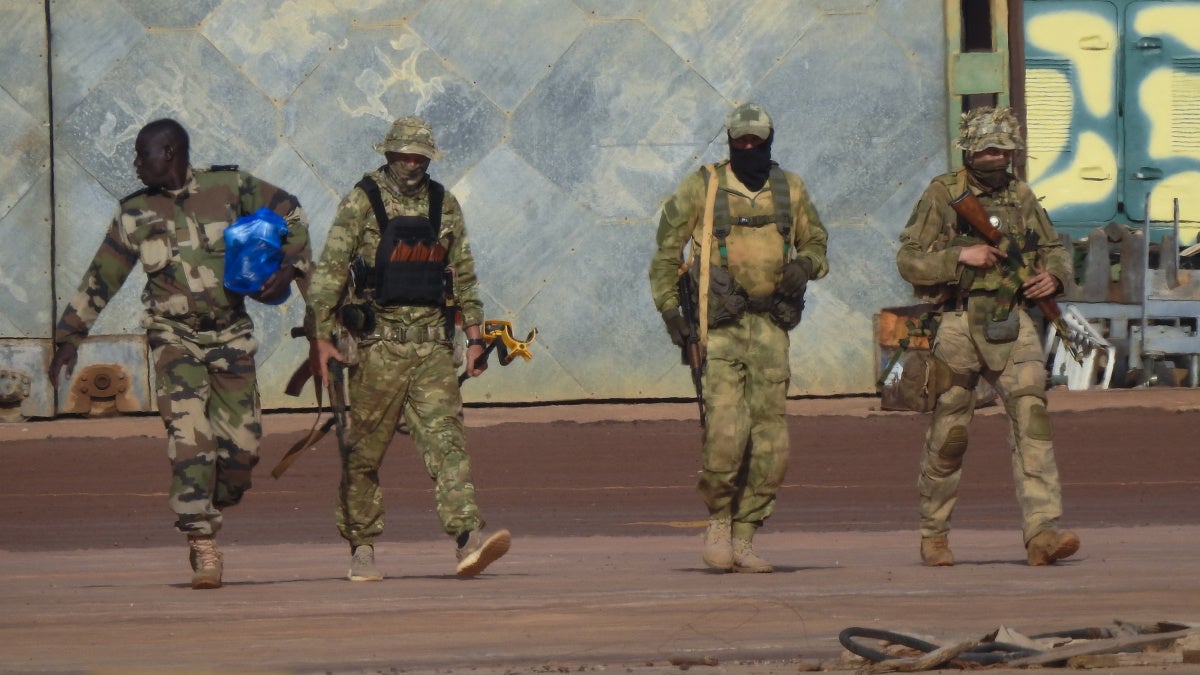
The Malian Armed Forces, in collaboration with the Russian-backed Wagner Group, are facing serious allegations of executing and forcibly disappearing Fulani civilians since the start of 2025. These accusations, supported by credible evidence, suggest a pattern of grave human rights abuses in multiple regions across the country.
key allegations and regional incidents
sebabougou massacre
In April 2025, soldiers and Wagner operatives reportedly arrested over 100 Fulani men in Sebabougou village, accusing them of collaborating with Islamist armed groups. According to United Nations reports, dozens were summarily executed while others remain forcibly disappeared. Satellite imagery analysis by Human Rights Watch corroborated the destruction of homes in the village during the operation.
kobou village attack
On January 23, 2025, Malian forces entered Kobou village and killed three Fulani men, including two elderly individuals whose bodies were found with bound hands and blindfolds. The soldiers also set fire to at least 30 homes. Survivors reported that Fulani residents fled out of fear of being targeted by soldiers who associate them with jihadist groups.
farana river incident
A March 26 operation near Farana village resulted in the alleged torture and killing of four Fulani men by security forces. Witnesses described finding a bloodied scene with human remains, suggesting severe mistreatment before the men’s disappearance.
belidanédji and molodo operations
On March 30, Malian forces and Wagner operatives executed at least six Fulani civilians in Belidanédji village after a confrontation with Islamist fighters. Additional reports indicate torture and secret detentions of two other men in Molodo military base, where at least 20 executions occurred.
sikere village reprisals
In May 2025, soldiers and allied militiamen conducted door-to-door searches in Sikere village, targeting Fulani and Rimaibé men. Four were executed execution-style near a mosque, with threats made against the community for alleged support of jihadist groups.international humanitarian law violations
These actions violate multiple international conventions, including the common article 3 of the Geneva Conventions, which prohibits murder, cruel treatment, and torture. The International Convention for the Protection of All Persons from Enforced Disappearances—to which Mali is a party—has also been breached through secret detentions.
The Malian government’s withdrawal from the Economic Community of West African States (ECOWAS) in January 2025 has further complicated accountability mechanisms, leaving victims without access to regional justice.
international response and accountability
The African Union (AU) has been urged to intensify efforts to protect civilians and support investigations into these alleged war crimes. The AU’s intervention is critical given the absence of a UN peacekeeping mission in Mali since 2023, following demands from the Malian junta.
Human Rights Watch has called for:
- Immediate cessation of abuses by Malian forces and Wagner operatives
- Public disclosure of detention locations for forcibly disappeared individuals
- Transparent and fair investigations into all allegations
- Prosecution of responsible parties under international law
The International Criminal Court (ICC), which has an ongoing investigation into war crimes in Mali since 2012, may pursue accountability if domestic mechanisms fail to act. Senior Malian and Russian officials could be held responsible for crimes committed by their forces under the principle of command responsibility.
historical context of the conflict
Since the 2012 coup, Mali has struggled against Islamist armed groups like Jama’at Nusrat al-Islam wa al-Muslimeen (JNIM), affiliated with Al-Qaeda, and the Islamic State in the Sahel Province. Successive governments have often conflated the Fulani community with these groups, placing them at heightened risk of reprisals from security forces.
The Malian junta, which seized power in 2021, has increasingly relied on Russian military support, including Wagner operatives, despite public denials. While authorities claim only Russian military trainers are present, evidence—including statements from Russian officials—confirms Wagner’s active involvement in counterinsurgency operations.
The recent transition from Wagner to Africa Corps, a Kremlin-aligned paramilitary group, has not halted abuses. Both entities have been implicated in summary executions, forced disappearances, and collective punishment against Fulani communities.