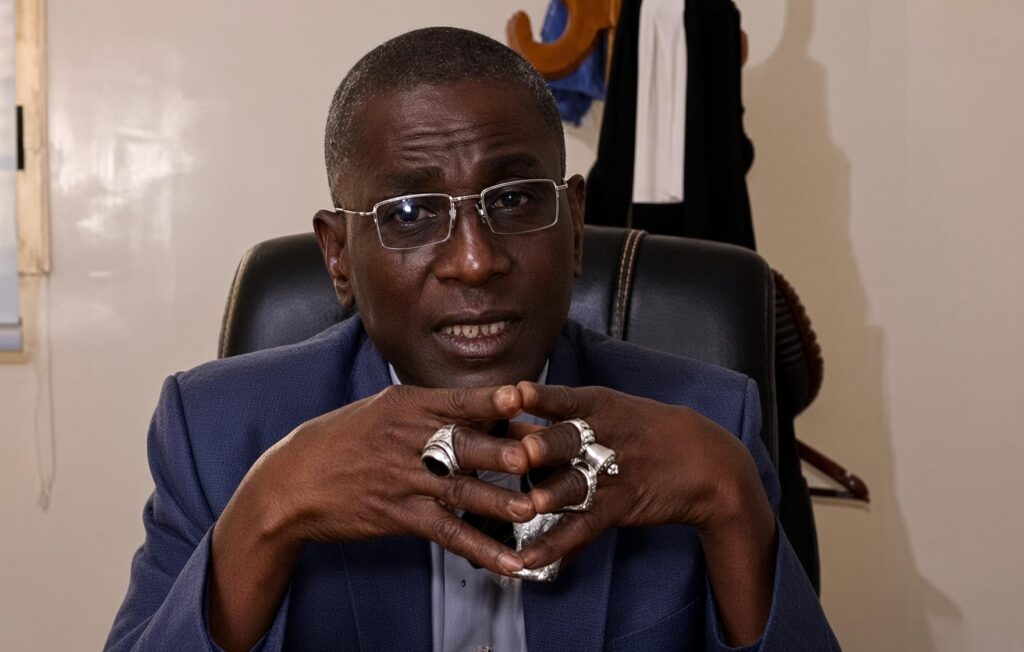
The detention of lawyer and human rights defender Abdourahamane Lirwana is not an isolated legal episode — it is a decision with tangible consequences for ordinary Nigeriens, for companies trying to operate in an unpredictable environment, and for an economy already under strain. When a single Facebook post can land a respected legal professional in prison, the ripple effects reach far beyond the courtroom.
From a social media post to a cell in Niamey
Lirwana was summoned to the judicial police headquarters in Niamey on 21 September 2026. He was taken into custody, brought before prosecutors the following day, and remanded to Niamey’s main prison. The charge: “disseminating data likely to disturb public order” under article 31 of the cybercrime ordinance.
His alleged offence? A Facebook post published on 12 September in which he shared reflections on the condition and morale of the Nigerien armed forces. A lawyer’s analysis — or any citizen’s opinion — on the military is now treated as a crime carrying a potential five-year prison sentence. The message to the public is unmistakable: silence is safer.
What this means for everyday life in Niger
The consequences are not abstract. For citizens, the fear of prosecution chills participation in public debate, weakens access to independent legal counsel, and erodes trust in institutions that are supposed to protect rights. For businesses, uncertainty around the rule of law translates into higher risk premiums, cautious investment decisions, and difficulty retaining legal and compliance talent.
When lawyers can be jailed for expressing an opinion, contracts become harder to enforce, commercial disputes become riskier to litigate, and international partners grow more hesitant. The economic cost of repression is real — it shows up in stalled projects, reduced investor confidence, and a shrinking space for the very civic engagement that holds governance accountable.
A pattern of pressure on civil society
Lirwana is an active member of the Patriotic Movement for Responsible Citizenship (MPCR). His imprisonment fits a broader trend: for more than a year, arbitrary detentions and prosecutions targeting civil society figures and media professionals have multiplied. Each case reinforces a climate of suspicion in which questioning public affairs can trigger judicial retaliation.
This trajectory conflicts with Niger’s international commitments, including the International Covenant on Civil and Political Rights and the African Charter on Human and Peoples’ Rights, both of which guarantee freedom of expression and the right to a fair trial.
Why the outcome matters for the country’s future
The Observatoire pour la protection des défenseurs des droits humains (FIDH-OMCT) has firmly condemned what it describes as judicial harassment. But beyond institutional statements, the practical stakes are clear: a climate of fear discourages civic participation, weakens the legal profession, and undermines the predictability that businesses and citizens alike depend on.
Lirwana committed no crime. He exercised a constitutional right to free expression. The call from rights advocates is straightforward: release him immediately and unconditionally, drop all charges, and guarantee that human rights defenders can carry out their work without intimidation. Until that happens, the impact will continue to be felt — not just in courtrooms, but in households, businesses and the wider economy across Niger.
You may also like
What Benin’s €500 million financing deal means for households, businesses and the economy
Burkina Faso: how four years under Ibrahim Traoré reshaped the lives of millions
What the Bucharest resolutions mean for Benin’s workers, businesses and public finances
Niger’s UN sovereignty show: the SOMAÏR and SONIDEP collapse hitting every household
South Africa’s gun violence crisis deepens as 27 killed in Johannesburg and Cape Town shootings